MolDraw › Updates

What’s new in MolDraw

In short: MolDraw is a free online chemical structure editor that is updated every few weeks. This page lists every update, newest first: 77 so far, the latest in November 2026 (“Virtual experiments: a 3D flame test lab”).

November 2026

Fixes: 3D panel, Richardson background, library drawings and 3D models Fixes

The 3D panel has a close button (×) at the top right; the 3D button at the bottom of the atom palette still opens it again

  • Proteins: the Richardson style draws on black in dark mode instead of in a white box
  • Library 2D: crowded drawings redrawn without overlapping labels or stretched bonds, coordination complexes without overlapping ligands, and two wrong structures corrected
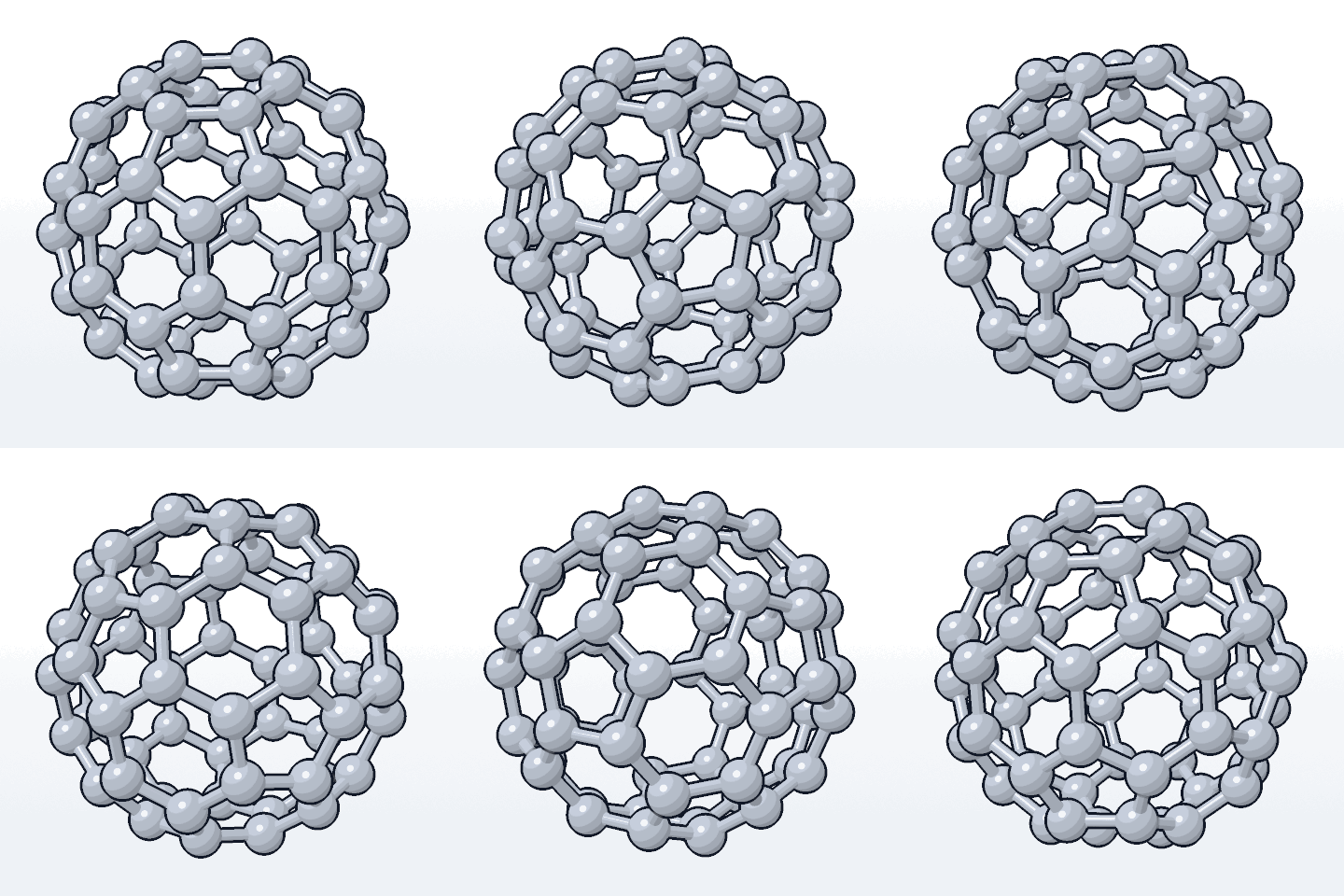
  • Library 3D: models build correctly across the library, including cages from a flat drawing (Fe₄L₆) and C₆₀ adducts
Read the full update →

Virtual experiments: a 3D flame test lab

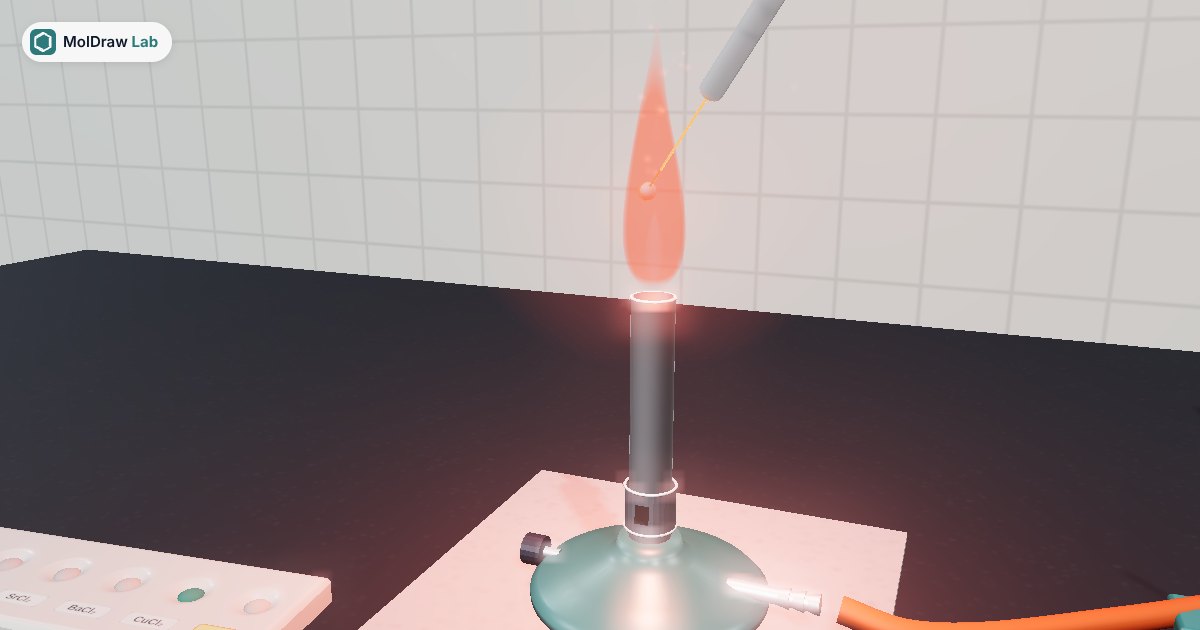
New at moldraw.com/education/experiments: run a flame test on a 3D lab bench, free in the browser.

  • Bunsen burner with gas tap, striker and air hole: a sooty yellow flame when the hole is closed, a roaring blue flame when it is open
  • Clean the nichrome loop in HCl, then test LiCl, NaCl, KCl, CaCl₂, SrCl₂, BaCl₂ and CuCl₂; traces of sodium hide potassium unless you look through cobalt blue glass
  • Spectroscope with the strong atomic lines from NIST; flame colours as in the AQA GCSE specification
Read the full update →
Bunsen burner with a red strontium flame and a glowing wire loop in the 3D flame test lab

The Library and all updates on the website

Browse the Library and every update without opening the editor.

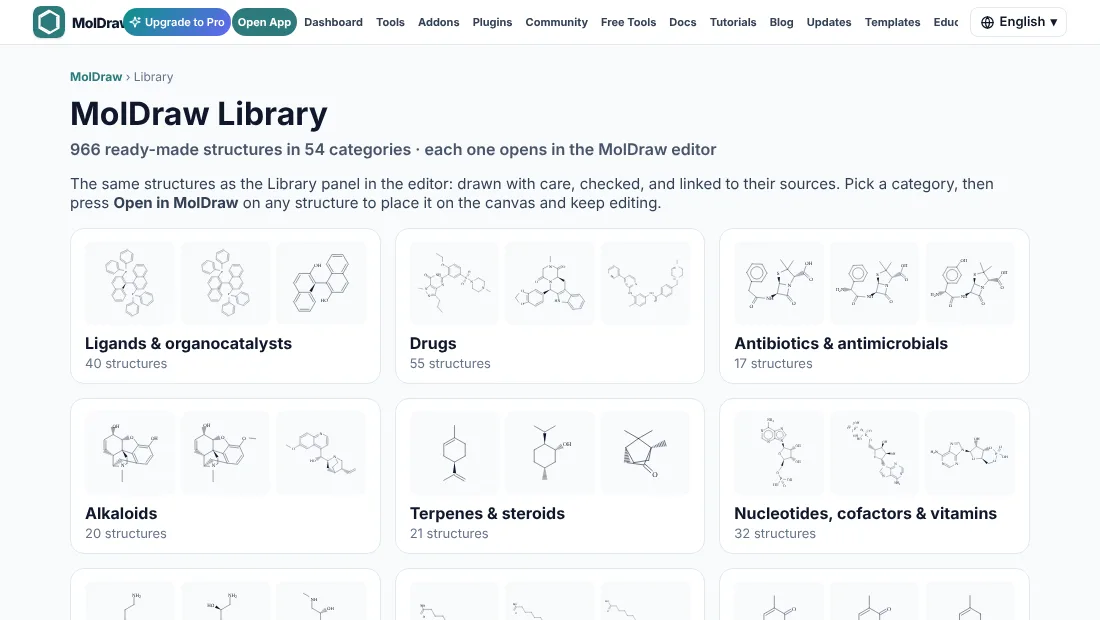
  • moldraw.com/library: the editor’s Library as web pages, 966 structures in 54 categories, each with Open in MolDraw
  • moldraw.com/updates: every update on its own page, with screenshots, a Fixes tab and an RSS feed
Read the full update →
The MolDraw Library web page: 966 structures in 54 categories with preview cards

Inorganic clusters: gold, platinum and palladium nanoclusters

13 new structures in Library › Inorganic › Clusters, POMs & silicates, each with a 3D model.

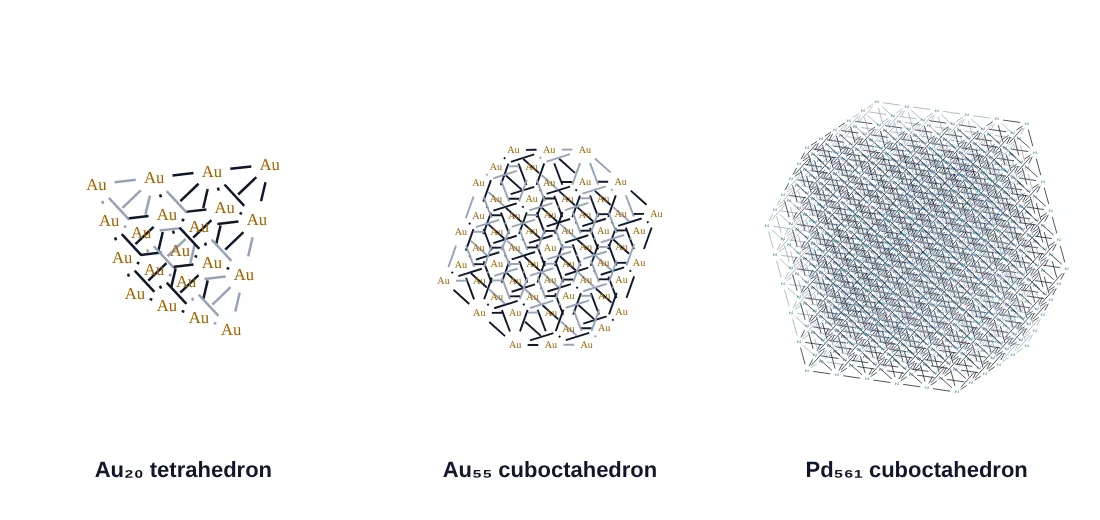
  • Metal clusters by geometry: Au₁₃ (centred icosahedron), Au₂₀ (tetrahedron), and the cuboctahedra Au₅₅, Pt₃₀₉ and Pd₅₆₁, built at bulk metal–metal distances
  • Classic clusters with structure references: Ir₄(CO)₁₂, Co₄(CO)₁₂, Rh₆(CO)₁₆, [Mo₆Cl₁₄]²⁻, [Fe₄S₄(SCH₂Ph)₄]²⁻, Cu₄I₄(py)₄, [Sn₉]⁴⁻ and the Anderson ion [TeMo₆O₂₄]⁶⁻
  • Large clusters keep every atom in 3D (Pd₅₆₁: 561 atoms, 2820 bonds) and are placed in perspective on the canvas
Read the full update →
Au20 tetrahedron, Au55 cuboctahedron and Pd561 cuboctahedron as drawn on the canvas

Proteins: Richardson cartoon style

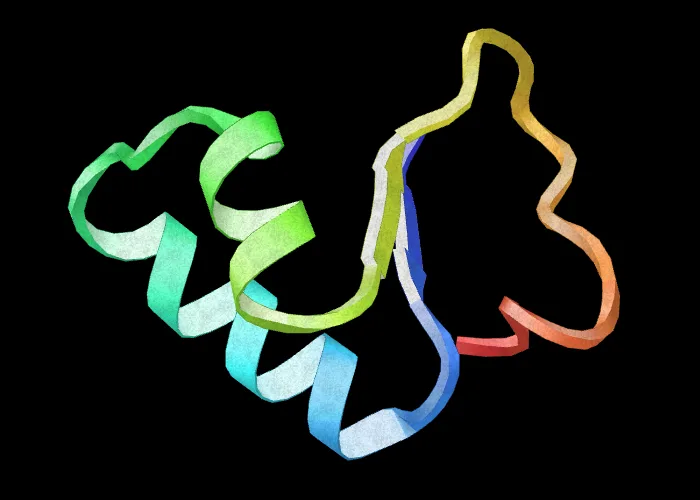
The Protein viewer adds the hand-drawn Richardson cartoon style, drawn with py2Dmol by Sergey Ovchinnikov.

  • Protein tab › Display › Style › Richardson: helices as ribbons and strands as arrows, in the classic hand-drawn look
  • Uses your colour scheme, and respects hidden chains, water and ligands
  • Follows the viewer background: black in dark mode, white in light mode
Read the full update →
Crambin (PDB 1CRN) in the Richardson cartoon style on a black background

Hydrogen bonds, H⁺ and ions in 2D and 3D

Fixes from Vic’s reports in the Community, and a new set of H-bond structures. Thank you, Vic.

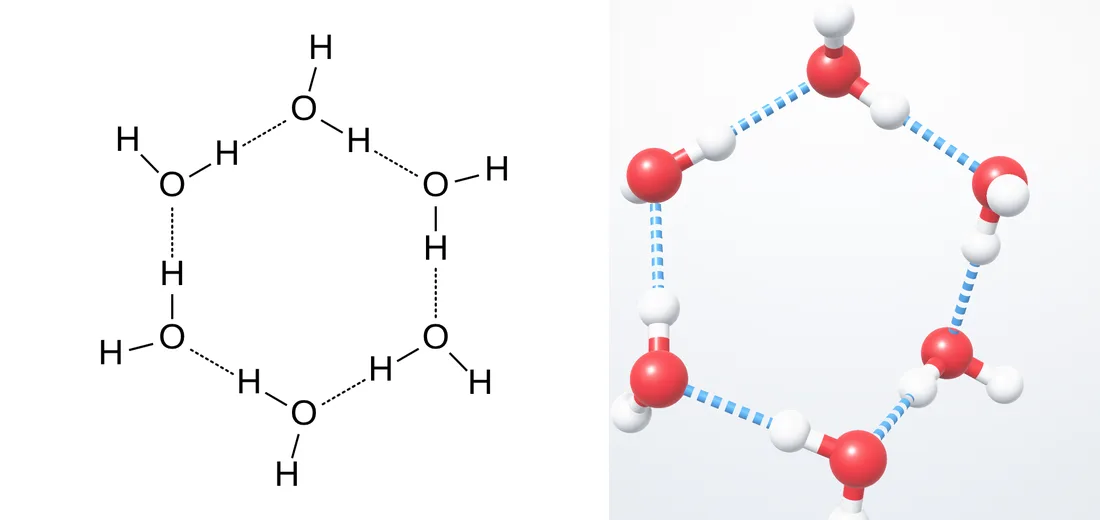
  • Library › Structures › H-bonded assemblies: 26 new structures with every H-bond drawn: water dimer to the ice hexamer ring, a tetrahedral water network, the Eigen and Zundel…
  • 3D shows hydrogen bonds and ion contacts as blue dashed lines at real distances (H···O about 1.9 Å, Na⁺···O about 2.6 Å); dative bonds stay dashed too
  • H⁺ however it is drawn: H₂O–H⁺ is H₃O⁺, HO–H⁺–OH keeps its bridging proton, and typing H+ or +H on an atom makes a proton (3D, formula and Copy SMILES agree)
Read the full update →
Water hexamer ring with dotted hydrogen bonds in 2D and blue dashed hydrogen bonds in 3D

Full Chinese interface, Ctrl+click and numbering control

The whole app in Simplified and Traditional Chinese: menus, dialogs, AI chat, Slides, Sheets, Notebook and all 20 add-ons

  • Select tool: Ctrl+click (⌘ on Mac) picks single atoms; Shift+click still picks the whole molecule (thank you, Ramon)
  • Right-click › Number in click order: Ctrl+click atoms in the order you want, then number them exactly that way
  • Right-click an atom › Number from this atom: the numbering starts there
Read the full update →

Atom numbers, point groups and comp-chem tools

Right-click › Number atoms: labels 1, 2, 3 … along the chain, placed clear of bonds and labels; edit or remove one number from its atom’s menu (thank you, Ramon)

  • Templates › Structure sets › Symmetry: point groups by example with 3D shapes (C1 to Oh), symmetry elements, what symmetry predicts, and a point-group flowchart with table
  • Computational Chemistry add-on: energy profile diagram from several outputs (E, ZPE, H, G; barriers and TS marked)
  • Set a bond, angle or dihedral and freeze atoms before writing an input (Gaussian, ORCA, xtb, Psi4, Q-Chem, NWChem, GAMESS, MOPAC)
Read the full update →

MolDraw Notebook (experimental)

A simple lab notebook at moldraw.com/notebook (More › Notebook). One page per experiment, saved in your browser.

  • Draw the reaction in MolDraw right inside the page; the reagent table fills itself with names, CAS numbers and hazard pictograms from PubChem
  • Equivalents, mmol, mass, volume and yield worked out like a spreadsheet
  • Files: spectra (JCAMP plotted), TLC photos from your phone camera, PDFs, structure files that open in MolDraw
Read the full update →

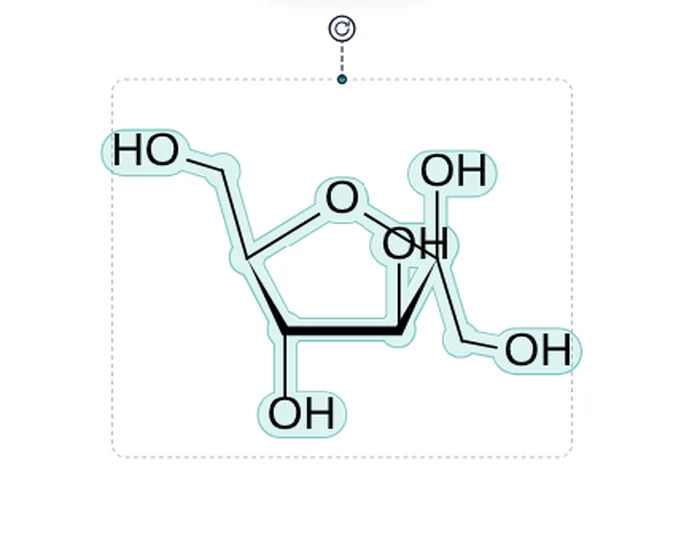
Haworth sugars and a Snapping switch

Fixes from teacher feedback in the Community — thank you, Ramon.

  • Sugars from the library stay Haworth projections when placed (a clean-up step was turning them into Mills projections)
  • α- and β-D-fructofuranose were swapped: corrected
  • Haworth rings in textbook perspective: thick front edge, wedged sides, straight up / down OH and CH₂OH, drawn larger
Read the full update →
β-D-fructofuranose as a Haworth projection with a thick front edge

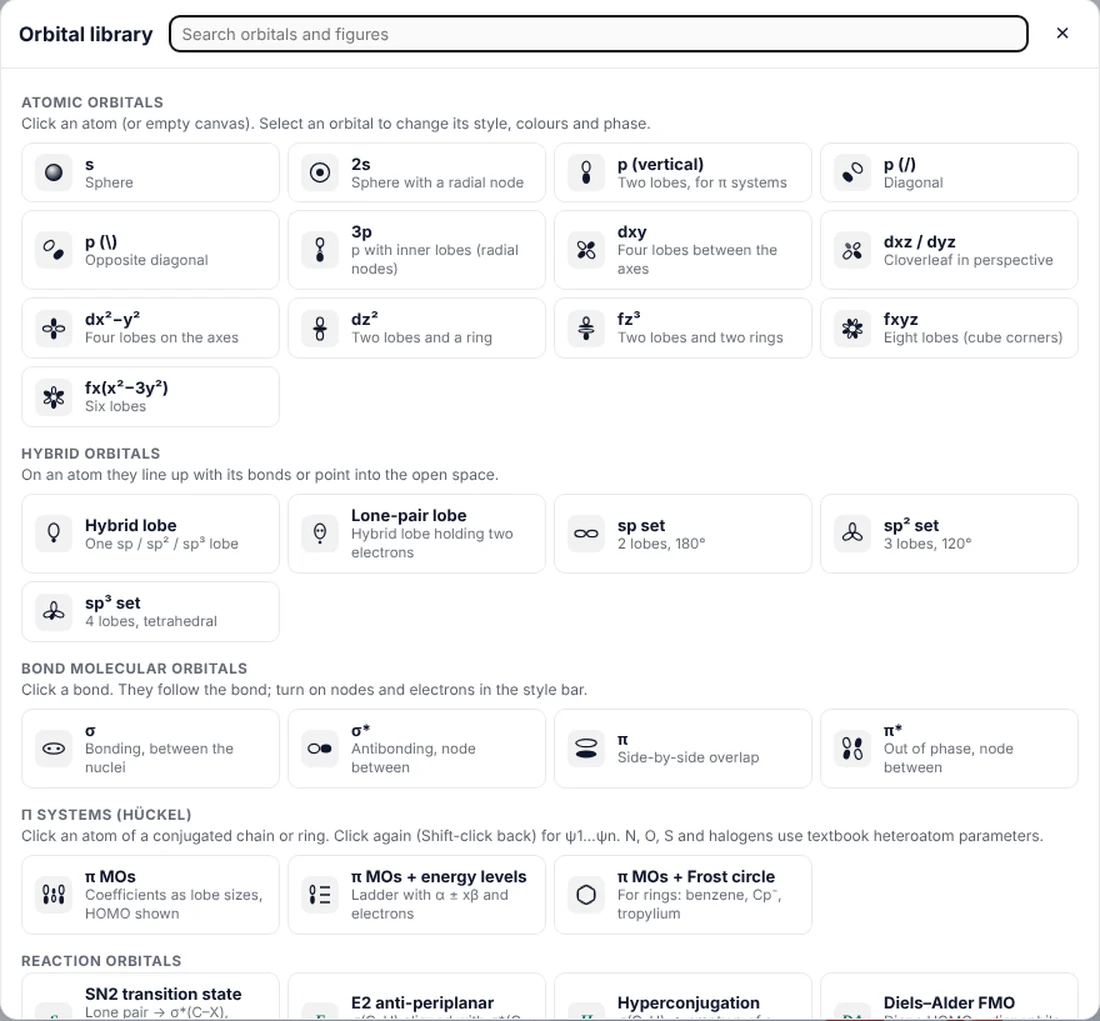
Orbitals like in textbooks: colours, molecular orbitals and an Orbital library

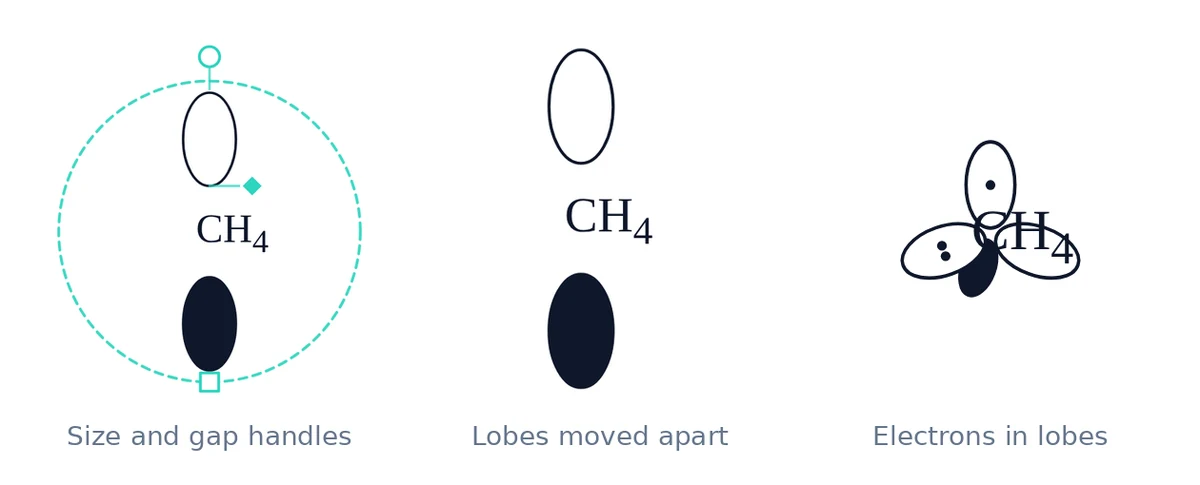
The orbital tool now draws the pictures from organic and general chemistry books: shaded 3D lobes in any colour, bonding and antibonding orbitals on bonds, Hückel π molecular orbitals with energy levels, and ready-made figures you can edit.

  • Select an orbital for the style bar: line, shaded 3D or flat; + / − phase colours with presets; opacity; swap phase; nodal planes
  • σ, σ*, π and π* orbitals: click a bond (they move with it), with electrons inside if you want
  • π MOs (Hückel): click any conjugated chain or ring for ψ1…ψn, lobe size from the coefficients, HOMO / LUMO label, energy-level ladder or Frost circle; N, O, S and halogens use…
Read the full update →
Orbital library with atomic, hybrid, bond and π-system orbitals and ready-made figures

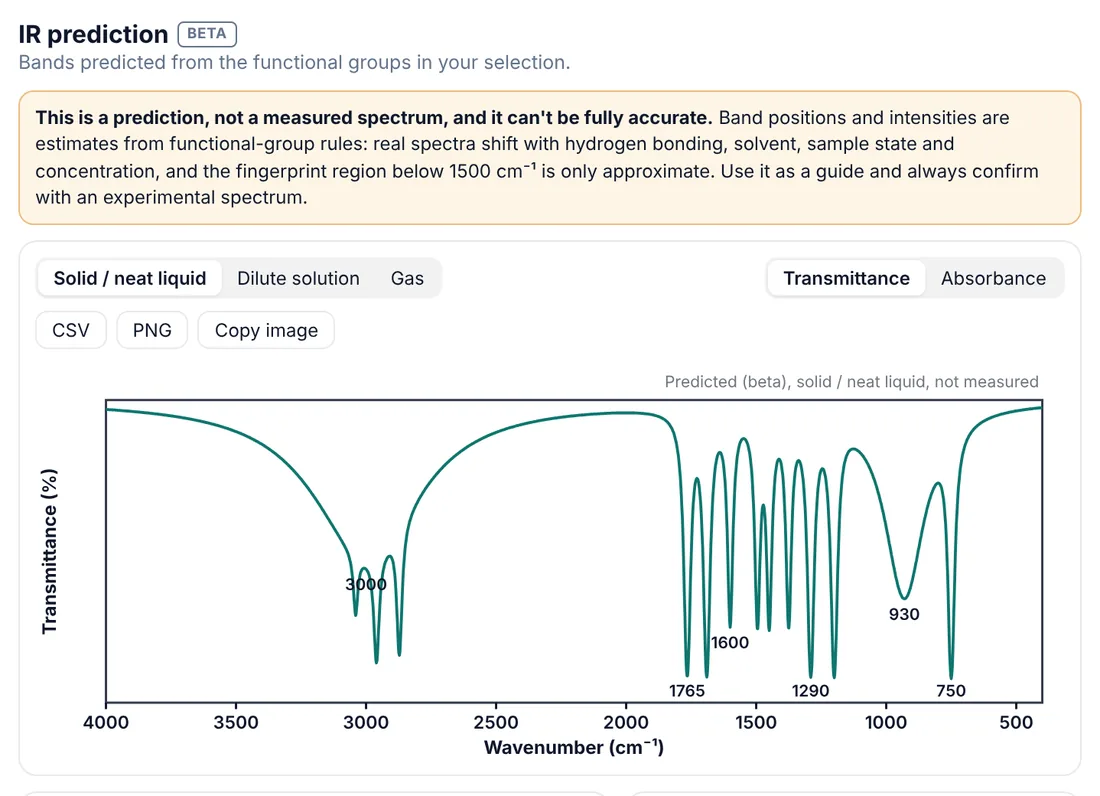
New add-on (beta): IR prediction

Draw a molecule and see its predicted IR spectrum: the expected bands, a simulated spectrum and the functional group behind each peak. It is a prediction from functional-group rules, not a measured spectrum, so it is labelled beta.

  • Install it from the + next to the 3D viewer tabs: IR prediction adds an IR tab
  • Hover a band or a peak label to see the atoms it belongs to in the structure
  • Sample state: solid / neat liquid, dilute solution or gas (free O-H and N-H, acid monomers)
Read the full update →
Predicted IR spectrum of aspirin with the beta label, the prediction warning and the solid, solution and gas switch

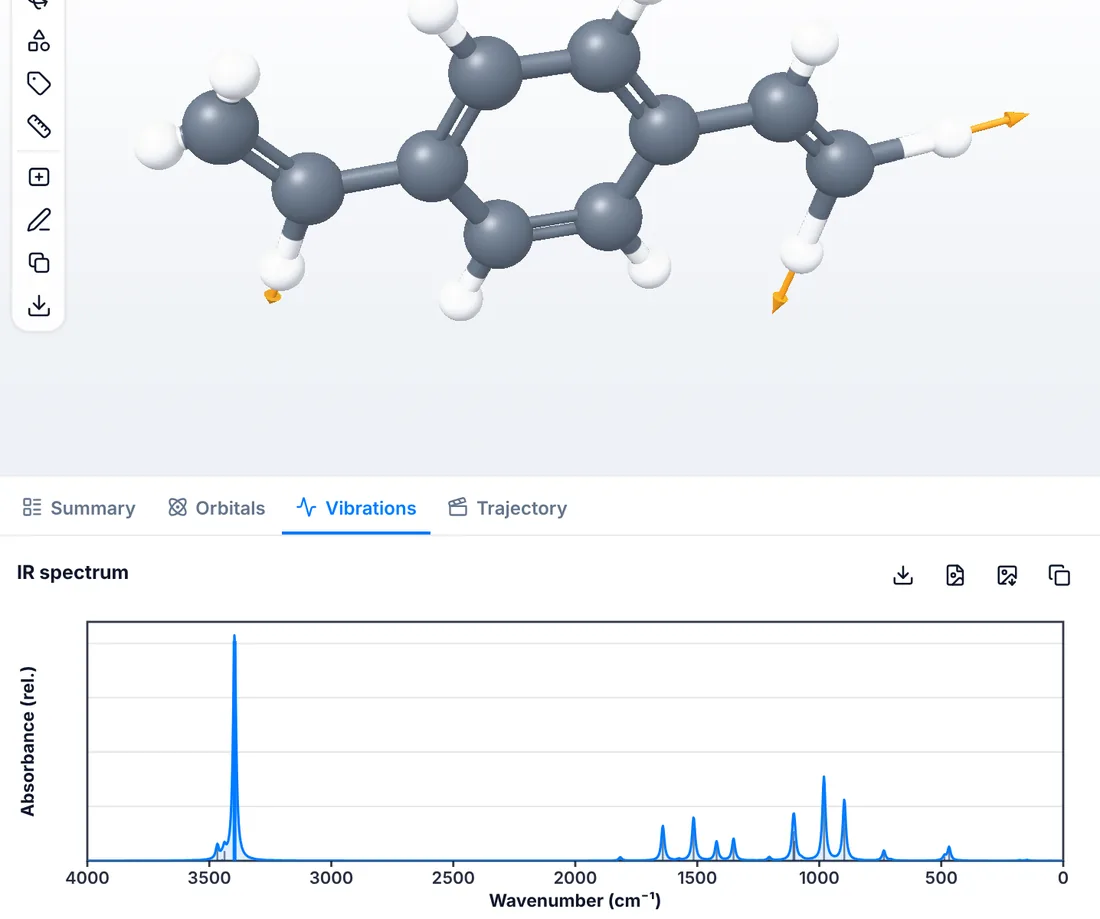
New plugin: Computational Chemistry, plus copy spectra into slides

Open Gaussian, ORCA, GAMESS, xtb, Molden, cube and trajectory files in your browser. Spectra can now be copied straight into PowerPoint as transparent images, with bolder axes.

  • Install it from the + next to the 3D viewer tabs: Computational Chemistry adds a CompChem tab
  • Summary: termination status, energy, method, HOMO/LUMO gap, dipole, convergence plot and thermochemistry
  • Vibrations: IR and Raman spectra; click a peak to animate that normal mode in 3D
Read the full update →
IR spectrum of divinylbenzene with an animated C-H stretching mode shown by arrows in 3D

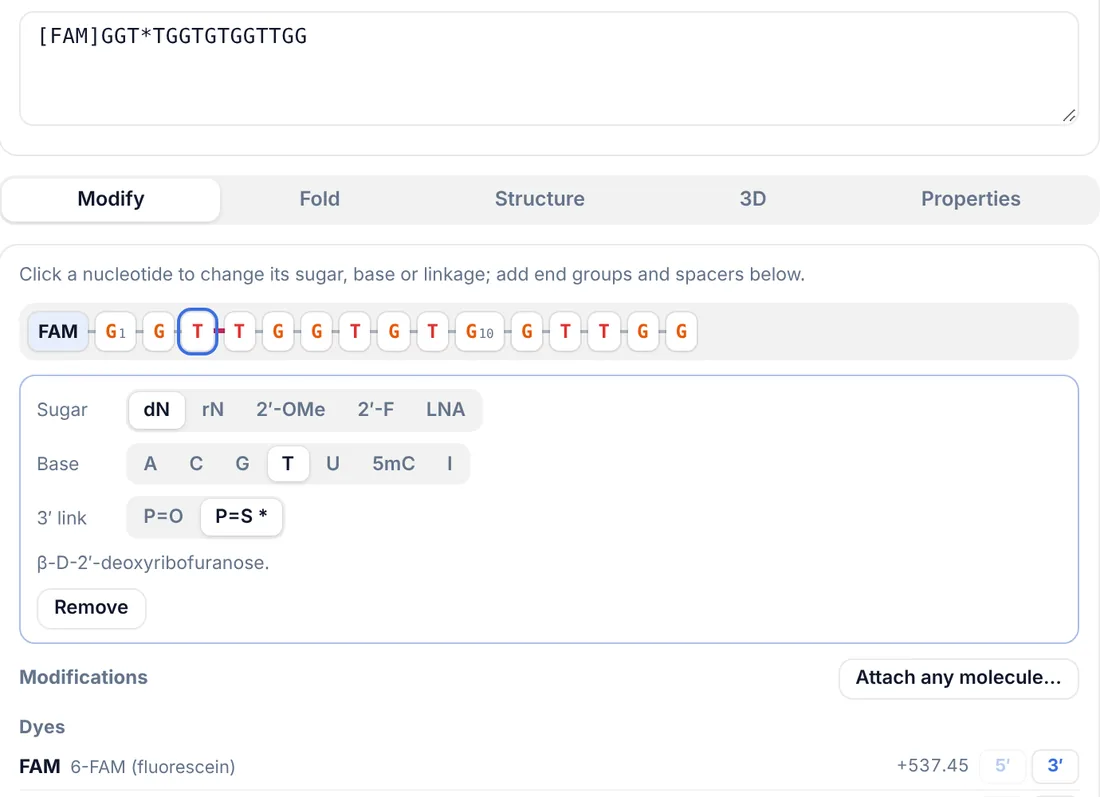
New plugin: Nucleic acid builder for DNA, RNA and aptamers

Type a DNA or RNA sequence, add dyes and modified nucleotides, fold it, draw the structure or a publication schematic, view a helix in 3D and read mass, Tm and ε260.

  • Install it from the + next to the 3D viewer tabs: Nucleic acid builder adds a DNA/RNA tab
  • Modify: FAM, TAMRA, Cy3, Cy5, pyrene, biotin, linkers and spacers at the 5′ or 3′ end; 2′-OMe, 2′-F, LNA, 5-methyl-C, inosine and phosphorothioates per nucleotide; IDT codes…
  • Fold: minimum free energy secondary structure (same results as RNAfold), editable dot-bracket and a fold diagram for the canvas
Read the full update →
Modify tab with [FAM]GGT*TGGTGTGGTTGG: a FAM chip, nucleotide 3 selected and its sugar, base and 3′ link options

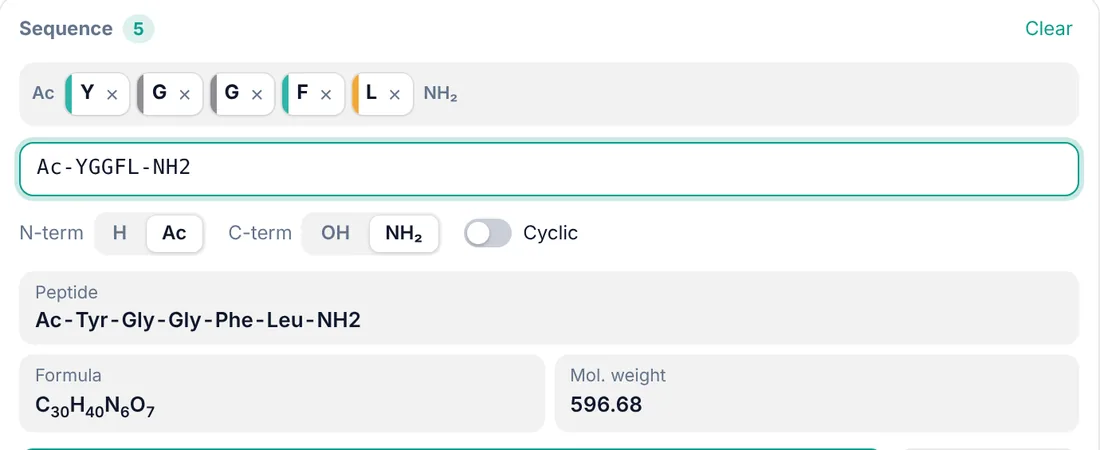
Peptide builder: step-by-step guide with screenshots

A new illustrated guide walks through the Peptide builder add-on, from installing it to inserting a cyclic peptide with D-amino acids.

  • Install it from the + next to the 3D viewer tabs: Peptide builder adds a Peptide tab
  • Type Ac-YGGFL-NH2 and the chips, termini, name, formula and molecular weight fill in by themselves
  • Insert on canvas draws every atom with a wedge or hashed bond at each stereocentre
Read the full update →
Peptide panel with Ac-YGGFL-NH2 typed in: chips Y G G F L between Ac and NH2, name Ac-Tyr-Gly-Gly-Phe-Leu-NH2, formula C30H40N6O7 and molecular weight 596.68

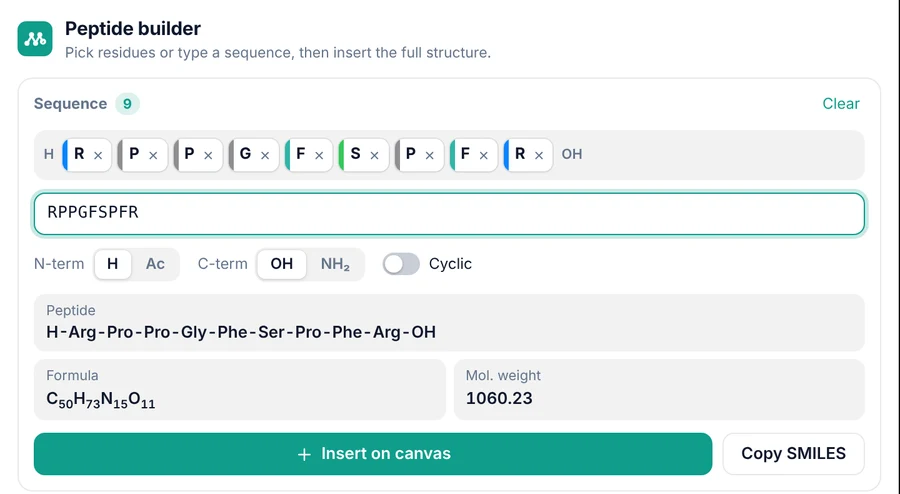
New plugin: Peptide builder

Build a peptide from amino-acid tiles or type its sequence, then drop the full-atom structure on the canvas with correct stereochemistry.

  • Install it from the + next to the Structure tab: Peptide builder adds a Peptide tab
  • 55 monomers: the 20 standard amino acids, their D-forms, N-methyl residues and favourites such as Aib, Abu, Nle, Orn, Sar, Hyp, Cha, Nal and Thi, each checked against reference…
  • Click tiles to build the chain, drag chips to reorder, or type GAVLK, Gly-Ala-Val, Ac-GAVK-NH2 or cyclo(RGDfV)
Read the full update →
Peptide builder panel with bradykinin RPPGFSPFR as sequence chips, N- and C-terminus options, formula C₅₀H₇₃N₁₅O₁₁, molecular weight 1060.23 and the Insert on canvas button

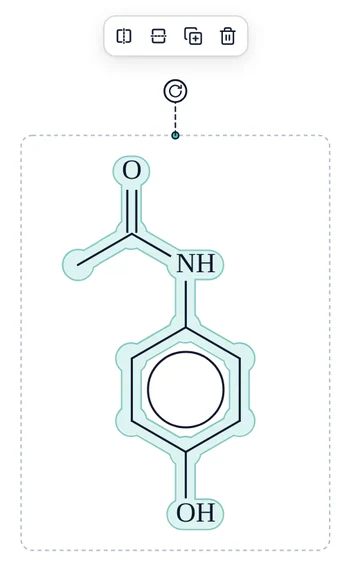
Clearer selection, 3D in your colours, smoother Community

Selected molecules get a soft band along each bond with a round node at every atom, and ring centres stay open, so you can see exactly what is selected

  • The selection box has rounded corners and a single clean rotate handle
  • Atoms and bonds you colour or highlight on the 2D canvas keep those colours in 3D (switch it off with "Use 2D drawing colours" in the 3D Display menu)
  • Community: each post shows the exact number of replies and who replied last; open the post to read the whole thread. Reply opens it with the reply box ready
Read the full update →
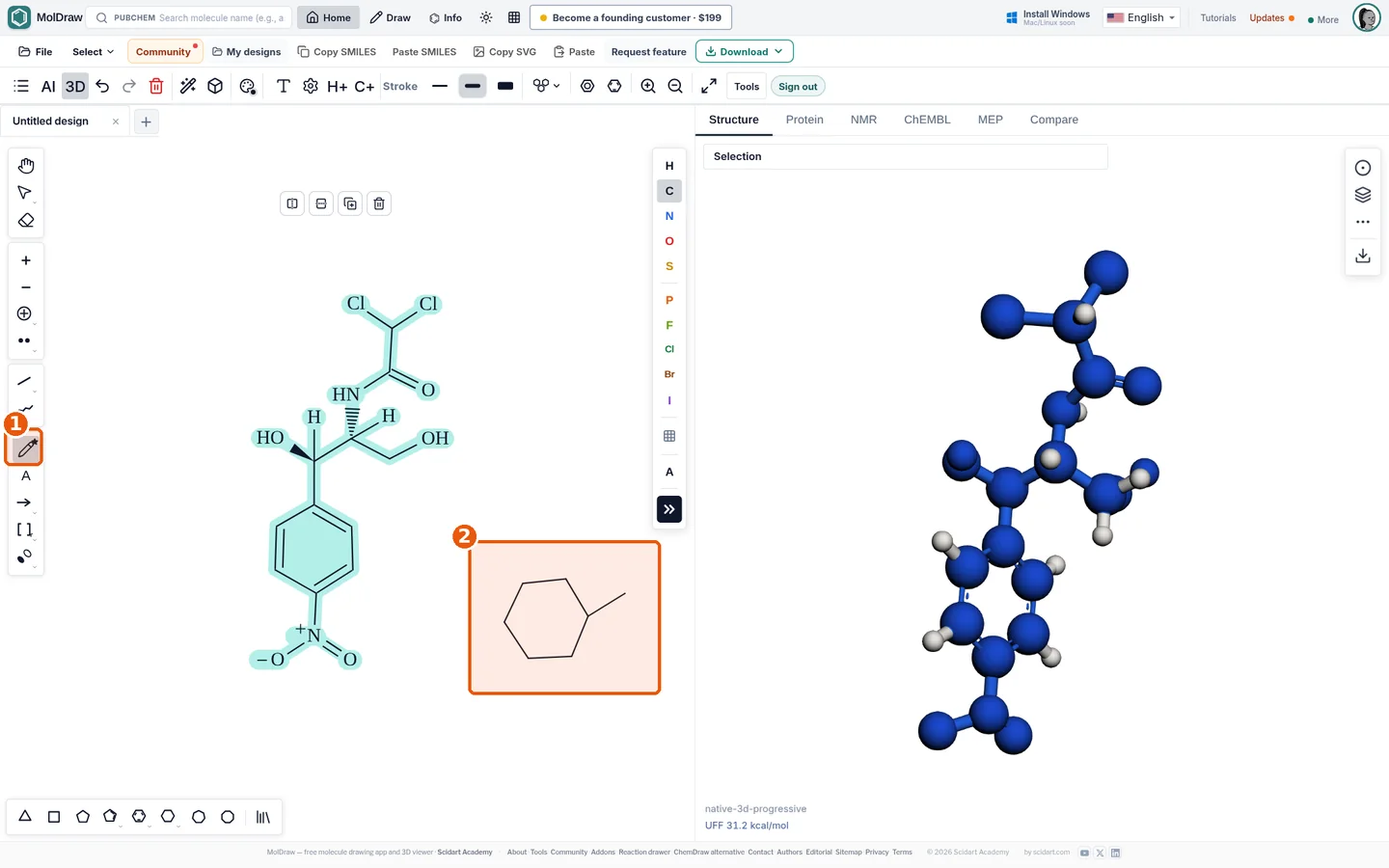
Paracetamol selected: a light teal band along each bond, a round node at each atom, an open benzene ring centre, rounded selection box and a circular rotate handle

Periodic table, element pages and a tidier toolbar

Every element in one click, printable tables for class, and toolbar menus that group what belongs together.

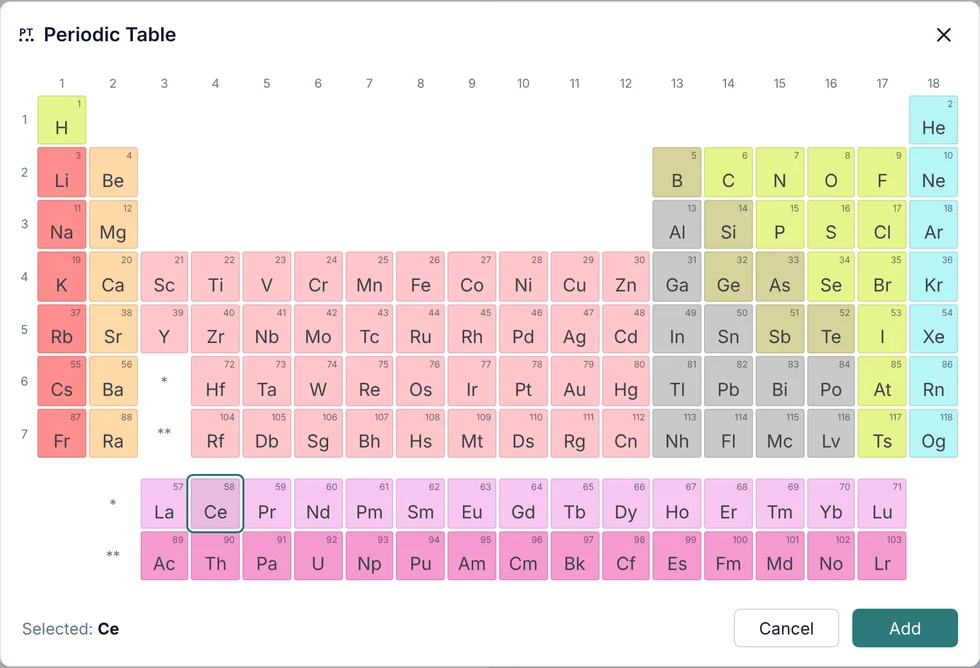
  • The periodic table picker now has all 118 elements in the classic layout: group and period numbers, La–Lu and Ac–Lr in their own rows, family colours. Click an element, then Add…
  • 118 element pages with properties, plus printable periodic tables (coloured and blank) as PDF
  • The eye button next to Settings is the new View menu: toolbar, teaching and display options in one place
Read the full update →
The periodic table picker with all 118 elements, group and period numbers, the lanthanide and actinide rows, cerium selected and an Add button

Cleaner labels, MOF and COF crystals, easier NMR

Fixes from your support chats and feature requests.

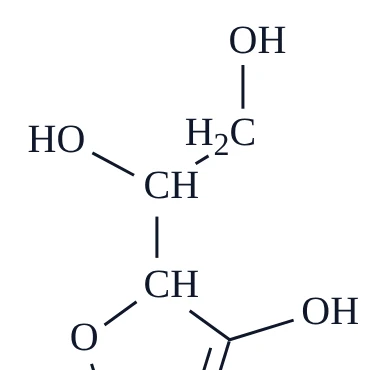
  • Typed labels stay as you type them: H₂C stays H₂C and CH stays CH, and bonds now stop before the label, so no line runs through the H₂
  • Right-click an atom label → Hydrogens on the left / right to flip HC ↔ CH or CH₂ ↔ H₂C (the menu shows a preview)
  • Single bonds end square at a label, so line ends no longer look curved
Read the full update →
A sugar side chain with H₂C and CH labels; bonds stop before each label and none cross the subscript 2

October 2026

Crystals, live 3D optimisation and Pharma templates

Open crystal structures, watch molecules relax in 3D as you build, and start from ten new reference sheets for drug discovery.

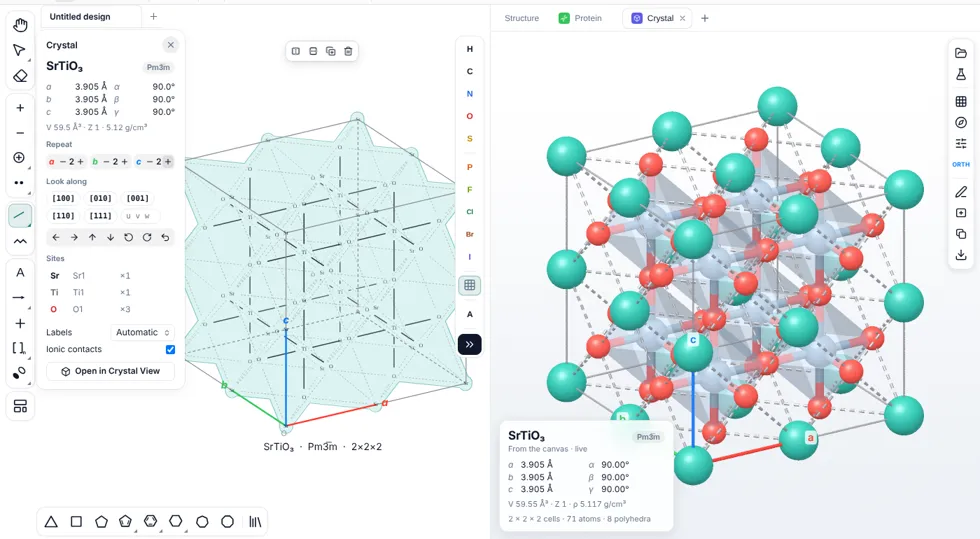
  • Open a CIF, POSCAR, PDB with a unit cell or extended XYZ file and it lands on the canvas as an editable unit-cell drawing
  • The Crystal panel repeats the cell, looks along any direction ([111] and friends) and swaps an element on every equivalent site while the cell stays put
  • New Crystal View plugin: a live 3D view with the unit cell, repeats, coordination polyhedra, a parallel or perspective camera and a cell card (a, b, c, angles, volume, density,…
Read the full update →
SrTiO₃ drawn as a 2 × 2 × 2 unit-cell drawing on the canvas with the Crystal panel, and the Crystal View plugin showing it in 3D with TiO₆ octahedra

Tables on the canvas, and cleaner Clean up

Put real tables on your drawing and move them to and from PowerPoint, Word and Excel. Community request.

  • Insert a table from the Table button next to Text (pick rows × columns), the right-click menu or the command palette
  • Double-click a cell to type; Tab moves to the next cell and adds a row at the end. Add or delete rows and columns, drag column borders, choose grid, publication rules or no…
  • Copy a table and paste it into PowerPoint, Word, Excel or Google Docs as a native table; paste a table from those apps into MolDraw and it stays a table, with subscripts and…
Read the full update →
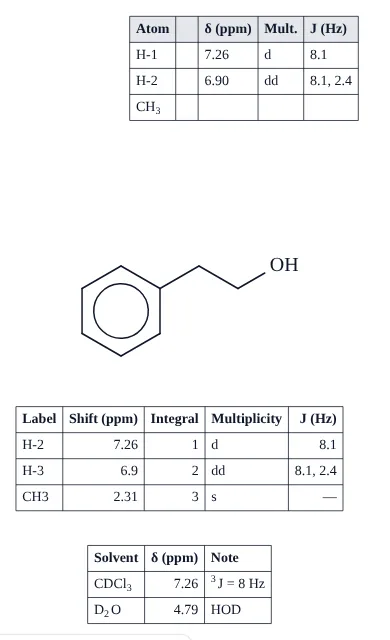
Pasted NMR tables on the canvas around phenylethanol, one with grid lines and one in publication style with CDCl₃ and ³J

Text box backgrounds and a tidier selection bar

Small improvements for everyday drawing.

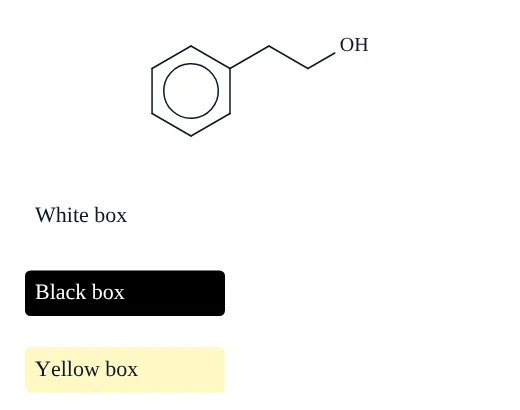
  • Text boxes can have a background colour: none, white, black, light yellow, light grey or any colour, with opacity. Text stays readable on dark fills, and it works in PNG, SVG and…
  • The actions for a selection now sit in one compact pill beside the structure, so they never cover what you are working on
  • Flattening a rotated 3D pose back to 2D now redraws the wedges and hashes so the stereochemistry still reads correctly
Read the full update →
Three text boxes under a structure with white, black and light yellow backgrounds

743 new structures in the Library, with sources

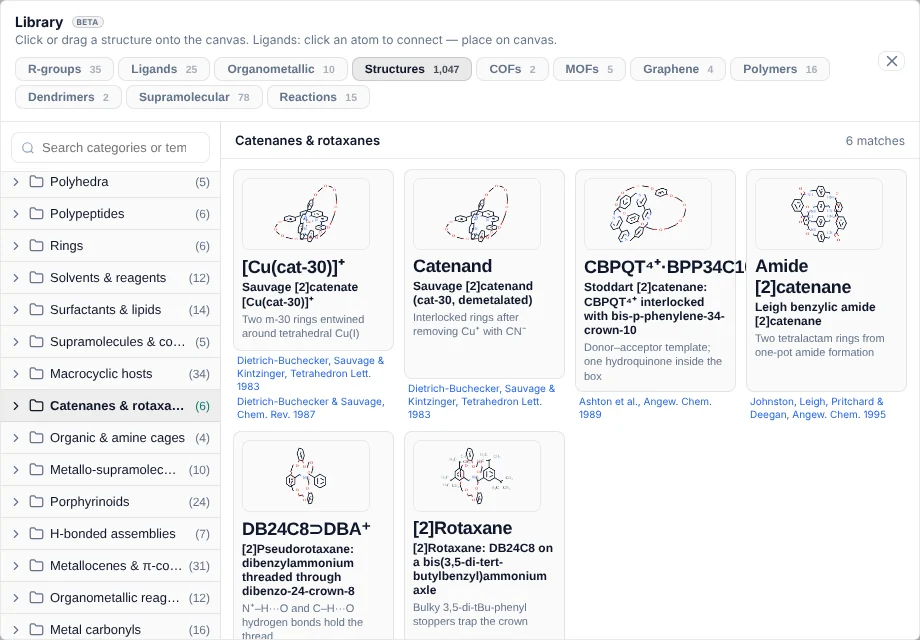
The structure Library has grown by 743 checked structures. Cards link to PubChem and, for landmark molecules, to the original paper. Search is faster, and every tab shows how many structures it holds.

  • Supramolecular: macrocyclic hosts, catenanes and rotaxanes, organic and metallo-supramolecular cages, porphyrinoids and hydrogen-bonded assemblies
  • Everyday chemistry: drugs, antibiotics, alkaloids, terpenes and steroids, nucleotides, cofactors and vitamins, neurotransmitters, flavours and fragrances, indicators and…
  • Materials and showpieces: dendrimers, fullerenes, graphene ribbons, nanotubes, nanohoops, molecular switches and motors, strained and famous molecules, polymer monomers
Read the full update →
Library Catenanes & rotaxanes category with Sauvage's catenate, Stoddart's catenane and a rotaxane, each with citation links

Coordination cages and layered ring fills

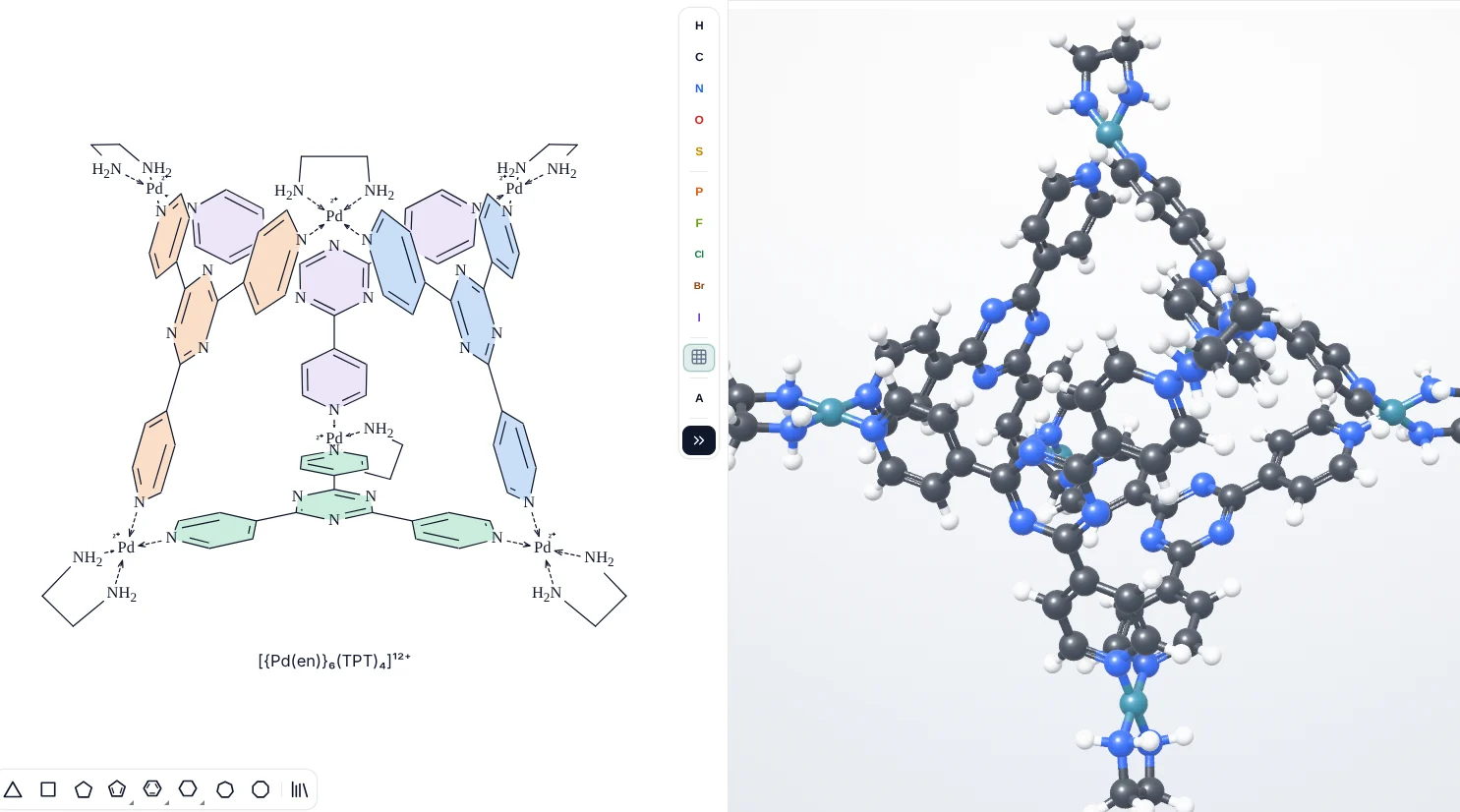
Library › Supramolecular › Coordination cages has five classic cages drawn in perspective with coloured ligand panels: Fujita's Pd₆(TPT)₄ cage and Pd₄ square, a Pd₂L₄ lantern, an Fe₄L₆ tetrahedron and the CC3 organic cage. Each one opens as a proper 3D model too.

  • Ring fills can be opaque front faces that hide the bonds behind them; Style › Ring fill › Bring to front or Send to back sets the stacking order
  • Style › Bond › Draw behind: a bond crossing behind another gets a small gap, as in ChemDraw
  • Draw cages by hand: a bond from pyridine N or a phosphine to a metal becomes a dative bond (hover a bond and press D to toggle)
Read the full update →
The Fujita Pd6(TPT)4 cage on the canvas with coloured opaque ligand panels and dative bonds, beside its 3D model

Mass spec plugin: exact mass, adducts and isotope patterns
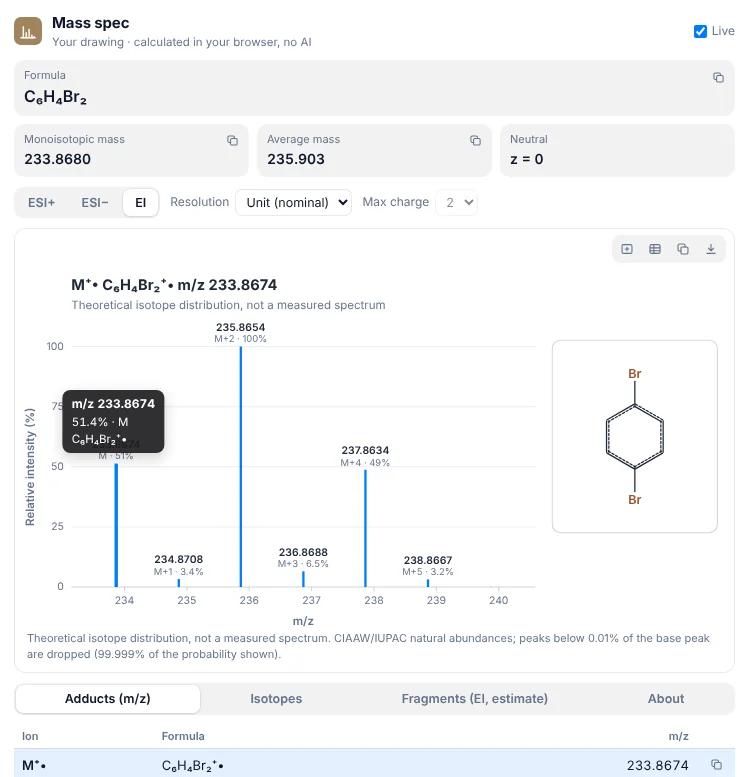
A new Mass spec plugin for the side panel. Click + next to the Structure tab and add Mass spec. It updates live as you draw, works offline and runs entirely in your browser.

  • Formula, monoisotopic (exact) and average mass of the structure as drawn, including isotope labels, charges and counterions
  • Adduct m/z table for ESI+ ([M+H]⁺, [M+Na]⁺, [M+K]⁺, [M+NH₄]⁺, multiply charged), ESI− ([M−H]⁻, [M+Cl]⁻, [M+HCOO]⁻) and EI (M⁺•)
  • Theoretical isotope pattern at unit, 10,000 or 100,000 resolution or fine structure, with a hover readout on every peak
Read the full update →
Mass spec panel for 1,4-dibromobenzene in EI mode: formula, exact and average mass, and the 1:2:1 bromine isotope pattern

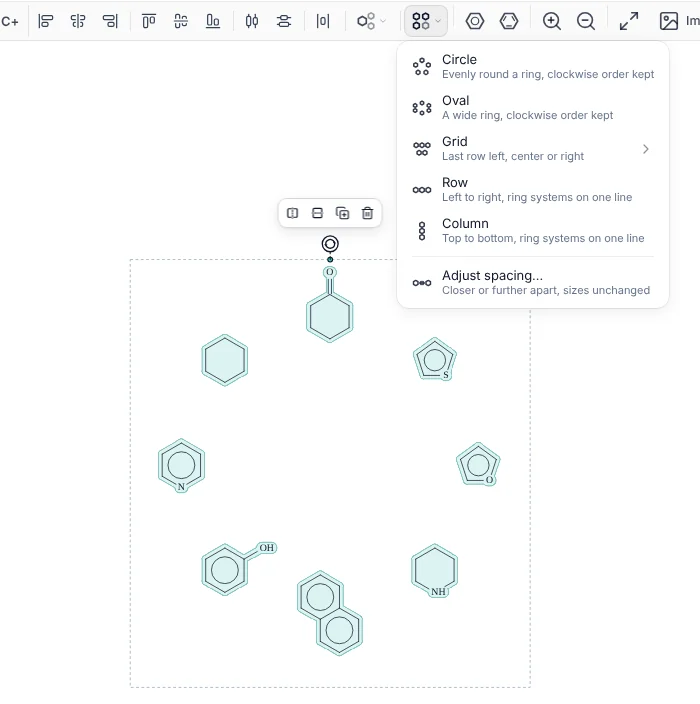
Arrange compounds in a circle, grid, row or column

Select two or more compounds and open the Generate menu in the selection toolbar: the Arrange compounds section lays them out (or right-click › Arrange). They move into place without being resized or rotated.

  • Circle and Oval keep your clockwise order; Grid lines up the last row left, centre or right; Row and Column put the ring systems on one line
  • Adjust spacing: a slider moves compounds closer or further apart with a live preview; Escape puts them back
  • Captions and anything grouped with a compound move with it, and every layout is one undo step
Read the full update →
Eight ring compounds arranged evenly in a circle, with the Arrange compounds menu open showing Circle, Oval, Grid, Row, Column and Adjust spacing

Pages, rulers and print-ready export

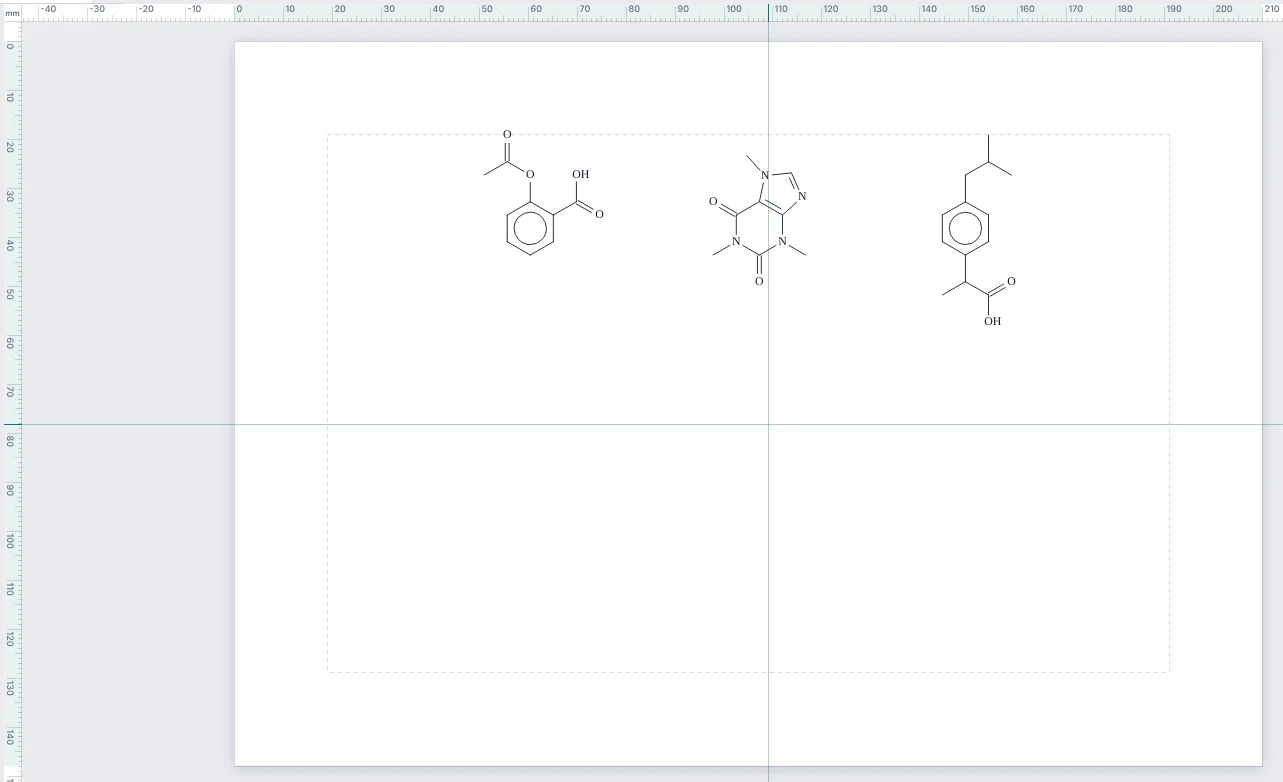
Lay out figures on real paper and export exactly what you see. File › Page setup adds pages to the canvas, and every export now shows a live preview first.

  • File › Page setup: A3, A4, A5, Letter, Legal, Tabloid, slide or custom sizes, portrait or landscape, margins and several pages across and down. Drawings sit at print size, so…
  • File › Rulers: top and left rulers in mm or inches (click the corner to switch) with crosshair guides that follow the pointer
  • New Export dialog with a live preview: export the drawing cropped to its content or a whole page, as PNG, JPEG or SVG
Read the full update →
An A5 landscape page on the canvas with three structures, millimetre rulers on the top and left and crosshair guides

MolDraw Sheets for drug design and computational chemistry

Sheets now runs RDKit in your browser, next to openchemlib, and adds more than 40 column types for medicinal and computational chemists. Nothing is sent to a server: properties, 3D conformers, similarity and clustering are computed on your computer. Every value was checked against Python RDKit (and cclib for quantum-chemistry outputs).

  • Clean column picker: search (QED, XYZ, PAINS…), one-click packs (Drug-likeness, Lead & fragment, Safety flags, QM prep, Identity) and a short explanation of each column
  • Drug-likeness: QED, Lipinski, Veber, Ghose, Egan, Rule of 3, lead-like, GSK 4/400 and Pfizer 3/75, shown as Pass / Fail with the reasons on hover
  • Safety flags: PAINS and Brenk alerts by name, and OSIRIS mutagenic, tumorigenic, irritant and reproductive risks
Read the full update →

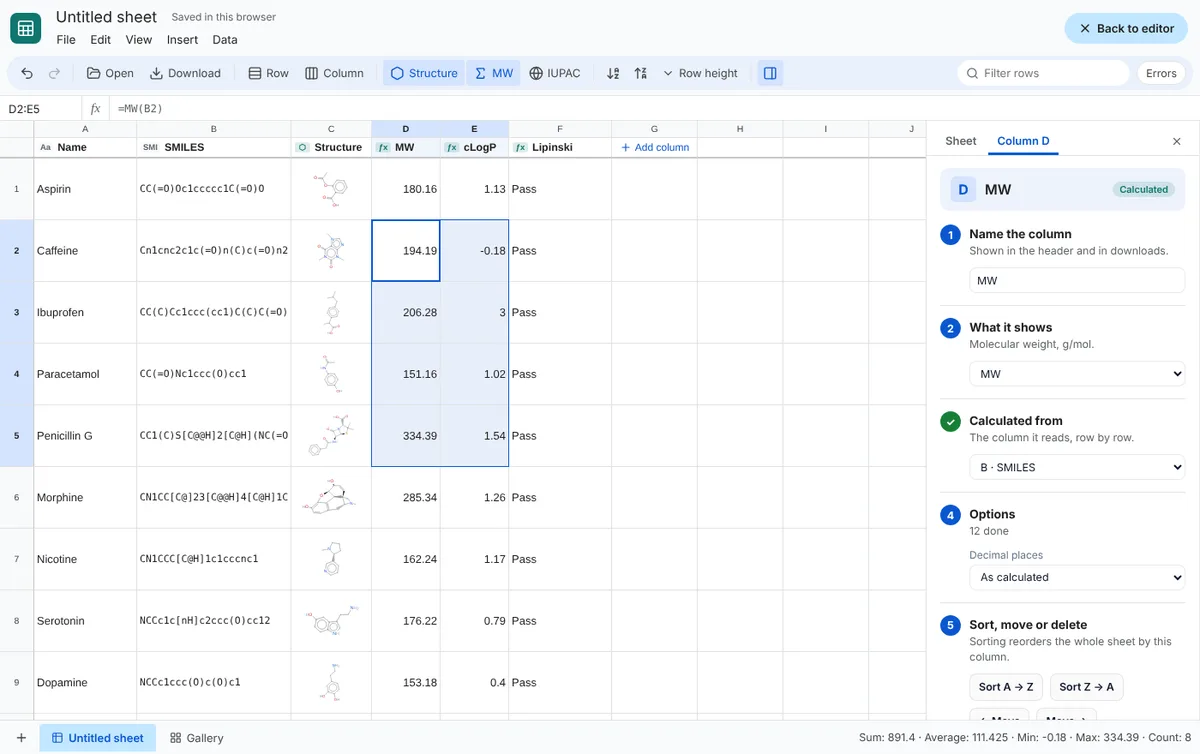
MolDraw Sheets: a spreadsheet for molecules

More › MolDraw Sheets (it replaces Bulk actions and keeps everything it did) is a spreadsheet where every row is a compound. Add rows by pasting SMILES, names, CAS numbers or PubChem CIDs, opening a CSV, Excel, SDF or SMILES file, sending the canvas, or picking hits in PubChem search. Then add the columns you need; click a column header to adjust it in the left panel.

  • Structure column: every row drawn and cleaned up like the editor; click a picture to open it on the canvas
  • Properties computed in your browser: formula, MW, exact mass, cLogP, HBD, HBA, TPSA, rotatable bonds, rings, stereocentres, Lipinski, canonical SMILES
  • PubChem columns: SMILES, name, IUPAC name, CID, CAS number, InChI, InChIKey, XLogP3 and a link, looked up from any identifier column (CIDs in batches of 100)
Read the full update →
MolDraw Sheets in a Google Sheets-style layout: menus, toolbar, formula bar, 12 drugs with structure, MW, cLogP and Lipinski columns and a selected range

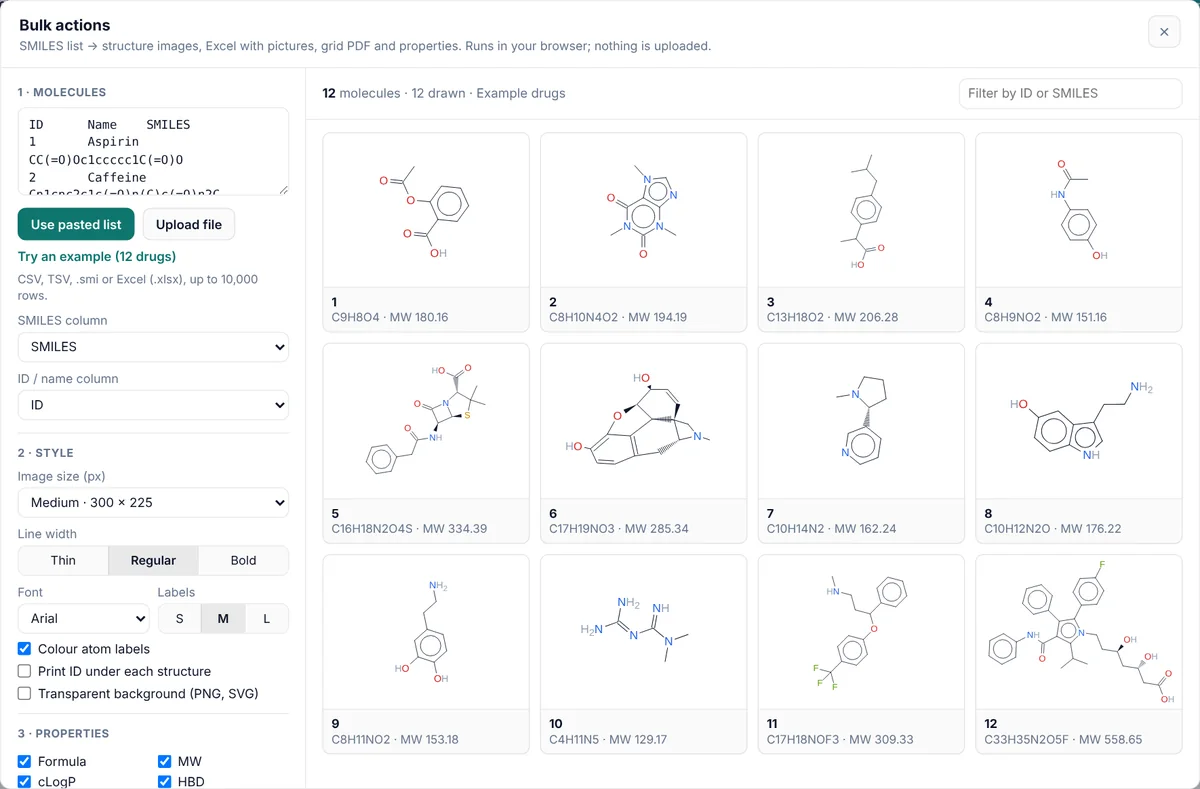
Bulk actions: thousands of SMILES to images, Excel and PDF

More › Bulk actions turns a list of SMILES into structure images in one go. Paste a list or drop a CSV or Excel file; every structure gets MolDraw's 2D Clean Up and is drawn exactly like the editor. Everything runs in your browser.

  • Excel (.xlsx) with a structure picture next to every row, your original columns kept
  • ZIP of PNG or SVG images (one per molecule, named by ID) and an A4 grid PDF
  • Style for the whole batch: image size, line width, font, label size, atom colours, transparent background
Read the full update →
Bulk actions dialog: 12 example drugs drawn with formula and MW, style and property options on the left

Supramolecular tab in the Library

A new Supramolecular tab in the structure Library with 59 hosts, guests and building blocks, ready to click or drag onto the canvas.

  • Crown ethers, cryptands, cyclodextrins (α, β, γ with full stereochemistry), calixarenes, cucurbiturils and pillararenes
  • Cyclophanes and interlocking components (CBPQT⁴⁺, paraquat, TTF), porphyrins, ZnTPP and phthalocyanine
  • Hydrogen-bonding motifs (UPy, melamine, cyanuric acid), photoswitches and Feringa's molecular motor
Read the full update →
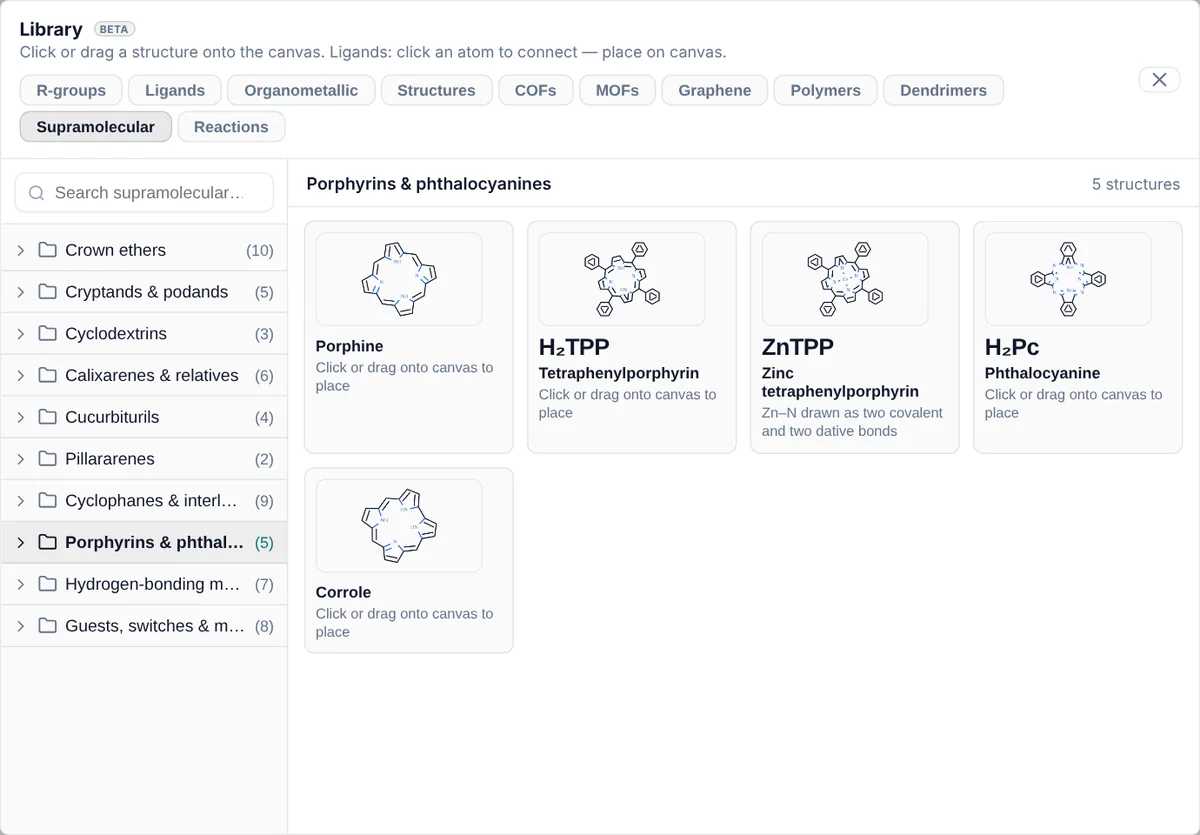
Library Supramolecular tab showing porphine, tetraphenylporphyrin, ZnTPP, phthalocyanine and corrole

Template pages and Educational materials on the website

Every template now has its own page on moldraw.com with a preview, the mechanism steps or key points, sources and an Edit in MolDraw button. Free templates download as SVG or PNG.

  • moldraw.com/templates: 370 templates in 29 categories, with search
  • Free templates (the first three in each category) download as SVG or high-resolution PNG
  • Educational materials: 15 free printable chemistry worksheets you can customise and save as PDF
Read the full update →
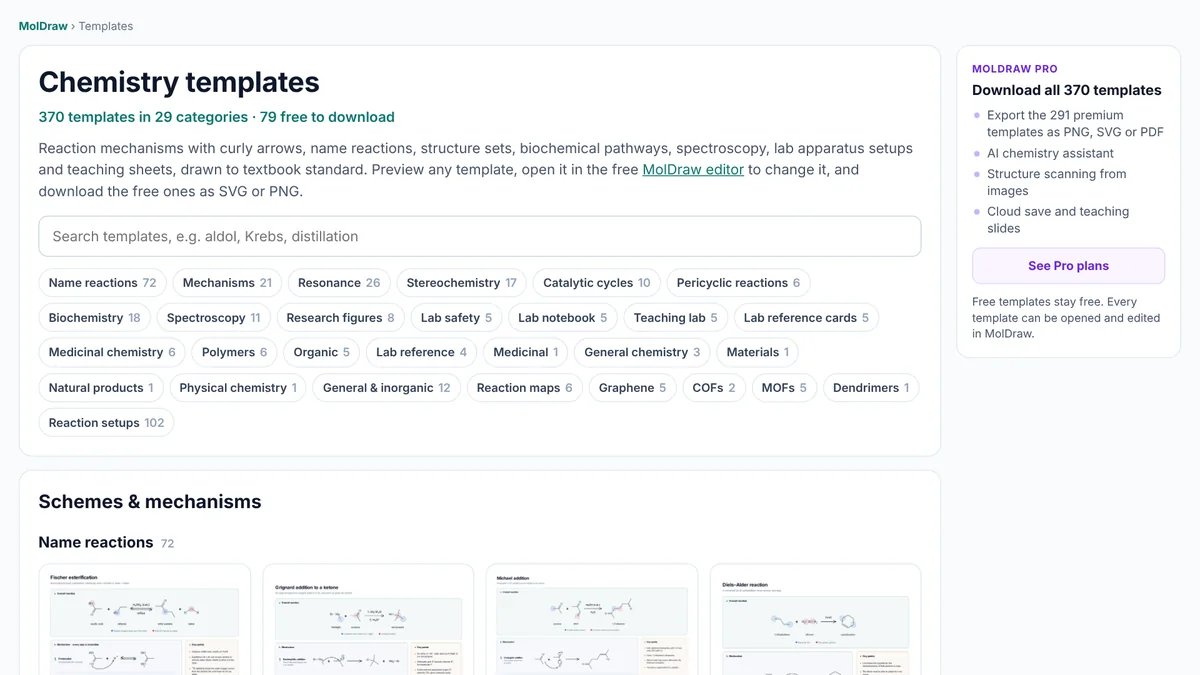
moldraw.com/templates: 370 chemistry templates in 29 categories with search and category chips

20 lab templates: notebook pages, safety documents, teaching lab sheets and reference cards

Four new template sets for working and teaching labs. Open Templates and pick a category; the first three in each are free.

  • Lab notebook (5): experiment page, column chromatography record, characterisation sheet, supporting-information entry and vial labels
  • Lab safety (5): risk assessment, GHS pictograms, an SOP for quenching LiAlH₄, waste labels and work-up flowcharts
  • Teaching lab (5): aspirin pre-lab, lab report, apparatus labelling, functional group tests and salt analysis
Read the full update →
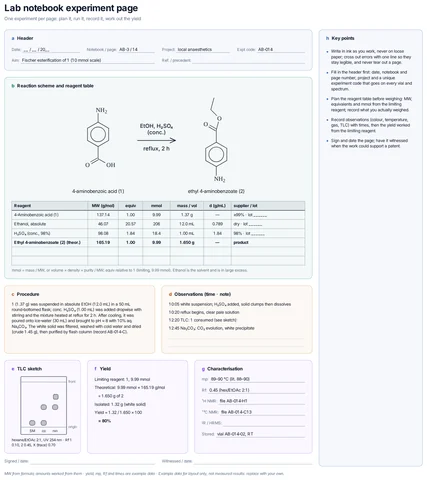
Lab notebook experiment page template with reaction scheme, reagent table and observations

24 more templates: pericyclic reactions, reaction maps, polymers and medicinal chemistry

Four new template sets. Open Templates and pick a category; the first three in each are free.

  • Pericyclic reactions (6): endo Diels–Alder, Diels–Alder regiochemistry, Cope and oxy-Cope, Claisen, electrocyclic ring closures (Woodward–Hoffmann) and 1,3-dipolar…
  • Reaction maps & reagents (6): alkene, alkyne, alcohol–carbonyl and aromatic reaction maps, plus oxidising and reducing agent guides with worked examples
  • Polymer chemistry (6): free-radical, cationic and living anionic polymerisation, nylon-6,6, PET and ring-opening polymerisation, with repeat units
Read the full update →
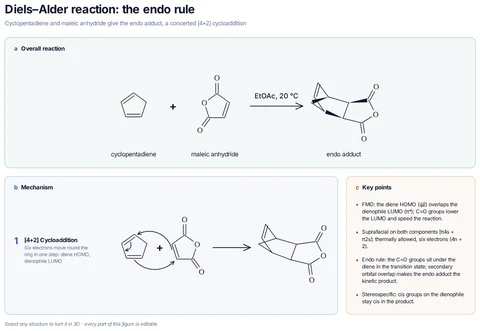
Endo Diels–Alder template: cyclopentadiene and maleic anhydride with curly arrows

66 new templates: catalytic cycles, stereochemistry, spectroscopy and more

Six new template sets for students, teachers and researchers. Open Templates and pick a category; the first three in each are free. A new Toolbar section in the Teaching menu (graduation cap) also switches the toolbar between one and two columns and sets the icon size in one click.

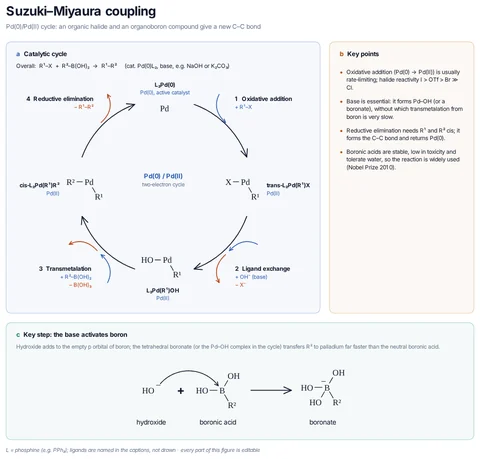
  • Catalytic cycles (10): Suzuki, Heck, Buchwald–Hartwig, Sonogashira, Negishi, Stille, olefin metathesis, Wilkinson hydrogenation, Wacker oxidation and the serine protease cycle
  • Stereochemistry (17): R/S and CIP rules, E/Z, Newman projections and energy curves, chair ring flips, Fischer projections, meso and tartaric acid, axial chirality and optical…
  • Spectroscopy (11): ¹H and ¹³C NMR worked examples, n + 1 splitting, IR absorptions, mass spectra with isotope patterns, and a step-by-step unknown
Read the full update →
The Suzuki–Miyaura catalytic cycle template: oxidative addition, transmetalation and reductive elimination around Pd(0)

Resonance structures: 26 ready-made sets, and resonance in 3D

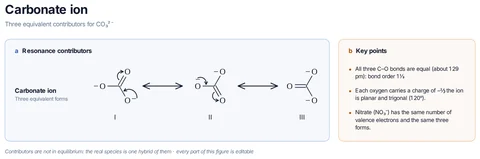
Templates → Schemes → Resonance now has the resonance structures students, teachers and researchers draw most, each with curved arrows, formal charges and key points. The 3D viewer can show a resonance scheme as the hybrid or as each contributor.

  • Acetate and carboxylates, carbonate, nitrate, nitrite, sulfate, phosphate, ozone and SO₂
  • Benzene, naphthalene, pyridine, pyrrole, phenoxide, aniline, nitrobenzene and the benzyl cation
  • Allyl cation, radical and anion, enolate, amide, guanidinium, acylium, nitro, azide, cyanate and thiocyanate
Read the full update →
The carbonate ion template: three resonance contributors with curved arrows and key points

Two-column toolbar, like a ChemDraw palette

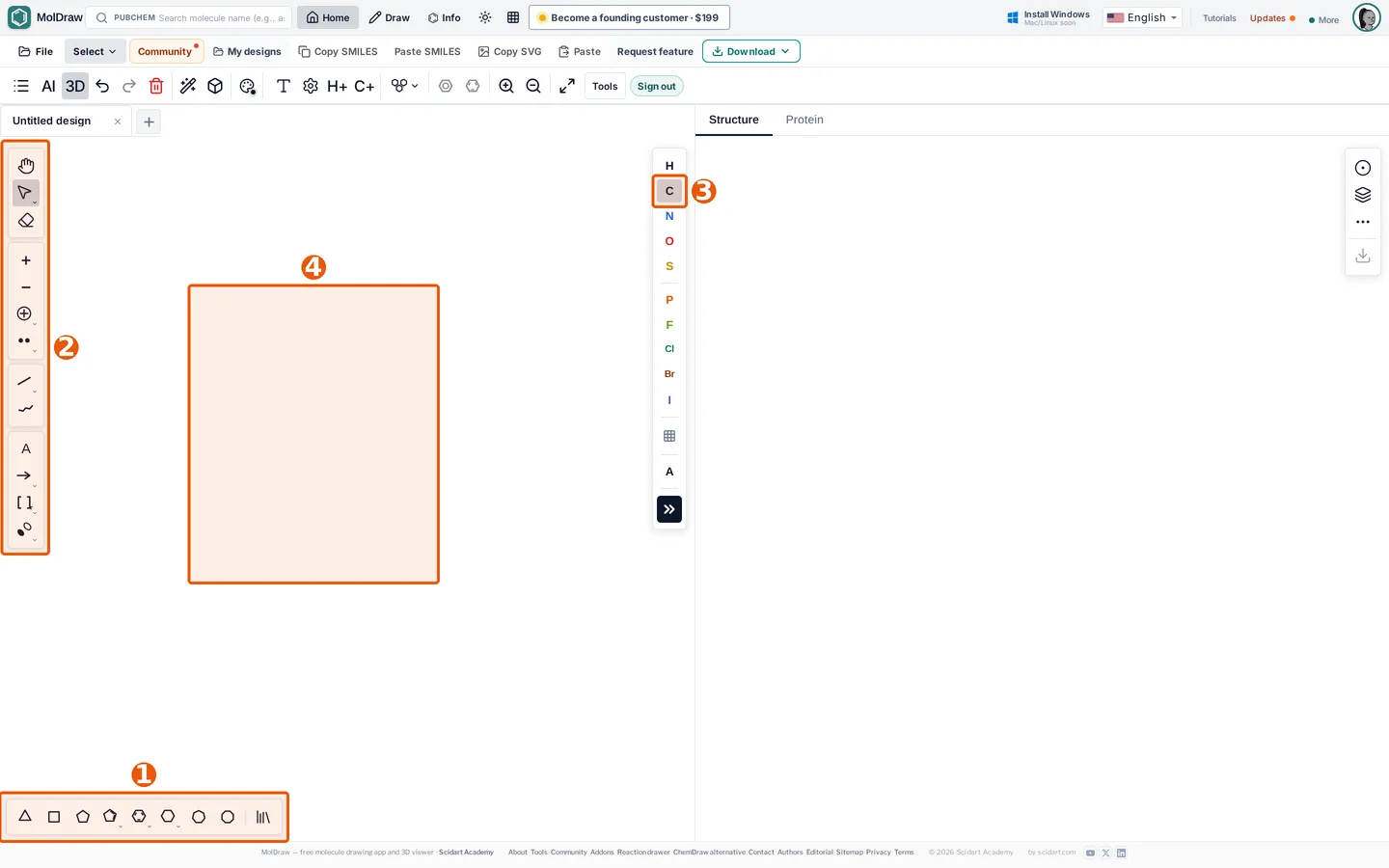
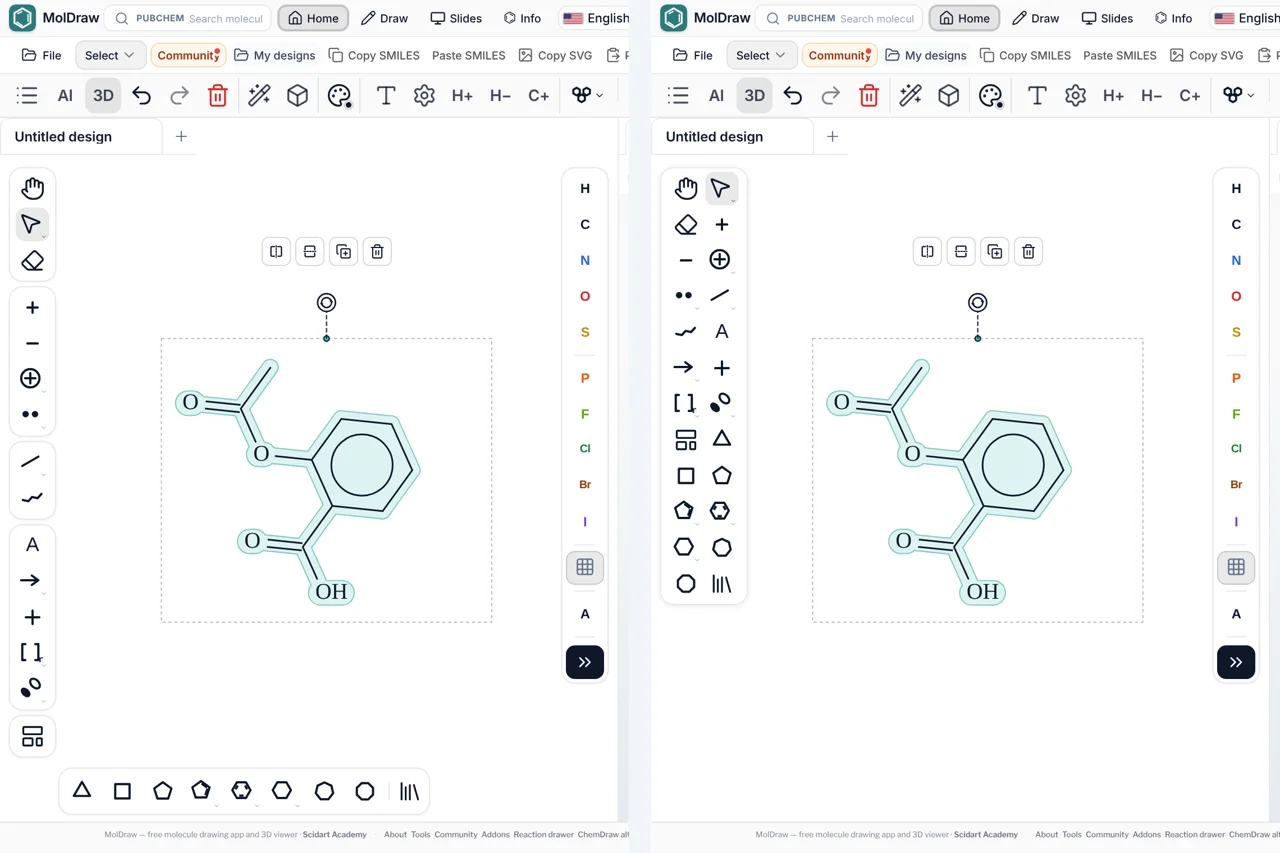
You can now pack every drawing tool into one compact two-column palette. The ring templates and the structure library move into it, so the bar at the bottom of the canvas goes away and you get more room to draw.

  • Turn it on in Settings → General → Toolbar columns → Two columns
  • All tools sit in one island with no gaps, and it ends after the last tool
  • Works in both the Scientific and Educational layouts
Read the full update →
The MolDraw editor with the usual one-column toolbar and bottom ring bar on the left, and the new two-column palette with rings included on the right

Open ChemDraw files as they were drawn

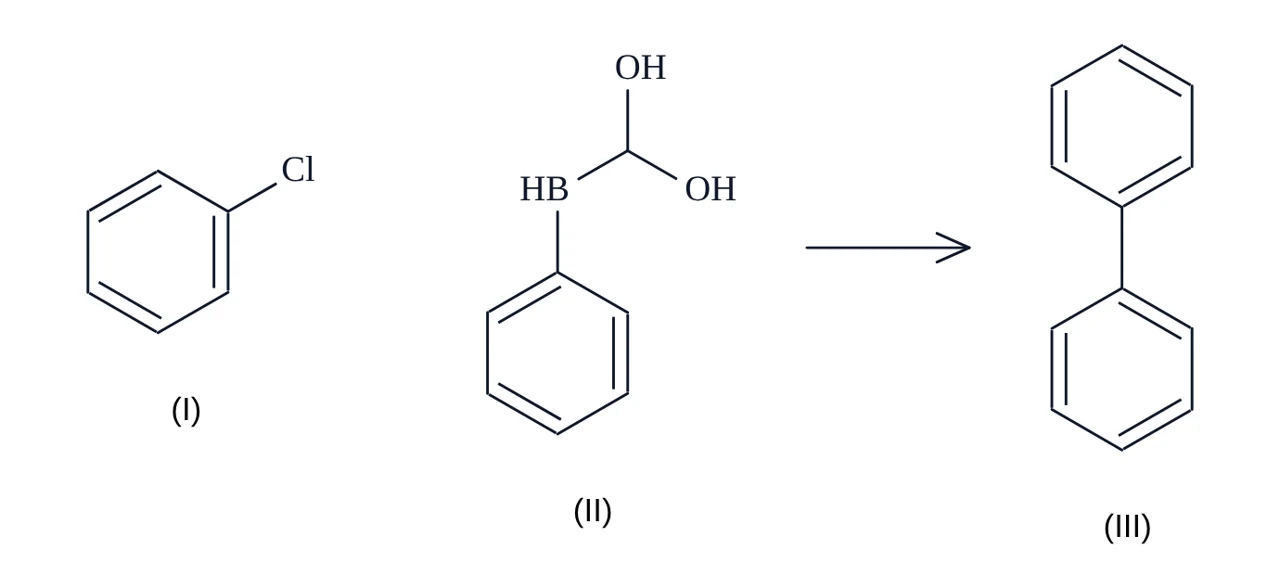
File → Open now reads ChemDraw .cdxml and binary .cdx files as a whole drawing, not just the molecules. Reaction schemes, mechanisms and posters open laid out the way they were in ChemDraw, ready to edit.

  • Reaction, equilibrium, retrosynthetic and resonance arrows, plus curved mechanism arrows and fish-hooks
  • Captions, reaction conditions and plus signs with their bold, italic, colours and subscripts
  • Abbreviations (OMe, Boc, Cys, R), every element, charges, isotopes, lone pairs and η⁵ metal bonds
Read the full update →
A Suzuki coupling opened from a ChemDraw .cdxml file: chlorobenzene, phenylboronic acid, the reaction arrow and biphenyl with their (I), (II), (III) labels

MolDraw Snip is on the Chrome Web Store

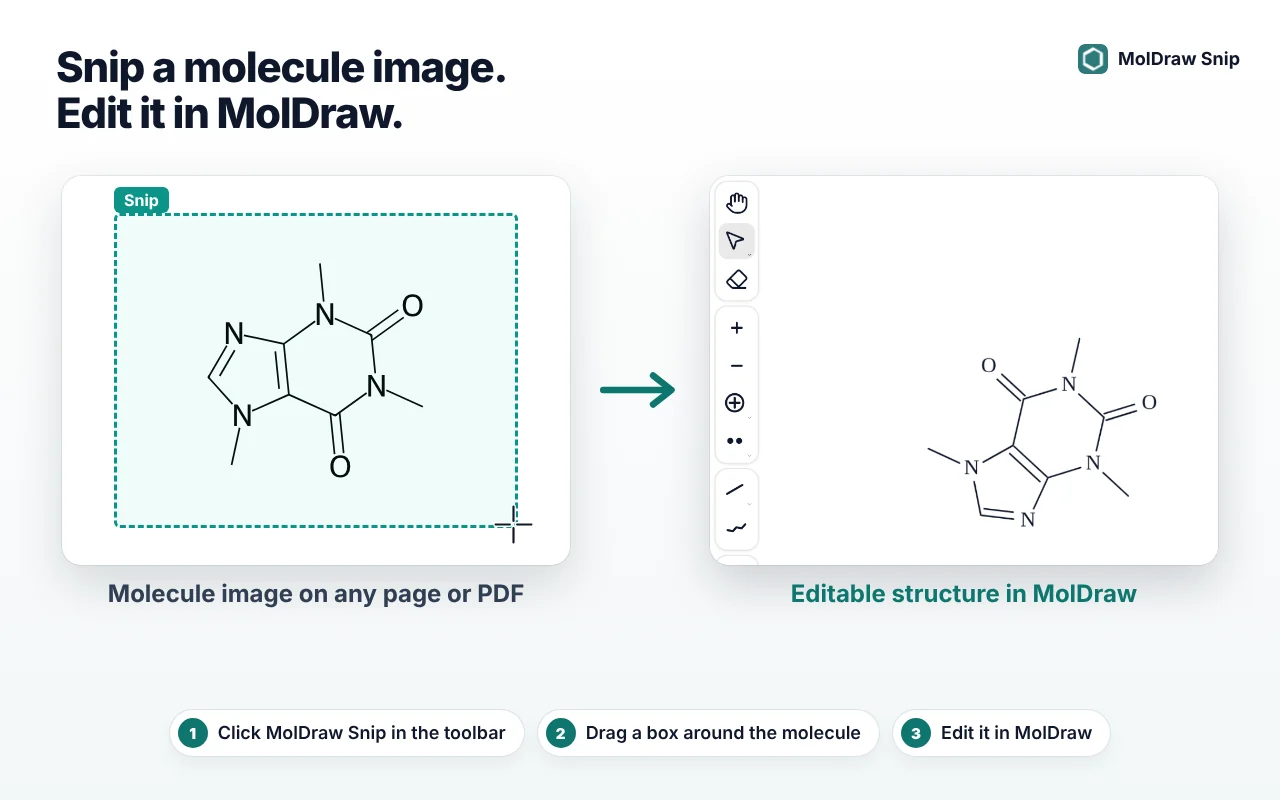
Turn any molecule image on a web page or PDF into an editable structure. Click the MolDraw Snip icon, drag a box around the structure, and open it in MolDraw.

  • Start a capture from the toolbar icon, with Alt+Shift+M, or by right-clicking the page
  • Reads single molecules, several structures and whole reactions
  • Copy SMILES or a molfile, or open it in MolDraw: it lands in your open tab without covering your drawing
Read the full update →
A caffeine image on a web page in a dashed selection box, and the same caffeine as an editable structure in MolDraw

Slides: make and present chemistry decks

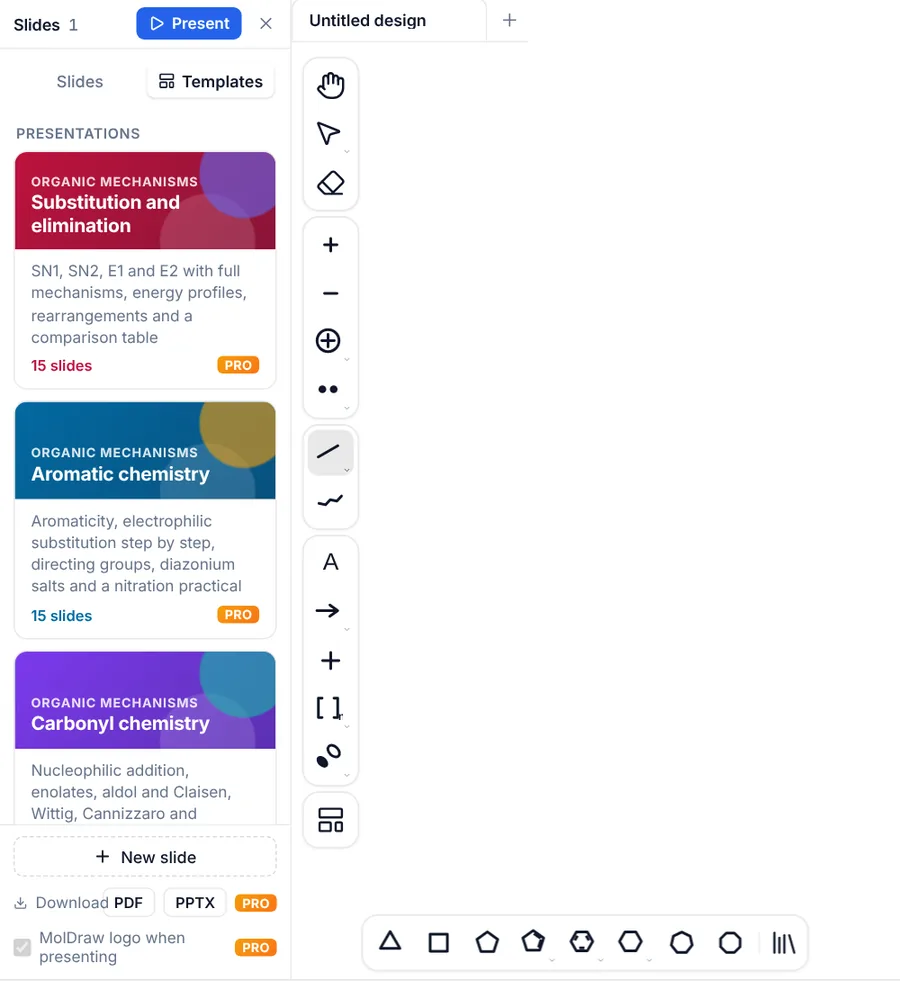
Click Slides in the top bar. Every slide is its own canvas, so you draw structures, mechanisms and apparatus right on it, then present full screen.

  • Templates tab at the top of the slide list: ready-made decks, slide layouts and the Templates and Apparatus libraries
  • Five new 15-slide teaching decks: Substitution and elimination, Aromatic chemistry, Carbonyl chemistry, Laboratory techniques and Biomolecules
  • Decks use real template mechanisms and apparatus, with notes, tables, worked examples and practice questions
Read the full update →
The Slides panel Templates tab with deck cards for Substitution and elimination, Aromatic chemistry and Carbonyl chemistry

Templates: 230+ ready-made figures, one click to the canvas

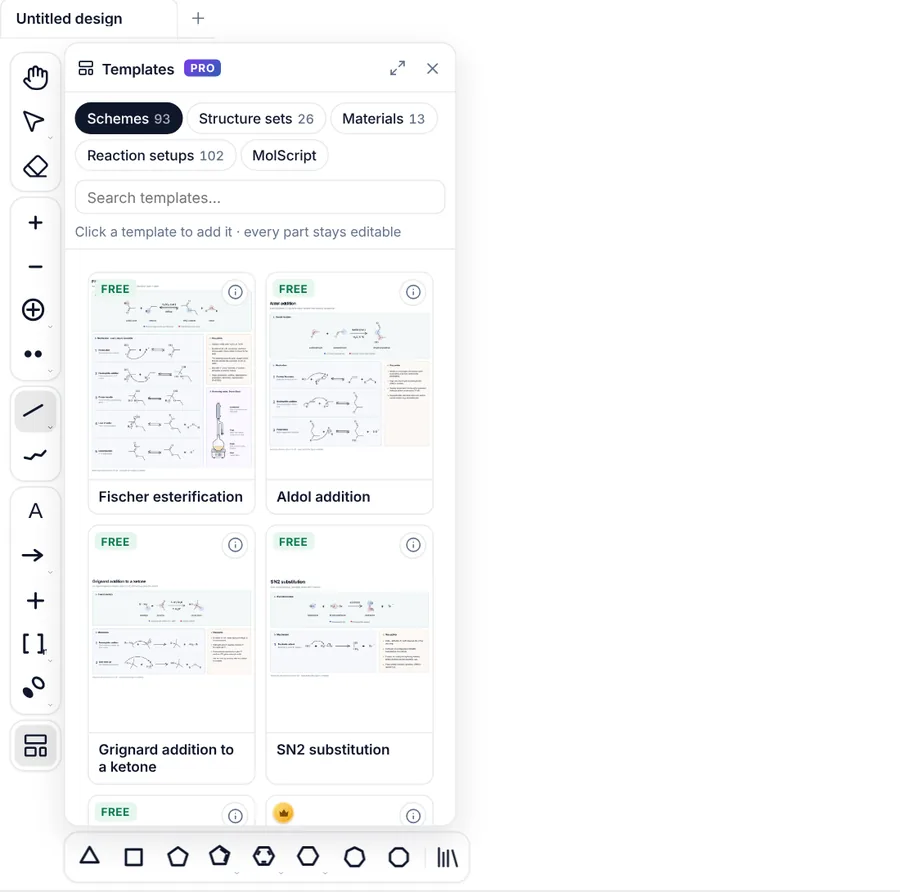
Open Templates from the left toolbar, pick a tab and click a card. The figure lands on the canvas fully editable: every atom, arrow, label and piece of glassware.

  • Schemes: 93 mechanisms and name reactions, each with the overall reaction, numbered steps and key points
  • Structure sets: amino acids, sugars, nucleic acids, drugs, Lewis structures, pKa ladder, energy diagrams and more
  • Reaction setups: 102 labelled apparatus set-ups, from reflux and distillation to titration and gel electrophoresis
Read the full update →
The Templates panel with Schemes, Structure sets, Materials, Reaction setups and MolScript tabs

Conformers ranked by energy, with a plot you can download

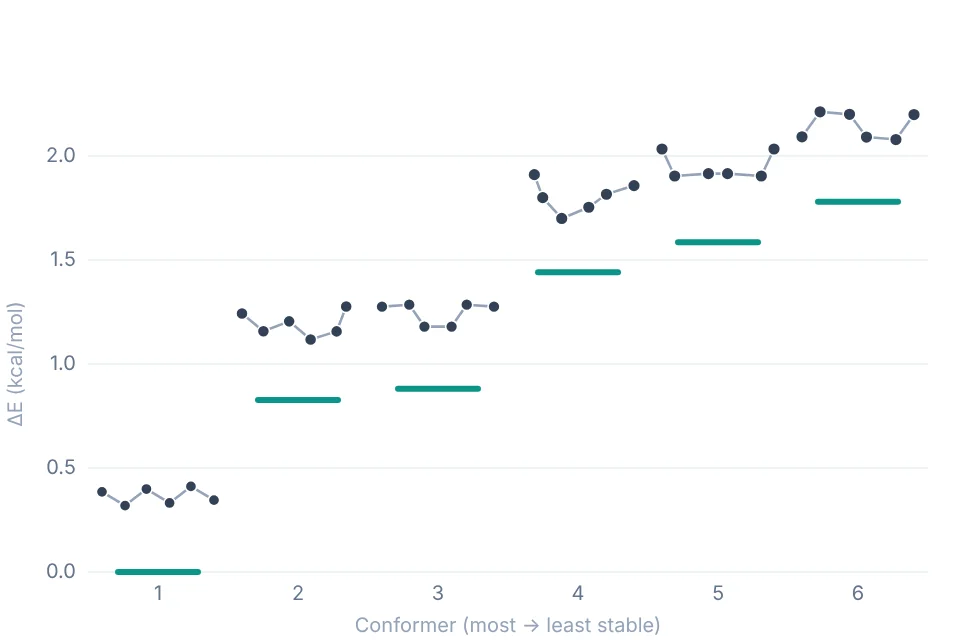
The Conformer gallery sorts conformers from most to least stable, with ΔE in kcal/mol and the share of each at room temperature

  • Plot tab: an energy-level diagram with a small picture of each conformer; click a level to pick it
  • Download PNG saves the plot for slides and reports
  • Fixed: with automatic hydrogens off, the 3D model now shows the hydrogens you drew
Read the full update →
Energy-level plot of six hexane conformers, from the all-anti form at 0 kcal/mol to 1.78 kcal/mol, each with a sketch of its shape

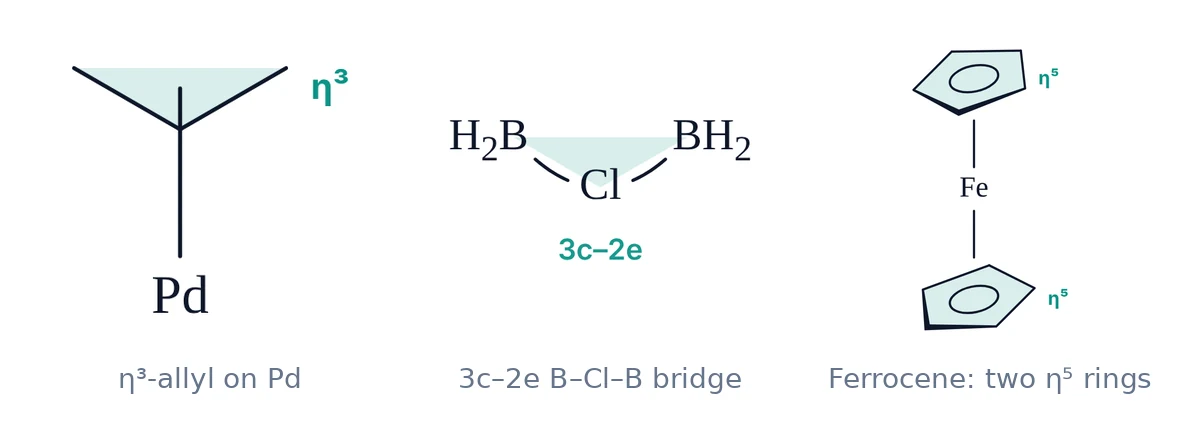
Hapto (ηⁿ) and 3-centre 2-electron bonds

Select a metal and the atoms it binds, right-click, and choose Hapto bond: η² alkenes, η³ allyls, η⁵ Cp and η⁶ arenes

  • The bonded atoms are shaded and labelled ηⁿ; hide the mark if you prefer a plain line
  • 3-centre 2-electron bonds for bridges such as B–H–B in diborane: right-click the three atoms, and the bridge is drawn as two curved bonds with a 3c–2e label
  • Valence and implicit hydrogens stay right, and molfiles keep hapto bonds (V3000 ENDPTS) for ChemDraw, RDKit and Marvin
Read the full update →
An η³-allyl on palladium, a B–Cl–B 3-centre 2-electron bridge and ferrocene with two η⁵ rings

60 name reactions, each with its sources

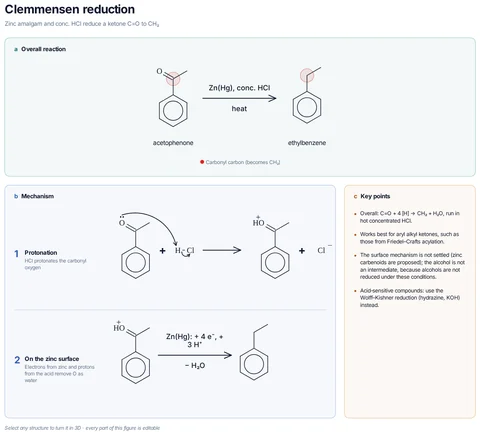
25 new name reactions with every curly-arrow step: Wurtz, Wurtz–Fittig, Fittig, Rosenmund, Stephen, Gattermann, Gattermann–Koch, Fries, Hunsdiecker, Swarts, Finkelstein, Kolbe electrolysis, carbylamine, Hinsberg, Lucas, Perkin, Clemmensen, Étard, Birch, Simmons–Smith, Reformatsky, Darzens, Vilsmeier–Haack, Henry and Cope elimination

  • Every template now lists its sources (textbooks, original papers, IUPAC and databases) as links on the card and in the browser
  • Optional: put the source line under an inserted template, so it goes with your figure (Settings → General)
  • Each tab in the Templates panel shows how many templates it holds
Read the full update →
Clemmensen reduction template: acetophenone to ethylbenzene with the protonation step and key points

Lab apparatus: 326 pieces and 102 practical setups

173 new pieces: organic glassware, instruments, gas handling, electrochemistry, physical chemistry, biology and safety

  • The Apparatus panel is wider, with categories down the left and a count on each one
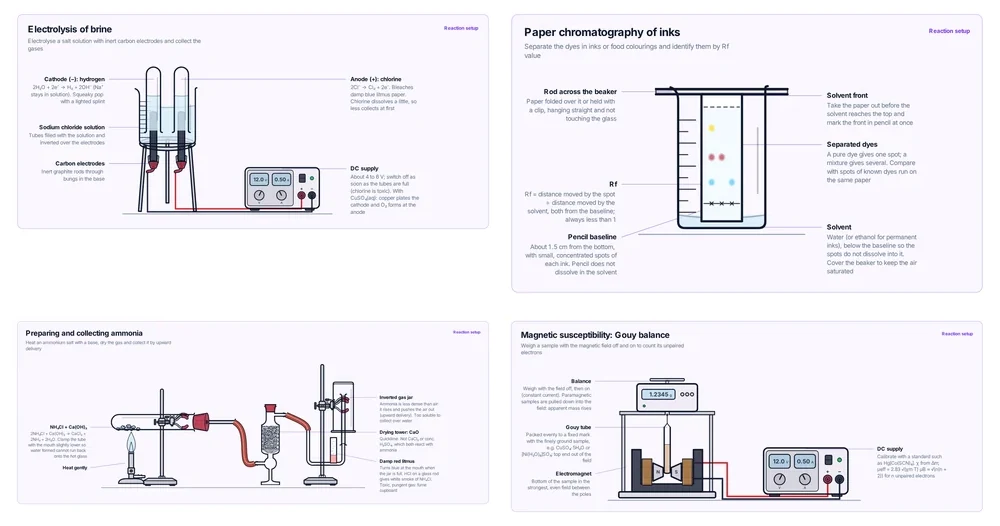
  • 102 ready-made setups in Templates → Setups: school and A-level/AP/IB/CBSE practicals and university organic, analytical and physical labs, each with its source
  • Beakers, flasks and tubes sit on tripods, gauze, racks and tiles; pieces show where they connect while you build
Read the full update →
Four of the new setups: electrolysis of brine, paper chromatography, preparing ammonia and a Gouy balance

Learn MolDraw inside the real editor

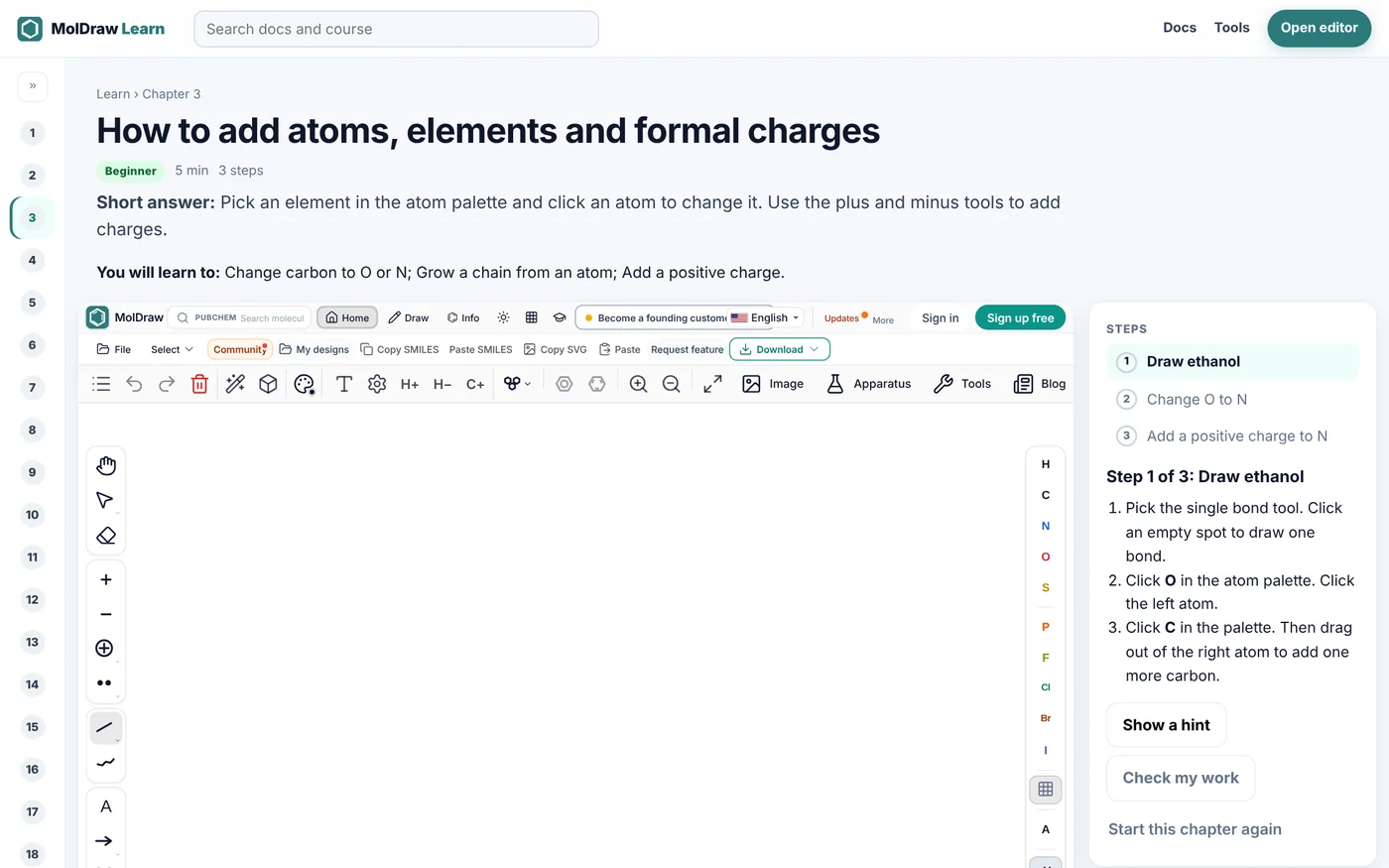
All 38 course chapters now run in the real editor, not in screenshots

  • Watch the demo: the pointer moves and clicks like a real hand, step by step
  • Try it yourself: do each step, then Check my work tells you what is right and what to fix
  • Show a hint when you are stuck, and start a chapter again at any time
Read the full update →
A course chapter: the real MolDraw editor on the left and the steps with Show a hint and Check my work on the right

New 3D: sharper molecules, seven looks and a measure tool

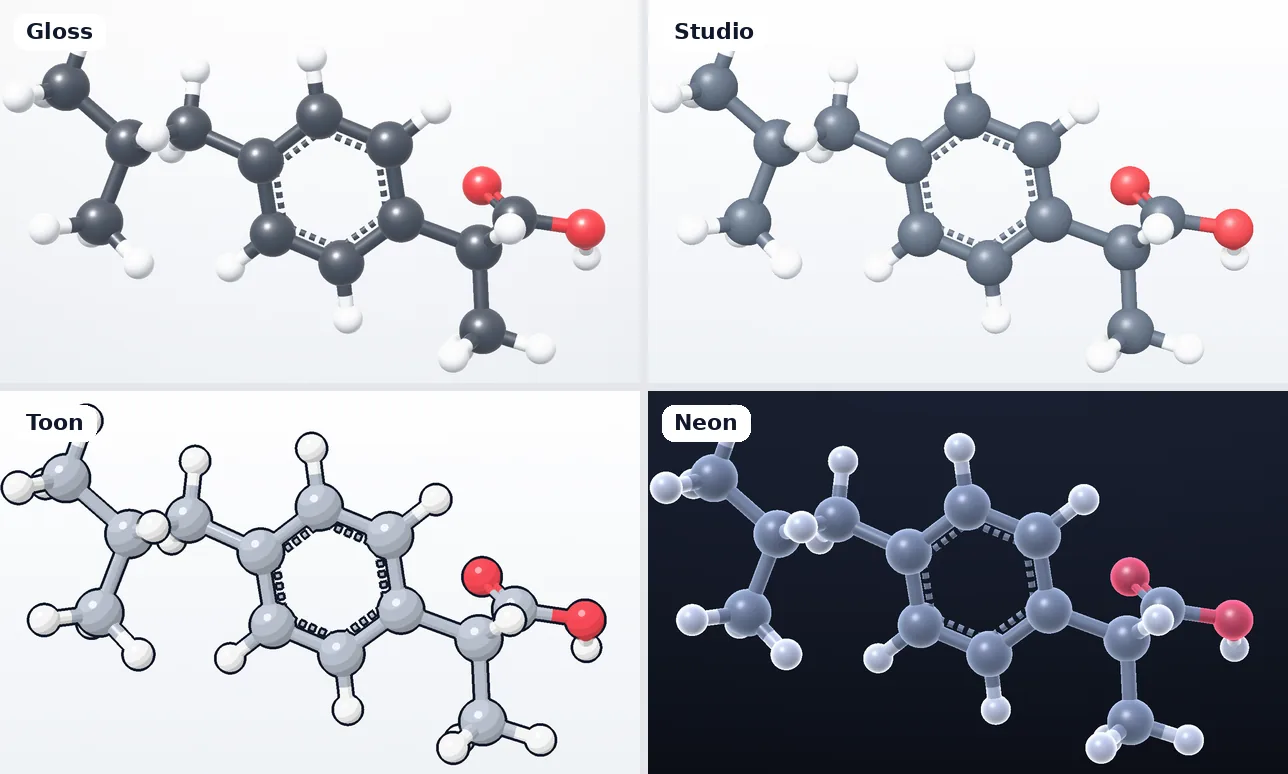
A new 3D engine built for molecules: crisp atoms and bonds at any zoom, soft shadows where atoms meet and clean outlines

  • Seven looks under Display: Gloss (the new default), Studio, Soft, Toon, Clay, Print and Neon
  • Measure tool on the 3D toolbar: bond lengths, bond angles and torsions, shown on the model
  • Molecular surfaces (van der Waals, solvent-accessible and solvent-excluded), coloured by charge to show electron-rich and electron-poor regions
Read the full update →
Ibuprofen in four 3D looks: Gloss, Studio, Toon and Neon

NMR preview, plugin menus and a Blog button

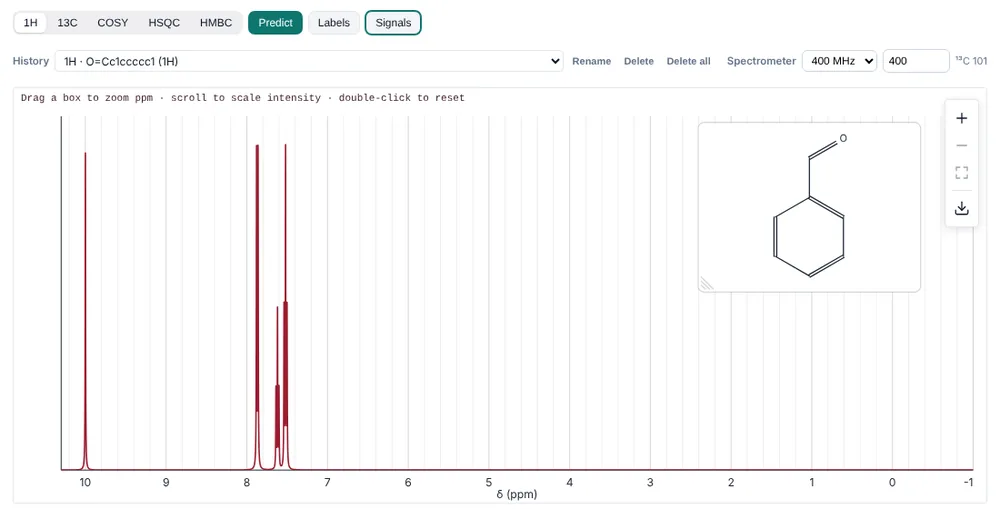
NMR analyser: a larger structure preview you can resize from its corner, placed in the corner with fewer peaks

  • Spectrometer frequency is shown only for ¹H, where it changes the multiplets
  • Plugin menus close when you click anywhere else
  • Installed plugins that need an account now say Sign in, and Open switches to their tab
Read the full update →
NMR analyser with a ¹H spectrum of benzaldehyde and a larger, resizable structure preview

AI chat draws templates, with more AI providers

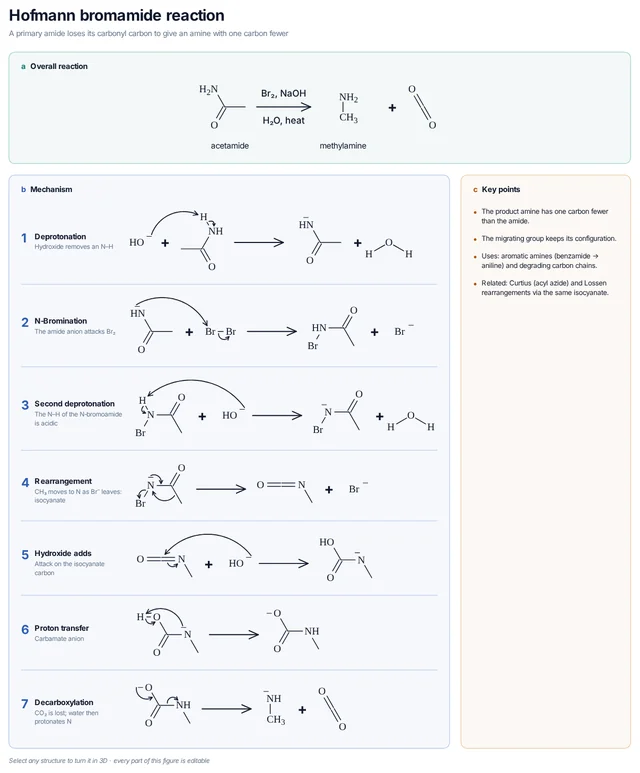
Ask for a mechanism, a name reaction, a lab setup or a structure set and the chat adds the matching Templates figure, checked electron by electron

  • Use Claude, OpenAI or DeepSeek as well as Gemini; only current models are listed
  • Better understanding of requests: mechanism questions, reaction schemes, clean-up and pasted chemfig code all go to the right tools
  • Faster replies, and the Gemini "invalid argument" error is fixed
Read the full update →
Hofmann bromamide mechanism template: every curly-arrow step from amide to amine

14 new free chemistry tools

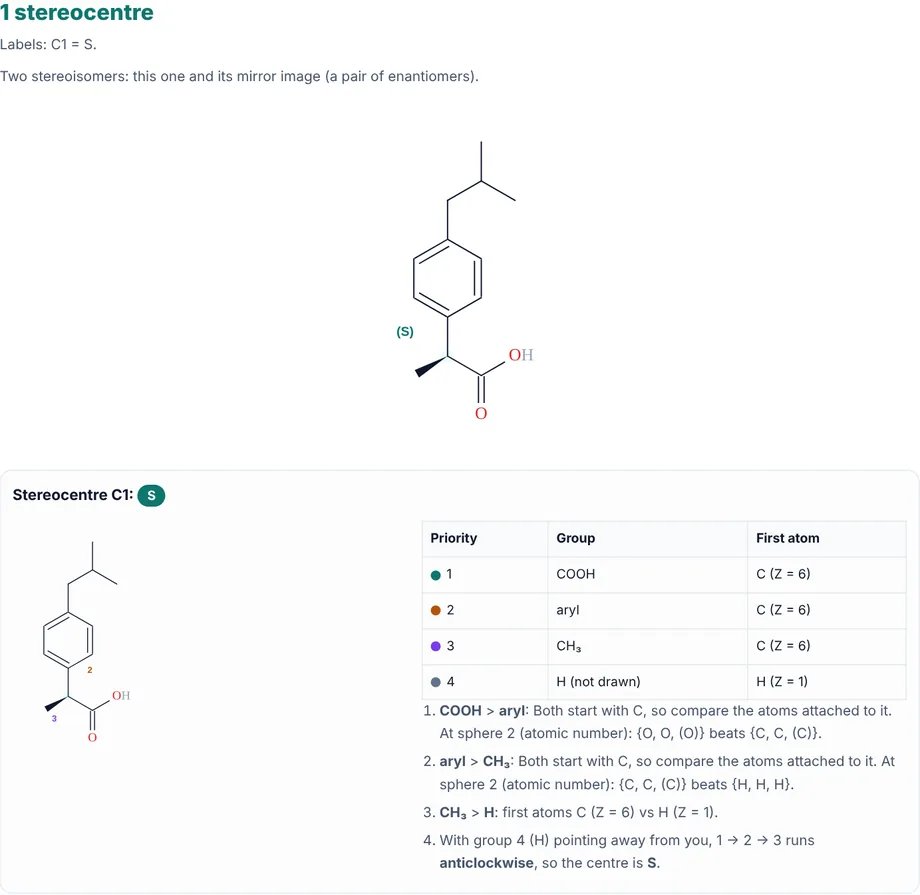
R/S chirality finder: every stereocentre labelled, with the CIP priorities explained step by step; double bonds get E or Z

  • Resonance structure generator: every contributor with its curly arrows, and which forms matter most
  • Functional group identifier, isomer generator and counter, and a name reaction finder
  • Point group finder: symmetry axes and mirror planes in 3D, the decision tree and the character table
Read the full update →
R/S chirality finder on ibuprofen: the (S) centre with its CIP priority table and steps

35 name reactions with full mechanisms

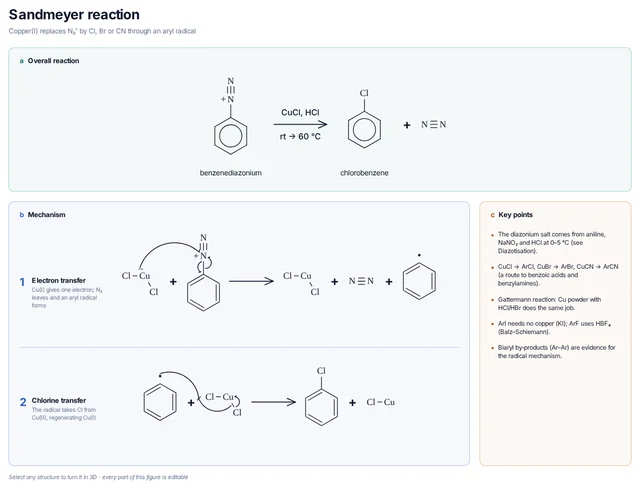
Every curly-arrow step, checked electron by electron: Wittig, Horner–Wadsworth–Emmons, Baeyer–Villiger, Beckmann, pinacol, Wolff–Kishner, Robinson, Mannich, Knoevenagel, Dieckmann, benzoin, HVZ, Gabriel, Strecker, Swern, haloform, Claisen and Cope rearrangements, Curtius, hydroboration, epoxidation, Arbuzov, Appel, Mitsunobu, Stork, Corey–Chaykovsky, Favorskii, ozonolysis, Baylis–Hillman, benzilic acid, azo coupling, Schotten–Baumann, Hofmann elimination, diazotisation and Sandmeyer

  • Templates panel: smaller cards two to a row, and an expand button that opens every template in a large browser with categories, search and keyboard navigation
  • Reaction guides for JEE and NEET (Reimer–Tiemann, Kolbe, Hofmann bromamide, Sandmeyer, Gabriel, Williamson and more) open the full mechanism in MolDraw in one click
  • Cleaner 2D layout for peroxy esters and crowded tert-butyl centres
Read the full update →
Sandmeyer reaction template: copper(I) electron transfer, loss of N₂ and chlorine transfer

40 new teaching templates

17 mechanisms: resonance, carbocation rearrangement, nitration, bromination, sulfonation and Friedel–Crafts alkylation of benzene, HBr addition (Markovnikov and radical), hydration, NaBH₄, cyanohydrin, aldol condensation, Cannizzaro, Williamson, Kolbe–Schmitt, Hofmann bromamide and Reimer–Tiemann

  • Structure sets: isomerism, Lewis structures, hybridisation, the pKa ladder, directing groups, peptides, DNA base pairs with hydrogen bonds, polymers, acids and indicators,…
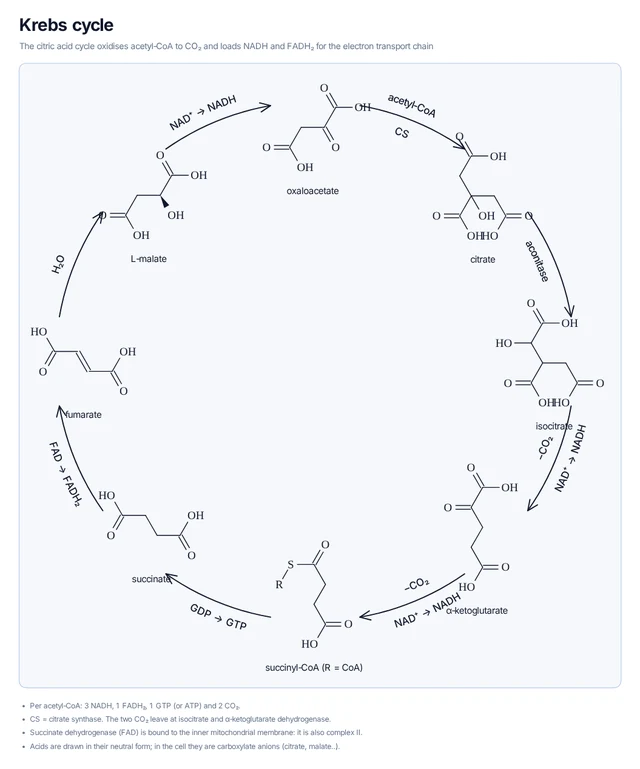
  • Glycolysis and the Krebs cycle with every structure, cofactor and enzyme
  • Reaction energy diagrams (SN1 vs SN2, catalysis, exo/endothermic, kinetic vs thermodynamic) and a lab colour chart (flame tests, precipitates, indicators, universal indicator)
Read the full update →
Krebs cycle template: eight intermediates in a cycle with cofactors on each arrow

Structure sets: amino acids, sugars, reagents and more

New Structure sets tab in Templates: labelled sheets of structures you can drop onto the canvas in one click

  • Templates are a Pro feature, free for everyone for now
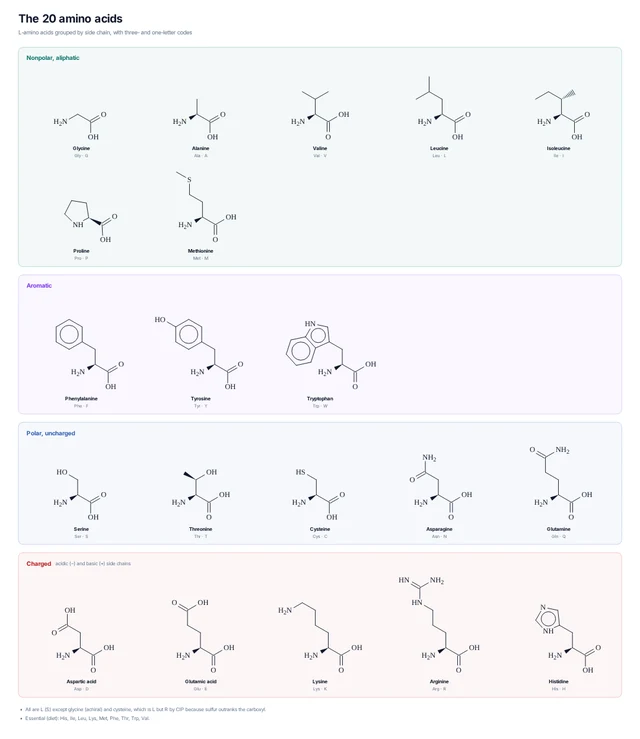
  • The 20 amino acids with stereochemistry, grouped by side chain, backbones lined up, with 3- and 1-letter codes
  • Nucleobases, nucleosides and ATP; carbohydrates (glucose, galactose, mannose, fructose, sucrose, lactose, maltose)
Read the full update →
The 20 amino acids sheet: L-amino acids in four side-chain groups with their codes

Templates: mechanisms and reaction setups in one click

New Templates button at the bottom of the left toolbar opens a panel of ready-made figures

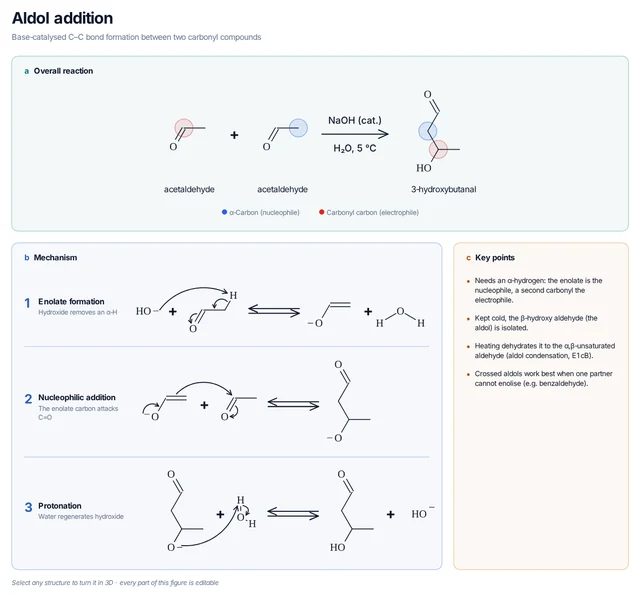
  • 16 mechanisms: SN1, SN2, E1, E2, hemiacetal and imine formation, ester hydrolysis, Fischer esterification, aldol, Claisen, Michael, Grignard, Diels–Alder, alkene bromination,…
  • Each has the overall reaction, numbered curly-arrow steps checked electron by electron, and key points
  • Works on phones and tablets too, as a bottom sheet, with a MolScript tab to write your own
Read the full update →
Aldol addition template: overall reaction, three curly-arrow steps and key points

chemfig for LaTeX: paste it, edit it, export it

Paste chemfig code or a whole .tex file onto the canvas: structures, schemes, names and curly arrows are drawn with the spacing and look of the PDF

  • Download → chemfig (.tex) and Copy as chemfig write code that compiles with pdflatex, fish-hooks and multi-step mechanisms included
  • Tighter reaction schemes: less space around + signs and arrows
  • New article with five worked mechanisms (radical chlorination, peroxide HBr addition, aldol, E1, aromatic bromination), each step with its code and a Copy button
Read the full update →
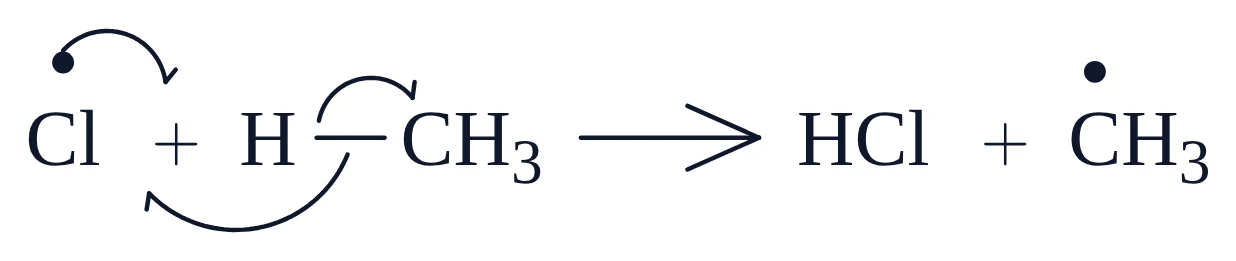
A radical propagation step pasted from chemfig: fish-hook arrows from the chlorine radical and the H–C bond

Lab apparatus library: glassware that snaps, fills and pours

125 pieces of glassware and lab equipment redrawn as clean line drawings, with a Premium look that adds soft 3D shading

  • Apparatus button at the right of the toolbar opens a library panel that stays open: click a card to add it, drag it onto the canvas, hover for a large preview
  • Joints snap together: add a condenser while a flask is selected and it lands on the neck
  • Liquid stays level when you tilt a vessel and pours straight down into the vessel below
Read the full update →
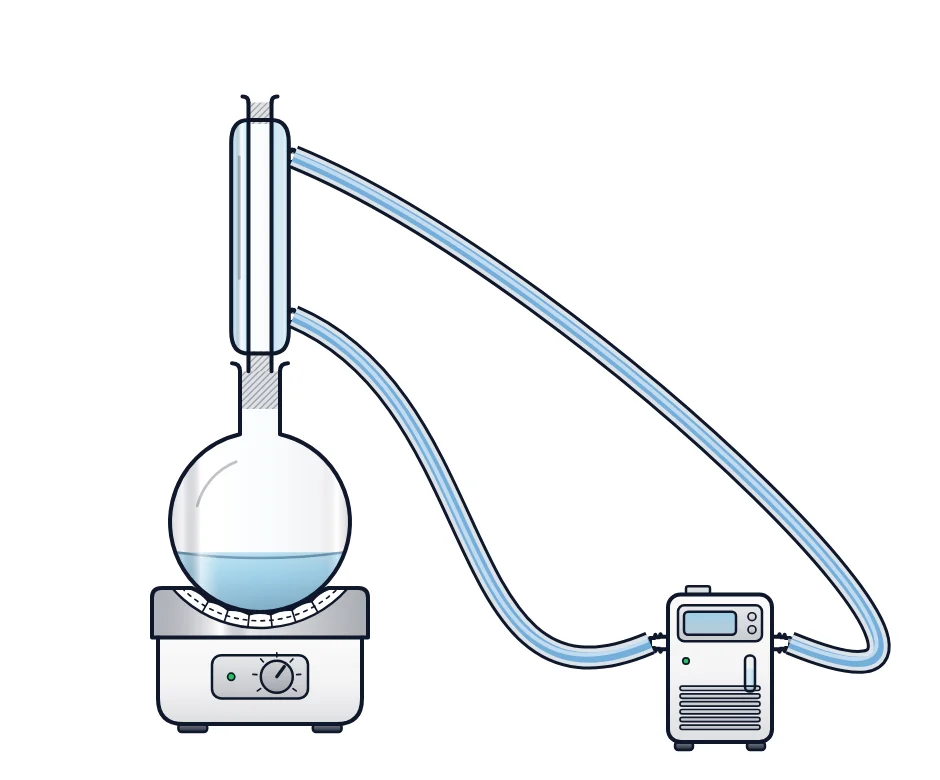
A reflux setup: round-bottom flask on a heating mantle with a condenser and water tubing

Plugins and data viewers

Smart Draw: sketch bonds, rings and labels by hand, then press Convert

  • NMR Analyser, AI Spectroscopy, pKa, MEP, Symmetry, ChEMBL, Compare and Themes plugins
  • Viewers for IR, NMR, mass, Raman, UV-Vis, XPS, CV, TGA/DSC and protein data
Read the full update →
Smart Draw: a hand-drawn sketch converted into a structure

Faster drawing and teaching modes

ChemDraw-style hover shortcuts: 1/2/3, W and H on bonds, + / − and numbers on atoms

  • Curved arrows snap to lone pairs, bonds and atoms and follow the structure
  • Reaction stoichiometry table and live analysis text on the canvas
  • Command palette (Ctrl/Cmd+K) and document tabs
Read the full update →
The MolDraw editor: tool rail, canvas, element strip and top bar

Desktop app and Office round trip

Windows desktop app with an offline copy that stays in step with the web version

  • Drawings saved as PNG or SVG open again as editable structures, for Word and PowerPoint round trips
  • File icons and Explorer thumbnails for MolDraw files; Ctrl+S saves back to the same file
Read the full update →
MolDraw for Windows

September 2026

Arrows

Smaller default heads; click, then move for a stretching preview; second click places the tip

  • Curved / electron-flow: the mid handle follows the cursor after the second click
  • Circular-arc cue: light grey dashed circle only when the shaft sits on a true circular outline — subtle snap, short arc, not a full ring
  • Equilibrium hooks (hook on both ends) in the arrow tool
Read the full update →
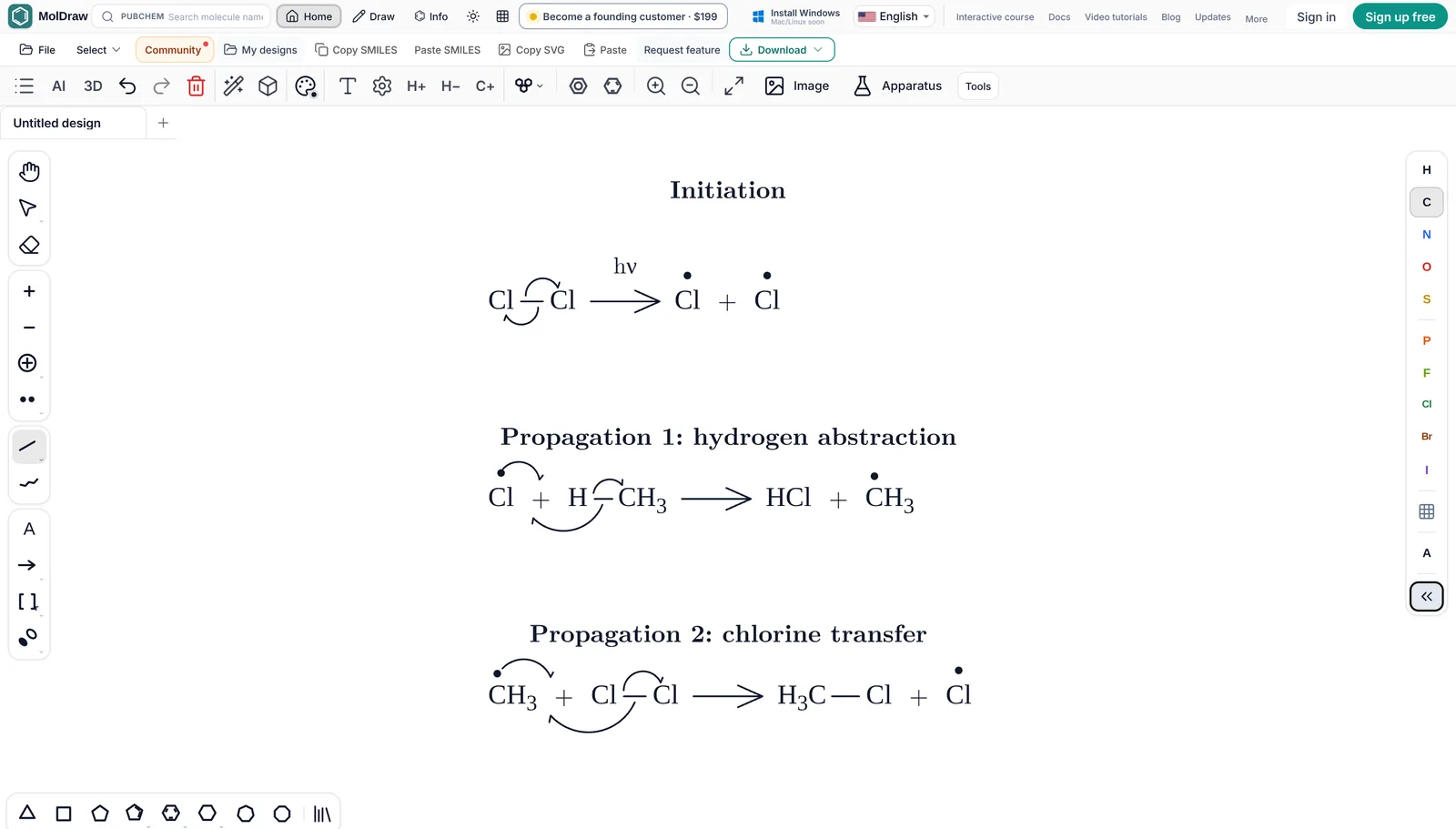
Radical chlorination of methane drawn with fish-hook arrows in the editor

Text and lone pairs

Text box: move on the border, resize on corners, horizontal resize on left / right mid handles

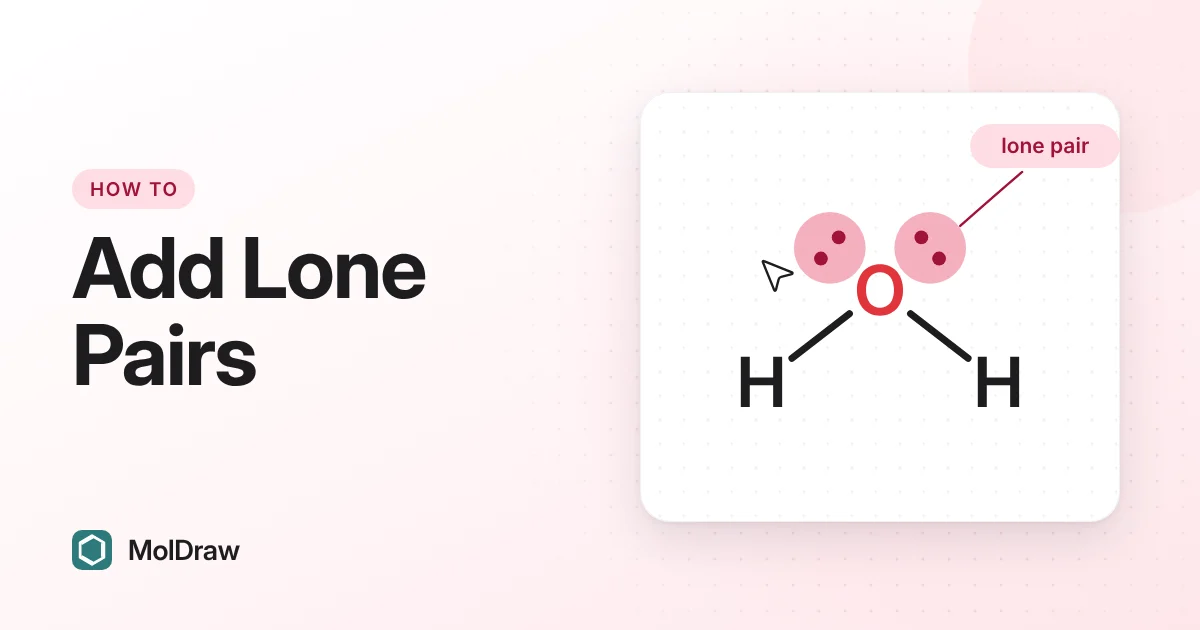
  • Add all lone pairs (full valence) and Add one lone pair to all; Free radical stays second in the menu
  • Lone-pair tool: hover highlight so a pair looks clickable and deletable
Read the full update →
Water with its two lone pairs added on oxygen

Import, export, and 3D

Import SMILES: cleanup, place in the view center, and stay clear of existing structures — CCO is ethanol

  • Biphenyl linker is a single bond; naphthalene fused bond stays aromatic
  • Generic scaffolds: * and A import as any-atom labeled A
  • Any atom (A) on the right element strip after the periodic table — same as SMILES * / A
Read the full update →

App

Dark mode: Delete hover is no longer a white button

  • Stale service-worker cache no longer keeps an old page on one PC
Read the full update →

Mobile chrome and Help

Phone top bar: search icon, delete (clear canvas), Help for support chat

  • Charla chat stays hidden until Help — tap again and the bubble is gone
  • Bottom status bar: formula, MW, charge, and selection count
  • Selection info opens as a bottom sheet on phones
Read the full update →

Select menu, color, and languages

Select menu: atoms, lasso, all/invert/connected, rings, heteroatoms, and more

  • Ring coloring and style: fill, stroke, and Color panel under Pattern
  • Grid on by default; clearer dot grid
  • Teal selection handles — corners scale uniformly, sides stretch
Read the full update →

Editor, draw tools, and 3D

New draw UI: compact islands, category dock on phones, clearer tool grouping

  • Better 3D viewer: rebuild, hydrogens, conformers, and heavier-atom structures
  • Larger atom set and aliases in the editor
  • Multi-project tabs — several drawings open at once, switch without losing work
Read the full update →
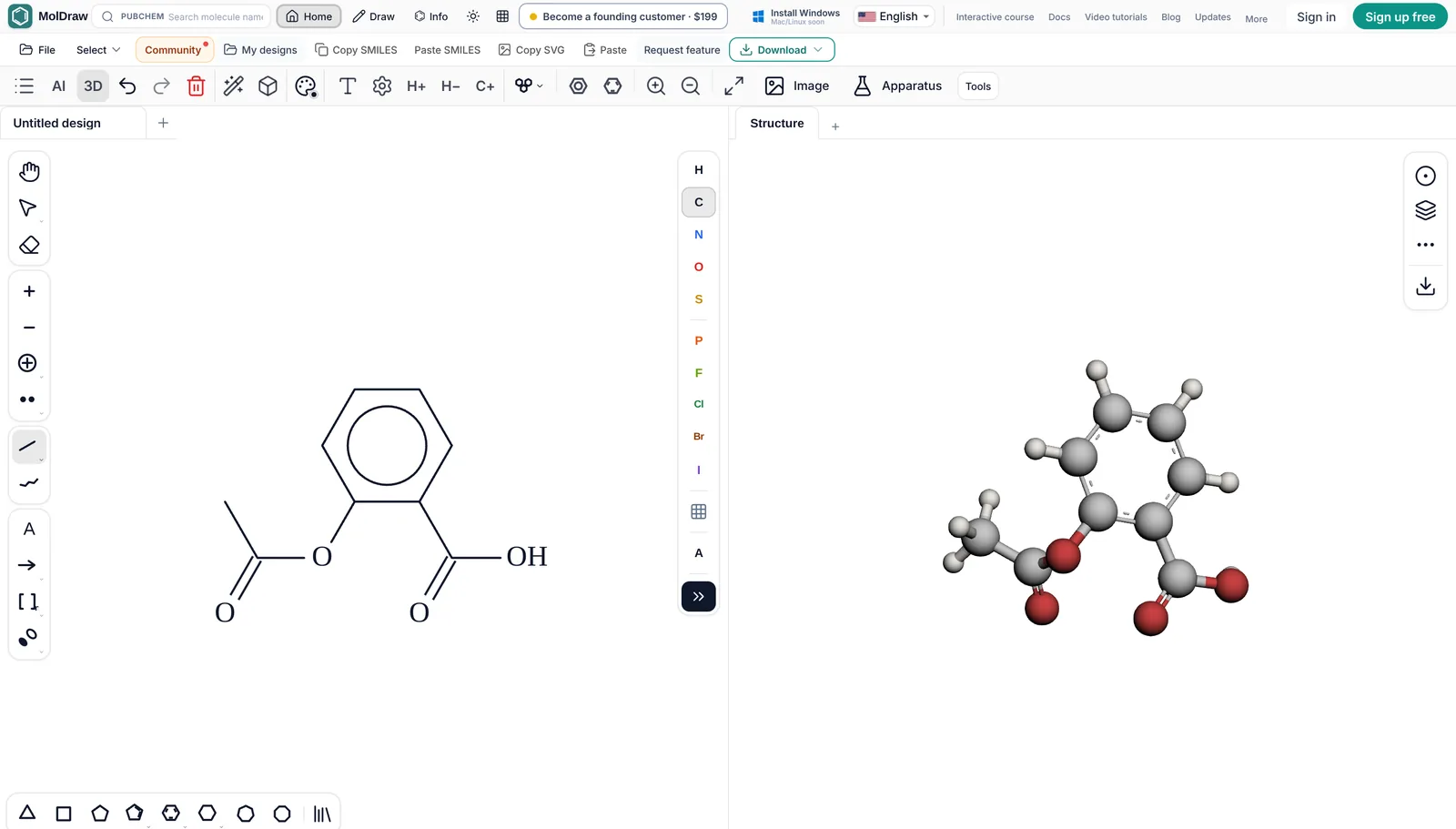
The MolDraw editor with aspirin drawn in 2D and shown in the 3D panel

June 2026

Chemistry tools hub

Standalone Tools pages: formula/mass, lookup, classroom calculators, drug-likeness, spectroscopy, Lewis, converters

  • Mass spectrum predictor from the drawing, SMILES, or PubChem
  • Accounts for saved designs, AI, and community
Read the full update →
MolDraw free chemistry tools: calculators, converters and structure tools

May 2026

March 2026

February 2026

3D properties and file extras

PubChem properties card: name, IUPAC, mass, boiling and melting points

  • IUPAC lookup from the drawn structure
  • JPEG export for 2D drawings and 3D snapshots
  • Protein PDB add/remove in the 3D scene without wiping other models
Read the full update →