New DNA/RNA builder plugin is live!
New DNA/RNA builder plugin is live!
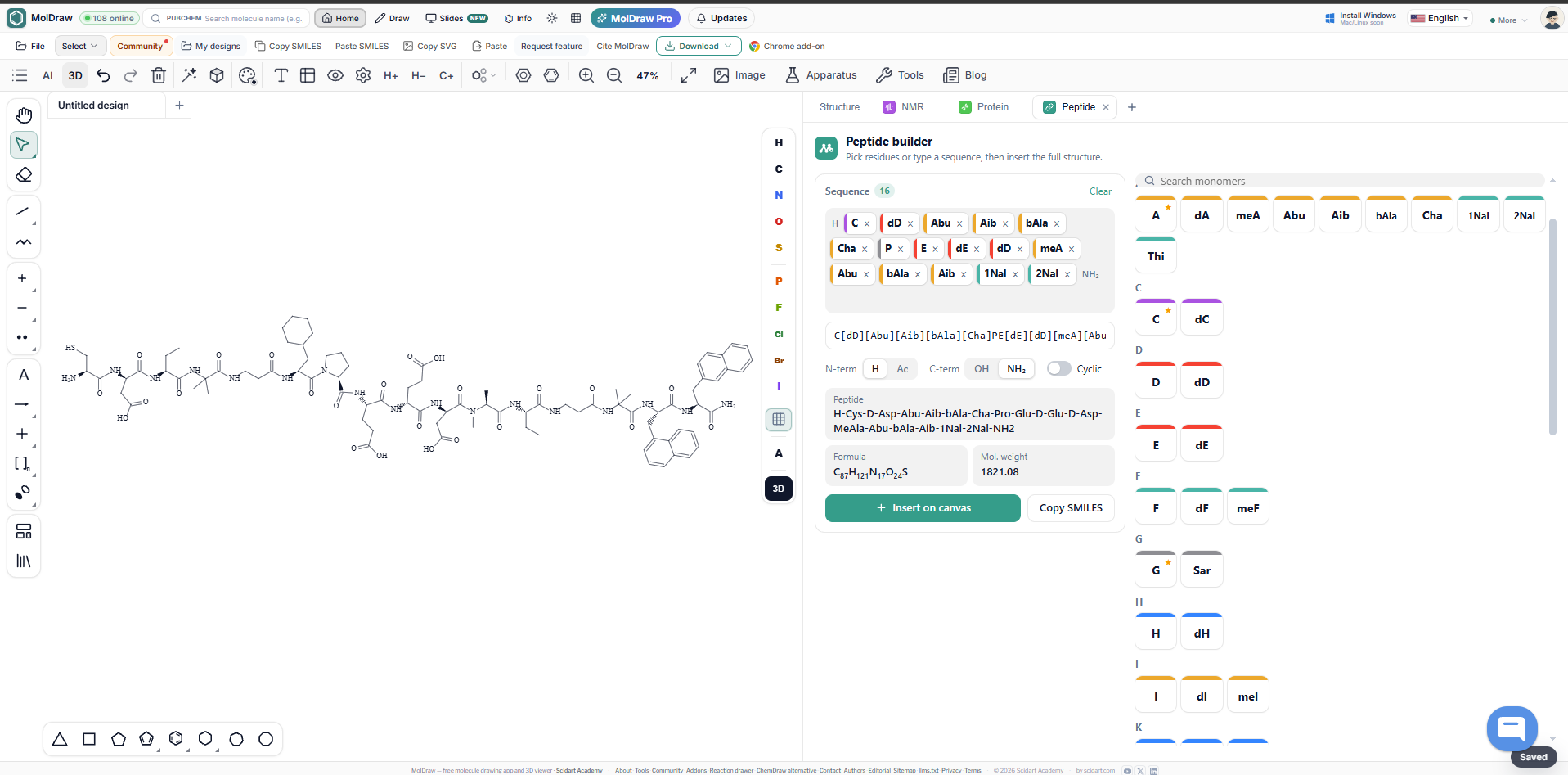
New peptide builder plugin
Peptide Builder | New Plugin is now available
Hi! I'm new to chemistry and was drawing caffeine in MolDraw. While making a ring with carbon and nitrogen atoms, the program automatically added hydrogens to some nitrogen atoms, showing "NH". Why does this happen? Is it related to nitrogen's bonding rules, and how can I prevent it?
I just realized, big problem
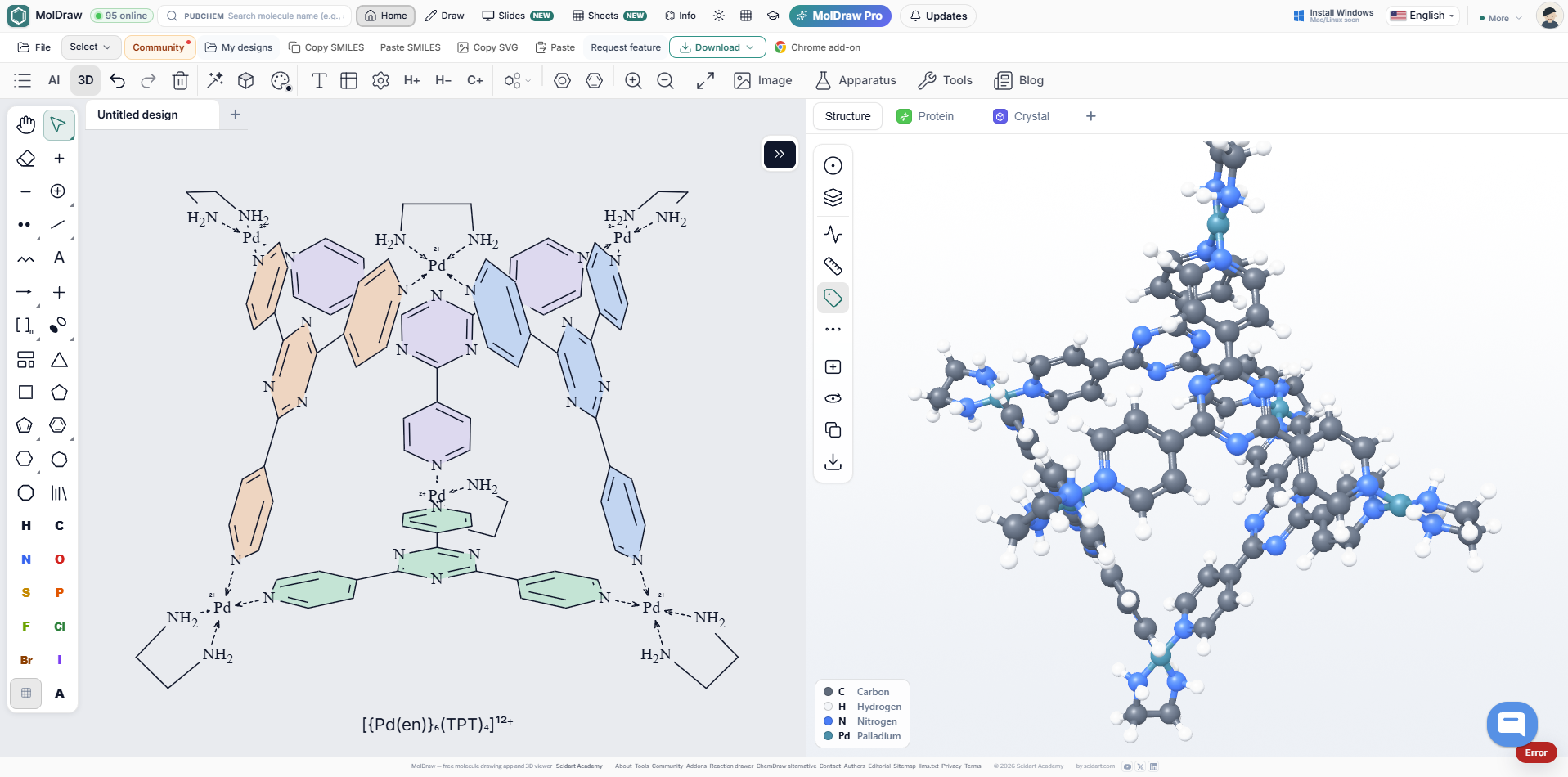
New cage molecules are added in Library
Why is the app down? Is there a problem
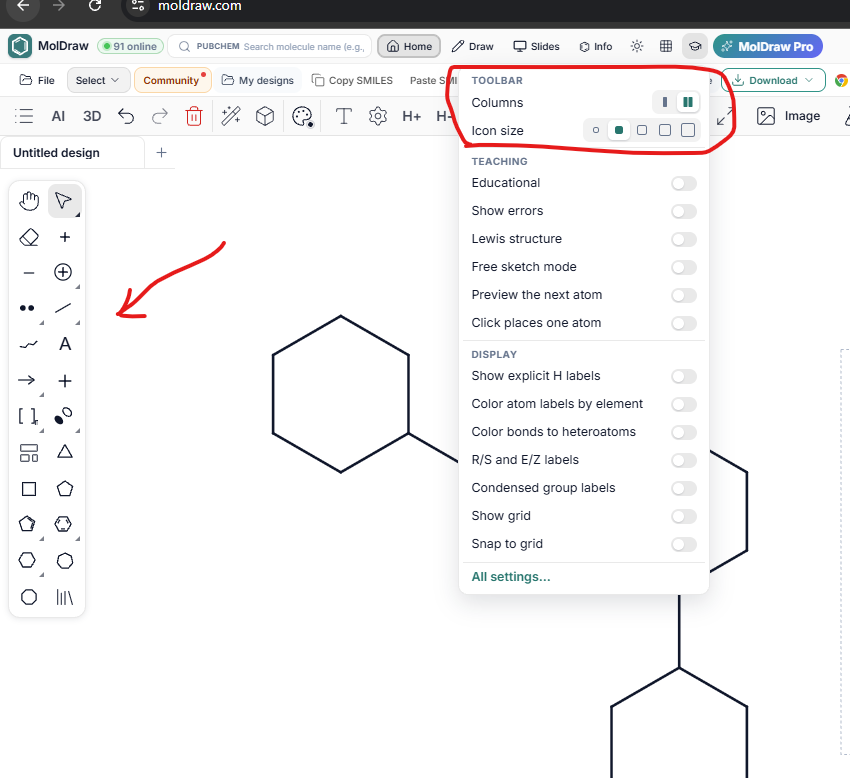
@ramon Make toolbar to more cleaner and compact two column layout if you prefer that
Excellent changes. The program is a great help to my students. A suggestion for improvement would be to include the energies of the generated conformers (from most to least stable). Currently, they are only listed.
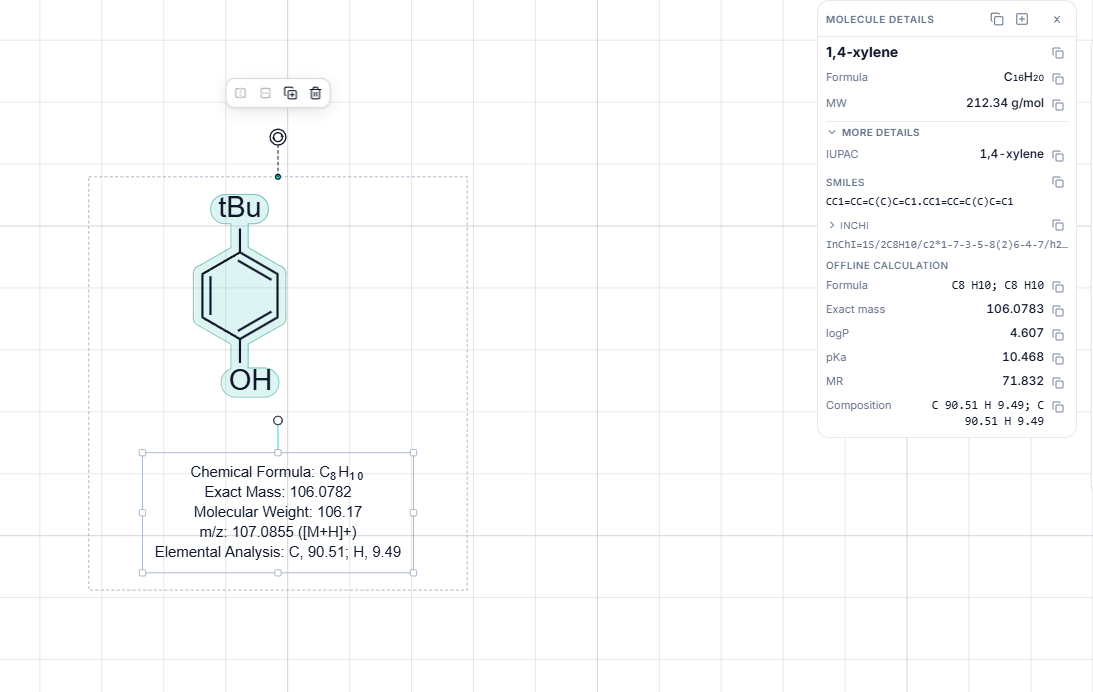
Hi, I’m using MolDraw and noticed something odd. On a benzene ring with an –SH group, the + and – charge tools turn it into SH₅⁺ or SH₅⁻. I’d expect something like R–SH₂⁺ or R–S⁻. With –OH the tool works as expected (O⁻ and H₂O⁺), so it seems like an issue with how the charge tool handles sulfur. Is this a bug, or am I doing something wrong?
Every MolDraw update in one feed, newest first.
Hi! I'm new to chemistry and was drawing caffeine in MolDraw. While making a ring with carbon and nitrogen atoms, the program automatically added hydrogens to some nitrogen atoms, showing "NH". Why does this happen? Is it related to nitrogen's bonding rules, and how can I prevent it?
Hi Yuri, great question, and yes, it’s nitrogen’s bonding rules. A neutral nitrogen makes three bonds. If a ring nitrogen only has two bonds in your drawing, MolDraw fills the third with a hydrogen and shows it as NH. That’s correct chemistry: it means the structure isn’t finished yet. In caffeine none of the nitrogens has a hydrogen. Three of them carry a methyl group (CH₃) and the fourth has a C=N double bond. To get there: Click the bond tool on each NH nitrogen that should carry a methyl and drag out a single bond (a CH₃). Add the C=N double bond in the five-membered ring and the two C=O groups on the six-membered ring. Once every nitrogen has three bonds, the “NH” labels disappear. Want to draw without automatic hydrogens? Open the Teaching menu (the graduation-cap icon in the top bar, or Settings → Teaching). Turn on Free sketch mode, then No automatic hydrogens. Atoms then show only their element (N, not NH), and hydrogens appear only where you draw them. This is handy while you’re still building the structure, but the formula will only count the atoms you’ve drawn. Shortcut: type caffeine in the PubChem search box at the top, or paste this SMILES: Cn1cnc2c1c(=O)n(C)c(=O)n2C. You’ll get the full structure, and you can compare it with yours.