Overall reaction
Sodium phenoxide + CO₂ (4–7 atm or more), 125 °C, then H₃O⁺ → salicylic acid
Phenoxide carboxylates at the ortho position with CO₂ under pressure.
In the Kolbe–Schmitt reaction (often called the Kolbe reaction in Indian syllabuses) sodium phenoxide is heated with carbon dioxide under pressure. The ring carbon ortho to O⁻ attacks CO₂, the dienone tautomerises back to an aromatic ring, and acid work-up gives salicylic acid — the industrial route to aspirin.
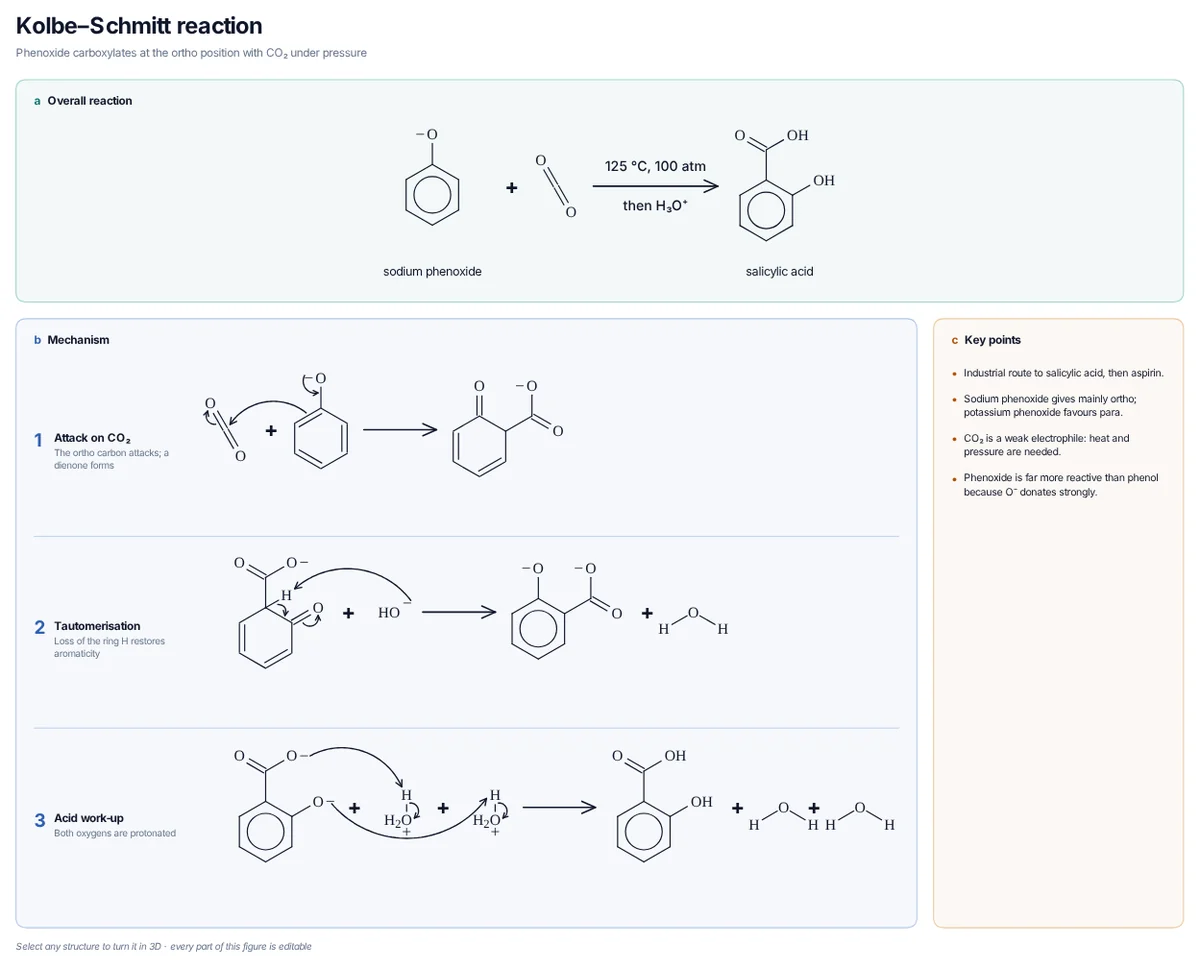
Sodium phenoxide + CO₂ (4–7 atm or more), 125 °C, then H₃O⁺ → salicylic acid
Phenoxide carboxylates at the ortho position with CO₂ under pressure.
Each step is checked electron by electron: the curly arrows give exactly the structures drawn.
CO₂ is a weak electrophile. The negative oxygen donates strongly into the ring, so only phenoxide is nucleophilic enough to attack it.
Salicylic acid (2-hydroxybenzoic acid) after acidification; the sodium salt forms first.
They are usually the same reaction (Schmitt added the pressure conditions). Kolbe electrolysis is a different reaction.
The button above opens the complete figure — overall reaction, numbered mechanism and key points — as ordinary editable structures. Change substituents, recolour atoms, or export a PNG, SVG or chemfig code for notes and slides. The same figure is in the Templates panel under Name reactions.