Overall reaction
R–O⁻ Na⁺ + R′–X → R–O–R′ + NaX (R′ = methyl or primary)
An alkoxide or phenoxide displaces a halide from a methyl or primary alkyl halide (SN2).
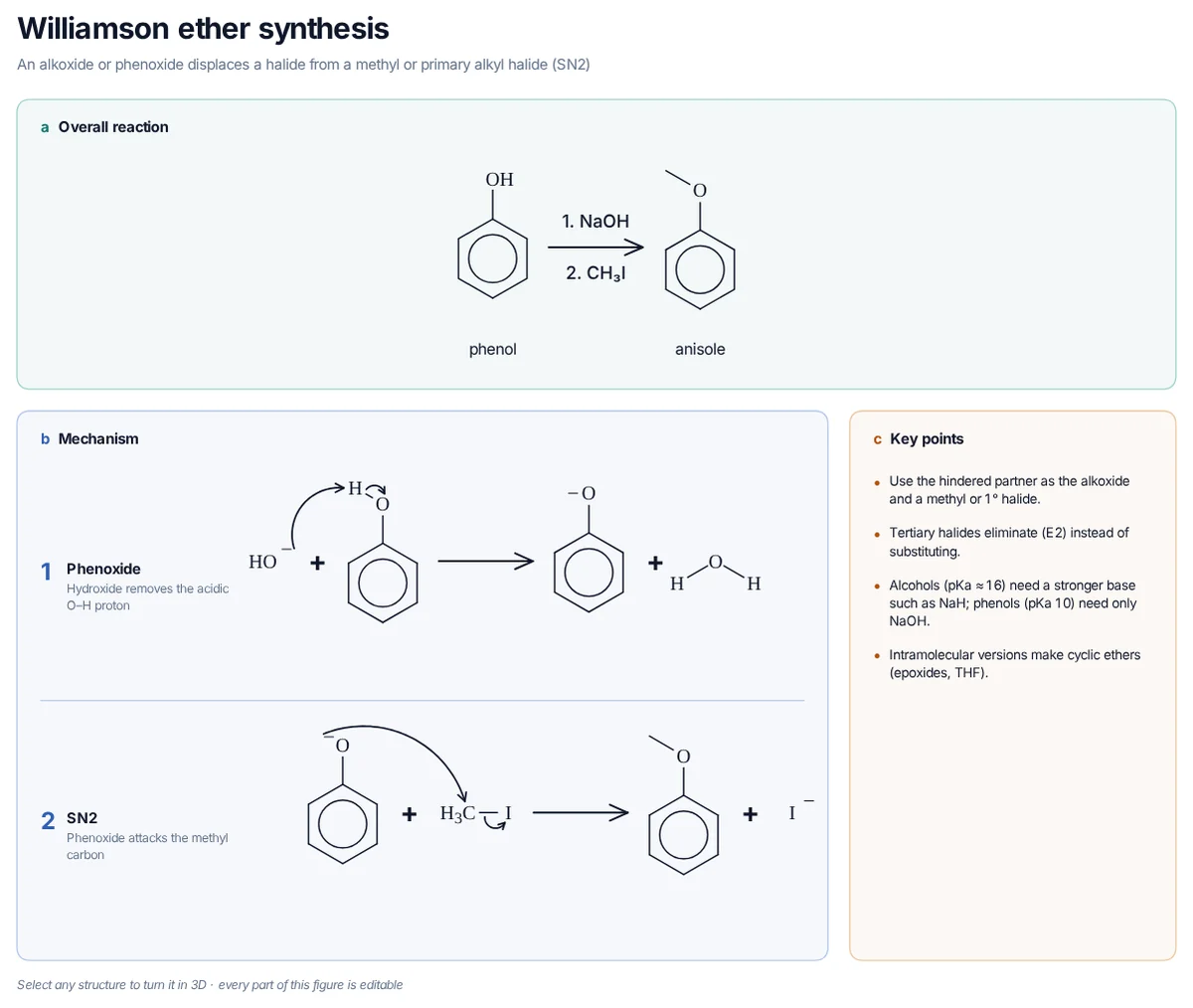
The Williamson ether synthesis makes ethers by an SN2 reaction between an alkoxide (or phenoxide) and a methyl or primary alkyl halide. The example here deprotonates phenol with hydroxide and methylates the phenoxide with iodomethane to give anisole.
R–O⁻ Na⁺ + R′–X → R–O–R′ + NaX (R′ = methyl or primary)
An alkoxide or phenoxide displaces a halide from a methyl or primary alkyl halide (SN2).
Each step is checked electron by electron: the curly arrows give exactly the structures drawn.
Any combination needs a tertiary halide, which undergoes E2 elimination with the strongly basic alkoxide.
Sodium phenoxide + iodomethane (or dimethyl sulfate). Methoxide + bromobenzene does not react.
A one-step SN2 backside attack of the alkoxide oxygen on the carbon bearing the halide.
The button above opens the complete figure — overall reaction, numbered mechanism and key points — as ordinary editable structures. Change substituents, recolour atoms, or export a PNG, SVG or chemfig code for notes and slides. The same figure is in the Templates panel under Name reactions.