Overall reaction
C₆H₅NH₂ → (NaNO₂, HCl, 0–5 °C) C₆H₅N₂⁺Cl⁻ → (CuCl/HCl) C₆H₅Cl + N₂
Copper(I) replaces N₂⁺ by Cl, Br or CN through an aryl radical.
The Sandmeyer reaction replaces the diazonium group of an arenediazonium salt by Cl, Br or CN using the copper(I) salt. Copper(I) gives one electron to the diazonium ion, nitrogen gas is lost to leave an aryl radical, and the radical takes the halogen from copper(II), regenerating copper(I). The diazonium salt is made first from aniline, NaNO₂ and HCl at 0–5 °C.
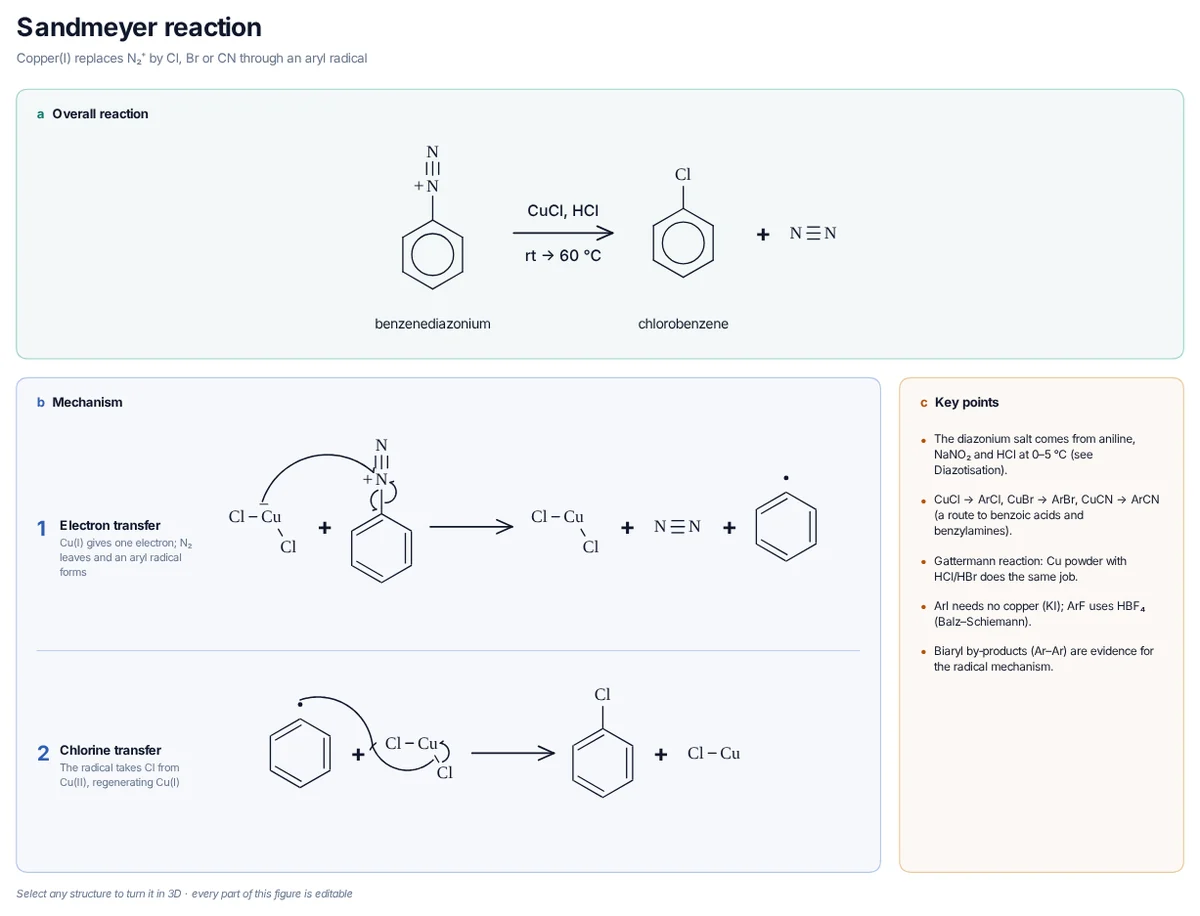
C₆H₅NH₂ → (NaNO₂, HCl, 0–5 °C) C₆H₅N₂⁺Cl⁻ → (CuCl/HCl) C₆H₅Cl + N₂
Copper(I) replaces N₂⁺ by Cl, Br or CN through an aryl radical.
Each step is checked electron by electron: the curly arrows give exactly the structures drawn.
Copper(I) transfers one electron to the diazonium ion; after N₂ leaves, the aryl radical takes Cl, Br or CN from copper(II), so copper(I) is regenerated (catalytic in principle).
Both convert diazonium salts to aryl halides. Sandmeyer uses CuCl/CuBr; Gattermann uses copper powder and the halogen acid, usually in lower yield.
Arenediazonium salts decompose on warming, losing N₂ and reacting with water to give phenols.
The button above opens the complete figure — overall reaction, numbered mechanism and key points — as ordinary editable structures. Change substituents, recolour atoms, or export a PNG, SVG or chemfig code for notes and slides. The same figure is in the Templates panel under Name reactions.