MolDraw › Educational materials › Predict the Product Worksheet: Organic Reactions

Predict the Product Worksheet: Organic Reactions

Organic chemistryGrades 11–12 · A-level · AP / IB · CBSE/JEE · first-year university20 items · answer key included

A printable predict the product worksheet with answers for organic chemistry. Each question gives a starting material and its reagents; students draw the major organic product. The 20 reactions cover the core of A-level, AP, IB, JEE and first-year university organic chemistry: alkene and alkyne additions (Markovnikov and anti-Markovnikov hydration, HBr with and without peroxides, bromine, Lindlar hydrogenation), oxidation with PCC and KMnO₄, reduction with NaBH₄ and LiAlH₄, Grignard reactions, Fischer esterification, SN2 substitution with inversion, E2 elimination (Zaitsev vs Hofmann), aromatic nitration, Friedel–Crafts acylation and the Diels–Alder reaction. The answer key shows every product structure with its name and a one-line reason, and every structure has been checked with RDKit so the atoms balance.

Live A4 preview. “Download PDF” opens the print dialog: choose Save as PDF. Click a structure to open it in MolDraw.

Predict the Product Worksheet: Organic Reactions

Name Class Date

Part A — Alkenes and alkynes

Draw the major organic product of each reaction. Show stereochemistry where it is asked for.

1.
2-Methylbut-2-ene + H2O, H2SO4 (cat.)
Structure for the question
2-Methylbutan-2-ol: acid-catalysed hydration is Markovnikov; water adds to the tertiary carbocation.Answer structure
2.
2-Methylbut-2-ene + 1. BH3·THF; 2. H2O2, NaOH
Structure for the question
3-Methylbutan-2-ol: hydroboration–oxidation is anti-Markovnikov (syn addition); OH goes on the less substituted carbon.Answer structure
3.
2-Methylbut-2-ene + HBr (no peroxides)
Structure for the question
2-Bromo-2-methylbutane: H⁺ adds to give the more stable tertiary carbocation, which Br⁻ captures (Markovnikov).Answer structure
4.
Cyclohexene + Br2 in CH2Cl2. Show the relative stereochemistry.
Structure for the question
trans-1,2-Dibromocyclohexane (racemic): Br⁻ opens the bromonium ion from the opposite face, so the two Br add anti.Answer structure
5.
Pent-1-yne + H2O, H2SO4, HgSO4
Structure for the question
Pentan-2-one: Markovnikov hydration gives an enol, which tautomerises to the methyl ketone.Answer structure
6.
Hex-3-yne + H2, Lindlar catalyst
Structure for the question
(Z)-Hex-3-ene (cis): the poisoned catalyst adds one H2 syn and stops at the alkene.Answer structure

Part B — Oxidation, reduction and Grignard reagents

Draw the major organic product. Where two steps are given, carry out step 1 and then step 2.

7.
Propan-1-ol + PCC, CH2Cl2
Structure for the question
Propanal: PCC is a mild anhydrous oxidant, so the primary alcohol stops at the aldehyde.Answer structure
8.
Methylbenzene (toluene) + hot KMnO4, then H3O+
Structure for the question
Benzoic acid: hot KMnO4 oxidises a benzylic C–H side chain all the way to COOH.Answer structure
9.
Butan-2-one + NaBH4, methanol
Structure for the question
Butan-2-ol (racemic): hydride adds to the C=O carbon and the alkoxide is protonated; ketones give secondary alcohols.Answer structure
10.
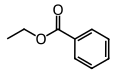
Ethyl benzoate + 1. LiAlH4, dry ether; 2. H3O+
Structure for the question
Phenylmethanol (benzyl alcohol), plus ethanol: LiAlH4 reduces the ester to two alcohols.Answer structure
11.
Benzaldehyde + 1. CH3MgBr, dry ether; 2. H3O+
Structure for the question
1-Phenylethanol (racemic): the Grignard methyl adds to C=O (new C–C bond); an aldehyde gives a secondary alcohol.Answer structure
12.
Bromobenzene + 1. Mg, dry ether; 2. CO2; 3. H3O+
Structure for the question
Benzoic acid: PhMgBr attacks CO2 to give a carboxylate, which acid protonates.Answer structure

Part C — Esterification, substitution and elimination

Draw the major organic product. For C3 give the configuration (R or S) of the product.

13.
Propanoic acid + methanol, conc. H2SO4 (cat.), heat
Structure for the question
Methyl propanoate + water: Fischer esterification, an acid-catalysed equilibrium.Answer structure
14.
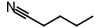
1-Bromobutane + NaCN, DMSO
Structure for the question
Pentanenitrile: cyanide displaces bromide from a primary carbon by SN2, adding one carbon to the chain.Answer structure
15.
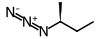
(R)-2-Bromobutane + NaN3, DMF
Structure for the question
(S)-2-Azidobutane: SN2 backside attack inverts the stereocentre (Walden inversion).Answer structure
16.
2-Bromo-2-methylbutane + NaOEt, ethanol, heat
Structure for the question
2-Methylbut-2-ene: E2 with a small base gives the more substituted (Zaitsev) alkene.Answer structure
17.
2-Bromo-2-methylbutane + KOC(CH3)3 (potassium tert-butoxide), heat
Structure for the question
2-Methylbut-1-ene: the bulky base removes the most accessible CH3 hydrogen, giving the Hofmann alkene.Answer structure

Part D — Aromatic substitution and Diels–Alder

Draw the major organic product. In D3 show whether the ring-fusion hydrogens are cis or trans.

18.
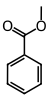
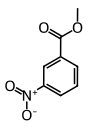
Methyl benzoate + conc. HNO3, conc. H2SO4, below 15 °C
Structure for the question
Methyl 3-nitrobenzoate: NO2+ attacks the ring; the electron-withdrawing ester directs meta.Answer structure
19.
Benzene + CH3COCl, AlCl3
Structure for the question
Phenylethanone (acetophenone) + HCl: Friedel–Crafts acylation by the acylium ion CH3CO+.Answer structure
20.
Buta-1,3-diene + maleic anhydride, heat
Structure for the questionStructure for the question
cis-1,2,3,6-Tetrahydrophthalic anhydride: a [4+2] cycloaddition forms a six-membered ring; the cis dienophile gives the cis product.Answer structure

moldraw.com/educational-materials/predict-the-product-worksheet/

Answer key: Predict the Product Worksheet: Organic Reactions

Part A — Alkenes and alkynes

1.
2-Methylbutan-2-ol: acid-catalysed hydration is Markovnikov; water adds to the tertiary carbocation.Answer structure
2.
3-Methylbutan-2-ol: hydroboration–oxidation is anti-Markovnikov (syn addition); OH goes on the less substituted carbon.Answer structure
3.
2-Bromo-2-methylbutane: H⁺ adds to give the more stable tertiary carbocation, which Br⁻ captures (Markovnikov).Answer structure
4.
trans-1,2-Dibromocyclohexane (racemic): Br⁻ opens the bromonium ion from the opposite face, so the two Br add anti.Answer structure
5.
Pentan-2-one: Markovnikov hydration gives an enol, which tautomerises to the methyl ketone.Answer structure
6.
(Z)-Hex-3-ene (cis): the poisoned catalyst adds one H2 syn and stops at the alkene.Answer structure

Part B — Oxidation, reduction and Grignard reagents

7.
Propanal: PCC is a mild anhydrous oxidant, so the primary alcohol stops at the aldehyde.Answer structure
8.
Benzoic acid: hot KMnO4 oxidises a benzylic C–H side chain all the way to COOH.Answer structure
9.
Butan-2-ol (racemic): hydride adds to the C=O carbon and the alkoxide is protonated; ketones give secondary alcohols.Answer structure
10.
Phenylmethanol (benzyl alcohol), plus ethanol: LiAlH4 reduces the ester to two alcohols.Answer structure
11.
1-Phenylethanol (racemic): the Grignard methyl adds to C=O (new C–C bond); an aldehyde gives a secondary alcohol.Answer structure
12.
Benzoic acid: PhMgBr attacks CO2 to give a carboxylate, which acid protonates.Answer structure

Part C — Esterification, substitution and elimination

13.
Methyl propanoate + water: Fischer esterification, an acid-catalysed equilibrium.Answer structure
14.
Pentanenitrile: cyanide displaces bromide from a primary carbon by SN2, adding one carbon to the chain.Answer structure
15.
(S)-2-Azidobutane: SN2 backside attack inverts the stereocentre (Walden inversion).Answer structure
16.
2-Methylbut-2-ene: E2 with a small base gives the more substituted (Zaitsev) alkene.Answer structure
17.
2-Methylbut-1-ene: the bulky base removes the most accessible CH3 hydrogen, giving the Hofmann alkene.Answer structure

Part D — Aromatic substitution and Diels–Alder

18.
Methyl 3-nitrobenzoate: NO2+ attacks the ring; the electron-withdrawing ester directs meta.Answer structure
19.
Phenylethanone (acetophenone) + HCl: Friedel–Crafts acylation by the acylium ion CH3CO+.Answer structure
20.
cis-1,2,3,6-Tetrahydrophthalic anhydride: a [4+2] cycloaddition forms a six-membered ring; the cis dienophile gives the cis product.Answer structure

How to use this worksheet

  1. Set Part A after teaching alkene and alkyne additions; ask students to label each product Markovnikov or anti-Markovnikov.
  2. Parts B and C work well as a revision starter: students first name the functional group that changes, then draw the product.
  3. Ask stronger students to add the stereochemistry in A4, C3 and D3, and to explain the regiochemistry in C4–C5 and D1.
  4. Use the editable preview to drop questions or reorder parts, then print the worksheet and the answer key separately.
  5. Set the title, student lines and answer option on the left, then press Download PDF and choose “Save as PDF” (or print directly). Your choices are remembered on this device.

Draw and edit structures in MolDraw. Make your own questions: draw any molecule, then export it as PNG or SVG for your worksheets.

Draw and edit structures in MolDraw

Frequently asked questions

How do you predict the product of an organic reaction?

Identify the functional group in the starting material, decide what the reagent is (electrophile, nucleophile, oxidant, reductant or base), then apply the matching reaction pattern. Finally check regiochemistry (Markovnikov or Zaitsev), stereochemistry (syn, anti, inversion) and that the atoms balance.

What is the difference between Markovnikov and anti-Markovnikov addition?

In Markovnikov addition (H₂O/H₂SO₄ or HBr) hydrogen adds to the alkene carbon that already has more hydrogens, so the OH or Br ends up on the more substituted carbon. Hydroboration–oxidation and HBr with peroxides give the anti-Markovnikov product, with OH or Br on the less substituted carbon.

What does PCC do compared with KMnO₄?

PCC is a mild, anhydrous oxidant that stops a primary alcohol at the aldehyde and turns a secondary alcohol into a ketone. Hot KMnO₄ is a strong oxidant: primary alcohols and aldehydes go to carboxylic acids, and alkyl side chains on benzene are oxidised to benzoic acid.

Does NaBH₄ reduce esters?

No. NaBH₄ reduces aldehydes and ketones to alcohols but leaves esters, carboxylic acids and amides untouched. LiAlH₄ is strong enough to reduce an ester to two alcohols, giving a primary alcohol from the acyl part.

Who is this predict the product worksheet for?

It suits A-level, AP Chemistry, IB HL, CBSE/JEE and first-year university organic chemistry students. Parts A–C cover the standard specification reactions; Part D (aromatic substitution and Diels–Alder) is extension material for most school courses.

Related worksheets