Organic chemistryGrades 11–12 · A-level · AP / IB · CBSE/JEE · first-year university11 items · answer key included
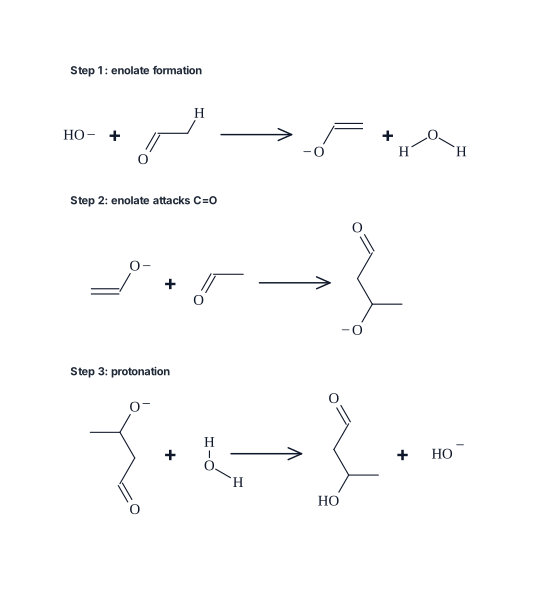
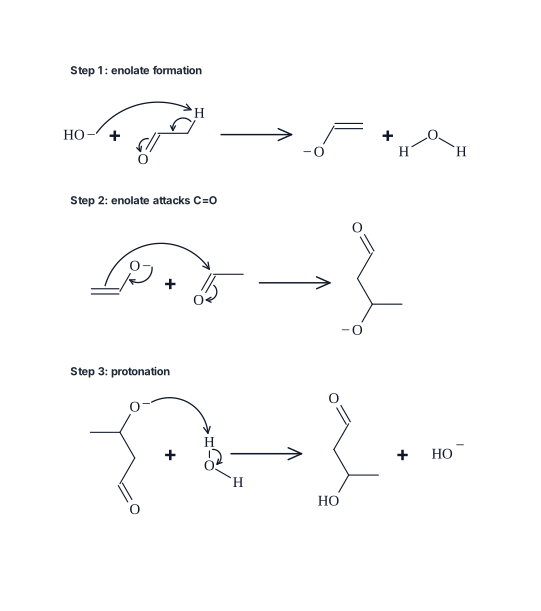
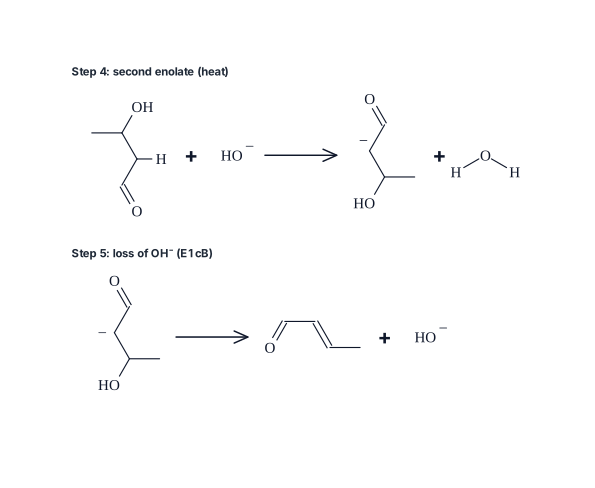
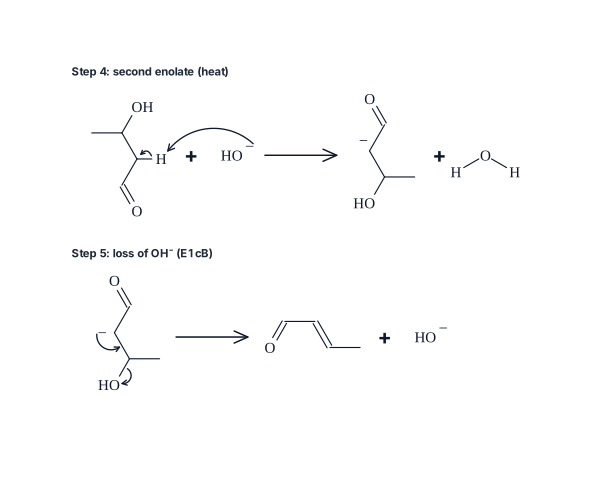
A printable curved arrow mechanism worksheet with answers. Every structure, intermediate, charge and lone pair is already drawn; students add the curly arrows that show how the electron pairs move. The mechanisms are the ones every organic chemistry course tests: SN2 (bromomethane and hydroxide), SN1 (tert-butyl bromide in water: ionisation, attack, deprotonation), E2 (2-bromo-2-methylpropane and ethoxide), E1, aldol addition and aldol condensation of acetaldehyde, and nucleophilic addition to a carbonyl group (cyanohydrin formation and NaBH₄ reduction). It is ideal arrow-pushing practice for A-level, AP, IB, JEE and first-year university students. The answer key shows the same diagrams with every curly arrow drawn in, each one checked electron by electron by MolDraw's mechanism engine.
Live A4 preview. “Download PDF” opens the print dialog: choose Save as PDF. Click a structure to open it in MolDraw.
Curved Arrow Mechanism Worksheet
Name Class Date
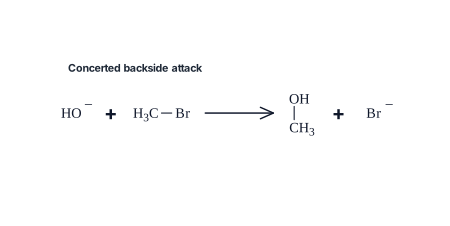
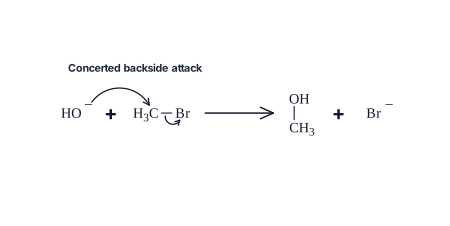
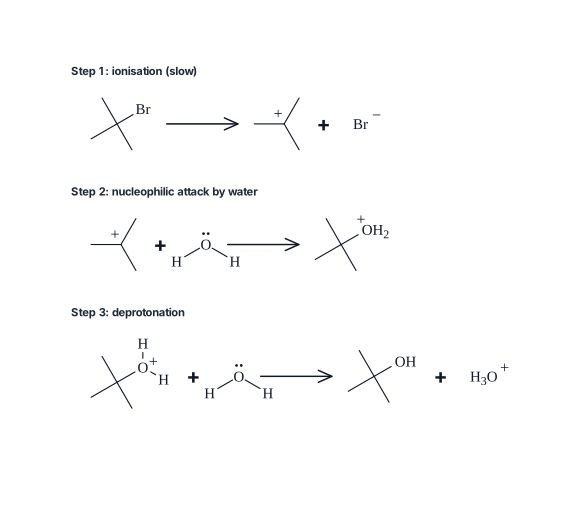
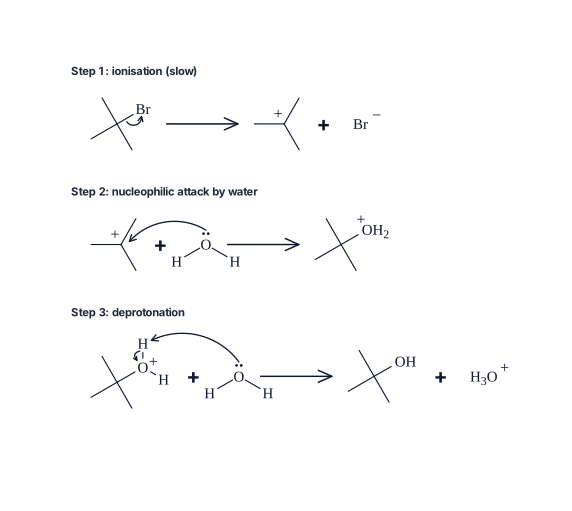
Part A — Nucleophilic substitution (SN2 and SN1)
Draw the curly arrows on each step. Start every arrow at a lone pair or a bond.
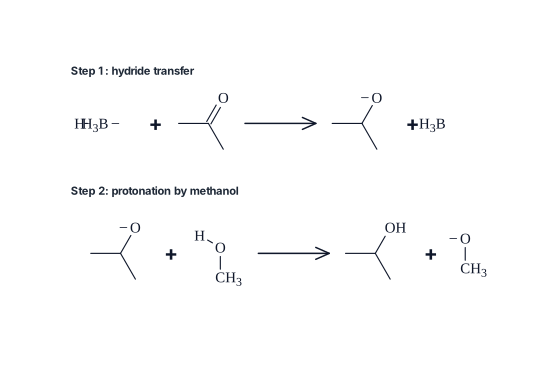
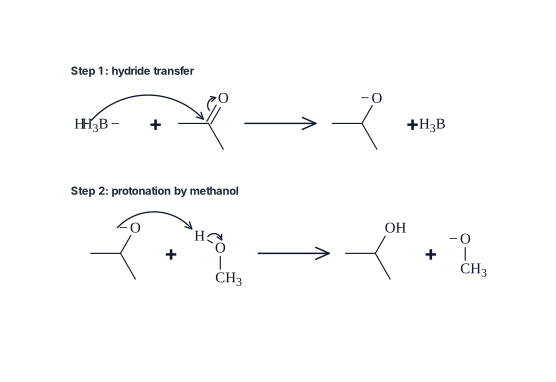
8. Nucleophilic addition: NaBH₄ reduction of acetone (2 steps)
Part D — Explain the mechanisms
Answer in full sentences.
9.
Write the rate equations for the SN2 reaction in Q1 and the SN1 reaction in Q2. Explain the difference using the mechanisms.
SN2: rate = k[CH3Br][OH−], both species are in the single (rate-determining) step. SN1: rate = k[(CH3)3CBr], only the substrate is in the slow ionisation step; water attacks the carbocation afterwards in a fast step.
10.
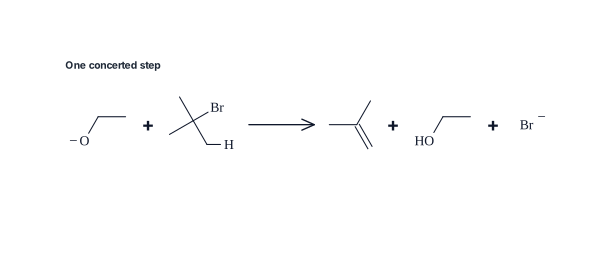
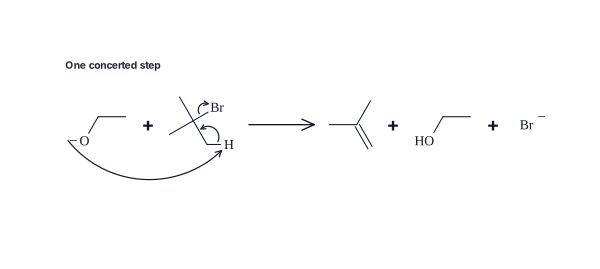
Why does 2-bromo-2-methylpropane undergo E2 with ethoxide (Q3) rather than SN2?
The carbon bearing Br is tertiary: three methyl groups block backside attack, so SN2 is impossible. Ethoxide is a strong base and instead removes an accessible β-hydrogen from a methyl group (E2).
11.
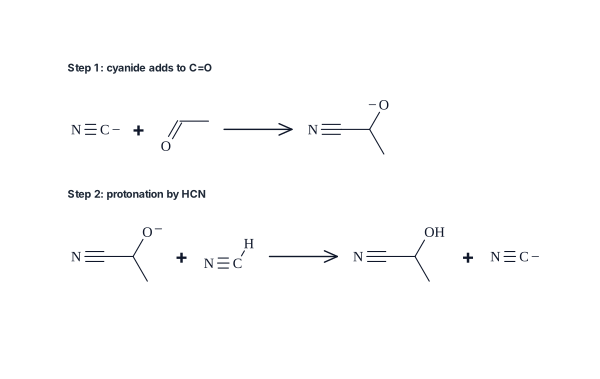
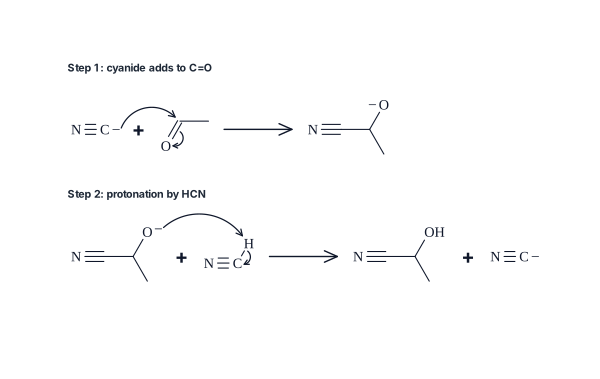
In Q7 and Q8 the nucleophile adds to C=O but nothing is substituted. Explain why, and name the intermediate formed in the first step.
Aldehydes and ketones have no leaving group on the carbonyl carbon, so the C=O π electrons move onto oxygen instead (nucleophilic addition). The intermediate is a tetrahedral alkoxide ion, which is then protonated to the alcohol.
Part C — Carbonyl reactions: aldol and nucleophilic addition
5.
6.
7.
8.
Part D — Explain the mechanisms
9.
SN2: rate = k[CH3Br][OH−], both species are in the single (rate-determining) step. SN1: rate = k[(CH3)3CBr], only the substrate is in the slow ionisation step; water attacks the carbocation afterwards in a fast step.
10.
The carbon bearing Br is tertiary: three methyl groups block backside attack, so SN2 is impossible. Ethoxide is a strong base and instead removes an accessible β-hydrogen from a methyl group (E2).
11.
Aldehydes and ketones have no leaving group on the carbonyl carbon, so the C=O π electrons move onto oxygen instead (nucleophilic addition). The intermediate is a tetrahedral alkoxide ion, which is then protonated to the alcohol.
How to use this worksheet
Remind students of the two rules first: an arrow starts at a lone pair or a bond and ends where the new bond or lone pair forms; a full arrowhead moves two electrons.
Count the curly arrows in each step before drawing: SN2 and the hydride step need two, the concerted E2 step needs three.
Parts A and B compare substitution with elimination on the same substrates; ask students to write the rate equation under each mechanism.
Use Part C as an extension: the aldol and carbonyl additions reuse the same nucleophile-attacks-C=O pattern.
Print the answer key separately so students can self-mark, then redraw any step they got wrong.
Set the title, student lines and answer option on the left, then press Download PDF and choose “Save as PDF” (or print directly). Your choices are remembered on this device.
Draw and edit structures in MolDraw. Make your own questions: draw any molecule, then export it as PNG or SVG for your worksheets.
What does a curved arrow show in a reaction mechanism?
A curved (curly) arrow shows the movement of a pair of electrons. It starts at the electrons that move (a lone pair or a bond) and points to where they end up: an atom, where a new bond forms, or an atom that takes them as a lone pair.
How many curly arrows are in an SN2 mechanism?
Two, drawn in one step: one from a lone pair on the nucleophile to the carbon, and one from the C–leaving group bond to the leaving group. Both happen at once, which is why SN2 is concerted and has the rate equation rate = k[Nu][R–X].
What is the difference between SN1 and E1 mechanisms?
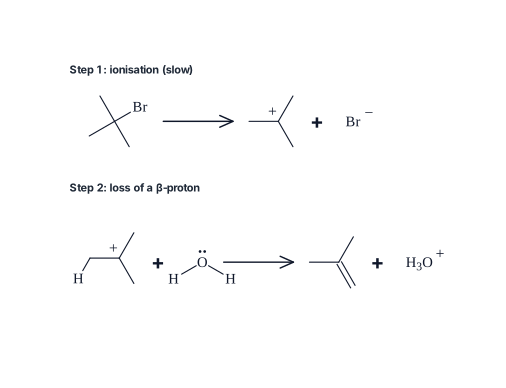
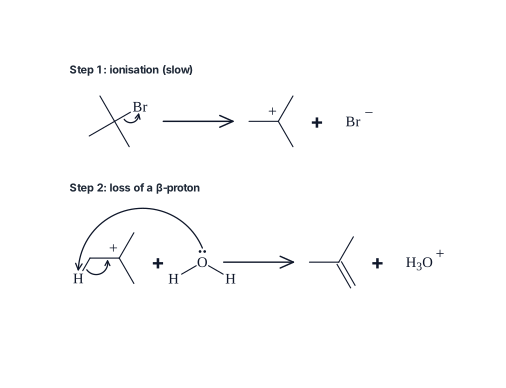
Both start with the same slow step: the leaving group departs to form a carbocation. In SN1 a nucleophile then bonds to the carbocation; in E1 a base removes a hydrogen from the neighbouring carbon and the C–H electrons form the C=C double bond.
Why is an aldol condensation called a condensation?
After the aldol addition gives a β-hydroxy aldehyde, heating with base removes a second α-hydrogen and hydroxide leaves (E1cB). Water is lost overall, so two molecules join with loss of a small molecule: a condensation reaction.