MolDraw › Educational materials › Functional Groups Identification Worksheet

Functional Groups Identification Worksheet

Organic chemistryGrades 11–12 · A-level / IB · AP Chemistry · CBSE/JEE · Intro college organic12 items · answer key included

Identifying functional groups is much more memorable when the molecules are real. This functional groups worksheet uses 12 well-known drugs and natural products — aspirin, paracetamol, ibuprofen, benzocaine, vanillin, adrenaline, caffeine, capsaicin, morphine, testosterone, penicillin G and oseltamivir (Tamiflu) — and asks students to circle and name every functional group. It covers alcohols and phenols, ethers, aldehydes, ketones, carboxylic acids, esters, amides, amines, alkenes, arenes and less common groups such as the β-lactam and thioether in penicillin. The answer key lists every group, making it ready-to-use identifying functional groups practice, homework or a printable PDF quiz.

Live A4 preview. “Download PDF” opens the print dialog: choose Save as PDF. Click a structure to open it in MolDraw.

Functional Groups Identification Worksheet

Name Class Date

Circle and name every functional group

Circle each functional group in the structure and write its name on the lines. Count benzene rings and C=C double bonds as well.

1.
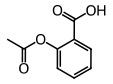
Aspirin (pain relief)
Structure for the question
Carboxylic acid; ester (aryl ethanoate); benzene ring (arene).
2.
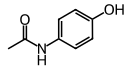
Paracetamol / acetaminophen
Structure for the question
Phenol (–OH on the ring); secondary amide; benzene ring (arene).
3.
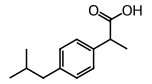
Ibuprofen
Structure for the question
Carboxylic acid; benzene ring (arene). The rest is alkyl (alkane) chain.
4.
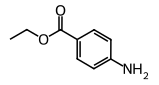
Benzocaine (local anaesthetic)
Structure for the question
Ester (ethyl ester); primary amine (aromatic amine / aniline –NH2); benzene ring (arene).
5.
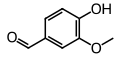
Vanillin (vanilla flavour)
Structure for the question
Aldehyde (–CHO); ether (methoxy, –OCH3); phenol (–OH on the ring); benzene ring (arene).
6.
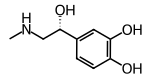
Adrenaline / epinephrine
Structure for the question
Two phenol groups (a catechol); secondary alcohol; secondary amine (–NH–CH3); benzene ring (arene).
7.
Caffeine
Structure for the question
Two amide carbonyls (C=O next to ring N; one sits in a cyclic urea unit, N–CO–N); tertiary amine-type nitrogens (N–CH3); imine (C=N) in the five-membered ring; alkene (C=C). The fused ring system is a purine.
8.
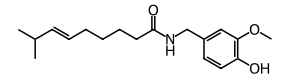
Capsaicin (chilli heat)
Structure for the question
Phenol; ether (methoxy); secondary amide; alkene (trans/E C=C); benzene ring (arene).
9.
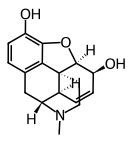
Morphine
Structure for the question
Phenol; secondary alcohol; ether (cyclic, in the furan-type ring); tertiary amine (N–CH3); alkene (C=C); benzene ring (arene).
10.
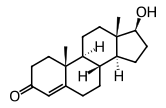
Testosterone
Structure for the question
Ketone (conjugated with the C=C: an α,β-unsaturated ketone / enone); alkene (C=C); secondary alcohol.
11.
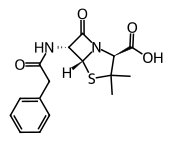
Penicillin G
Structure for the question
Carboxylic acid; β-lactam (cyclic amide in the four-membered ring); secondary amide (side chain); thioether / sulfide (C–S–C); benzene ring (arene).
12.
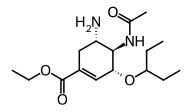
Oseltamivir (Tamiflu)
Structure for the question
Ester (ethyl ester); alkene (C=C, conjugated with the ester); ether (pentan-3-yl ether); secondary amide (acetamido, –NHCOCH3); primary amine (–NH2).

moldraw.com/educational-materials/functional-groups-identification-worksheet/

Answer key: Functional Groups Identification Worksheet

Circle and name every functional group

1.
Carboxylic acid; ester (aryl ethanoate); benzene ring (arene).
2.
Phenol (–OH on the ring); secondary amide; benzene ring (arene).
3.
Carboxylic acid; benzene ring (arene). The rest is alkyl (alkane) chain.
4.
Ester (ethyl ester); primary amine (aromatic amine / aniline –NH2); benzene ring (arene).
5.
Aldehyde (–CHO); ether (methoxy, –OCH3); phenol (–OH on the ring); benzene ring (arene).
6.
Two phenol groups (a catechol); secondary alcohol; secondary amine (–NH–CH3); benzene ring (arene).
7.
Two amide carbonyls (C=O next to ring N; one sits in a cyclic urea unit, N–CO–N); tertiary amine-type nitrogens (N–CH3); imine (C=N) in the five-membered ring; alkene (C=C). The fused ring system is a purine.
8.
Phenol; ether (methoxy); secondary amide; alkene (trans/E C=C); benzene ring (arene).
9.
Phenol; secondary alcohol; ether (cyclic, in the furan-type ring); tertiary amine (N–CH3); alkene (C=C); benzene ring (arene).
10.
Ketone (conjugated with the C=C: an α,β-unsaturated ketone / enone); alkene (C=C); secondary alcohol.
11.
Carboxylic acid; β-lactam (cyclic amide in the four-membered ring); secondary amide (side chain); thioether / sulfide (C–S–C); benzene ring (arene).
12.
Ester (ethyl ester); alkene (C=C, conjugated with the ester); ether (pentan-3-yl ether); secondary amide (acetamido, –NHCOCH3); primary amine (–NH2).

How to use this worksheet

  1. Give students a functional-group reference table for the first attempt, then repeat the sheet later from memory.
  2. Ask students to distinguish carefully: alcohol vs phenol, ester vs ether, amide vs amine, aldehyde vs ketone.
  3. Decide in advance whether 'arene/benzene ring' and 'alkene' count as functional groups in your syllabus; the answer key lists them.
  4. Extension: ask which groups make each drug more water-soluble (O–H, N–H, COOH) and which can be hydrolysed (esters, amides).
  5. Set the title, student lines and answer option on the left, then press Download PDF and choose “Save as PDF” (or print directly). Your choices are remembered on this device.

Draw and edit structures in MolDraw. Make your own questions: draw any molecule, then export it as PNG or SVG for your worksheets.

Draw and edit structures in MolDraw

Frequently asked questions

What functional groups are in aspirin?

Aspirin (acetylsalicylic acid) contains a carboxylic acid (–COOH), an ester (the ethanoate/acetate group attached to the ring oxygen) and a benzene ring.

How do you tell an ester from an ether?

An ether has an oxygen joined to two carbons by single bonds (C–O–C). An ester has that same C–O–C link but one of the carbons is also double-bonded to oxygen (C(=O)–O–C).

What is the difference between an amine and an amide?

In an amine the nitrogen is bonded only to carbon and/or hydrogen atoms. In an amide the nitrogen is bonded directly to a carbonyl carbon (C(=O)–N). Paracetamol contains an amide; benzocaine contains an amine.

Is a phenol the same as an alcohol?

No. A phenol has the –OH group attached directly to a benzene ring, whereas an alcohol has –OH on an sp3 carbon. Phenols are more acidic than alcohols. Vanillin and paracetamol contain phenols; testosterone contains an alcohol.

Does this functional groups worksheet have answers?

Yes. The answer key names every functional group in each of the 12 molecules, and you can download the worksheet as a PDF with or without answers.

Related worksheets